Showing posts with label suffering. Show all posts

Sunday, March 22, 2015

Heaven and Hell - a sermon, March 22, 2015

“Heaven and Hell”
Rev. Alison Longstaff, March 22, 2015
Bath Church of the New Jerusalem
Morning Has Broken; God Is Love, Let Heaven Adore Him; Lord, Look Down From Heaven
Psalm 139:1-12, Luke 17: 20-21; HS 8153

After I began this sermon, I quickly realized I had material for many, many sermons.  There are so many possible points of exploration when it comes to talking about heaven and hell; I could not possibly discuss them all in one short (or even long-ish) sermon.  I found myself sectioning off paragraph after paragraph and setting them aside for other sermons so as to keep this one from being too long.  Stay tuned for “Heaven and Hell, Part(s) Two,” (and “Three,” and “Four….”).

This morning we are going to explore the following three questions relating to heaven and hell:
  1. What are heaven and hell like? (Harps, wings, and clouds vs. a lake of fire?)
  2. Where, or rather, when are they? (Happening right now, or coming sometime in the future?)
  3. Who is responsible regarding where we end up?

First out of the gate, I must mention that Emanuel Swedenborg wrote an entire book on Heaven and Hell.  Heaven and Hell is far and away one of his easier books to read.  He wrote in Latin in the 1700s, and even in translation, he is one of the least “sound-bite accessible” authors I know.  A class on how to use Twitter could have transformed his accessibility to today’s audience!  Nevertheless it is a fascinating read, and will certainly change how you explore this topic.

1. Meanwhile, today we ask, what are heaven and hell like?

We've probably all seen the Philadelphia Cream Cheese commercial with the winged angel (eating cream cheese) on the clouds. She’s perky and cute, and just lacks a harp and blond hair to capture the perfect stereotype of an angel in heaven. 

Hmm.  Heaven will be sitting on a cloud, playing a harp?  Really?  I ask you, do you think a brilliantly wise, loving, and all powerful God would make our eternal existence break down to that?  (Can I at least keep my cell phone?)

We have also all probably seen images of the burning fires of hell, especially in jokes.  In one joke there are several Canadians revelling in all the glorious heat (after all their ice and snow and cold. “Mainers” could easily be substituted for “Canadians” in that part of the joke).  The devil keeps turning the heat up, frustrated because the Canadians aren’t suffering enough. Everyone else is moaning and wailing all the louder. But the Canadians just unzip their parkas and grin, enjoying it even more.  Finally, the devil decides to turn the heat right off and turn up the freezer instead, thinking that making it really cold is the way to make the Canadians suffer. There are icicles hanging from the icicles and frost even on the devil’s eyelashes when he comes to see how badly the Canadians are suffering. Instead he finds them jumping up and down with joy.  “Bring on the beer!” they shout. He stares at them in bewilderment. “Hell has frozen over!  That means the Maple Leafs must have won the Stanley Cup!” 

(You might have to be Canadian to truly appreciate that joke.)

In any case, we see the stereotypes.  Heaven is all clouds and wings and smiles; hell is endless suffering, usually in a lake of burning fire.

If you believe what Swedenborg says, heaven will be a lot like earth, except without corruption, greed, stress, or lack, and with a lot of amazing beauty and magic that we cannot imagine now.  Our days will be filled with learning and doing useful activities that we love with people that we love. 
There will be art, music, plays, and time to travel for rest and recreation, because we will still have rhythms of work and play there.  But the point will be providing service to all others from our gifts and talents, doing what we are best at and truly enjoy.  We will LOVE it, and love each other, and truly understand that the God of love created us exactly to participate in this wide reality of joyful, enriching human service and interrelationship.  And our capacity for joy and wisdom and service will simply grow each day forever.

Hell, Swedenborg tells us, is the eternal suffering that comes from wanting to steal from or harm others, of constantly wanting to have more than others, and of wanting to look down on others and control everyone else.  It is the hell of not being allowed to achieve any of those things, at least not for very long, because they involve harming others.  Those in hell are kept far away from those in heaven, instead being grouped with others just like themselves.  When we are in hell we spend our days scheming how to cheat and steal from the others (who are just like us), plotting how to control them and look down on them and harm them.  Sometimes we are allowed to succeed, and in those moments we feel a certain triumph or joy.  But because it is hell, and we are stuck with people just like us, sooner or later the shoe is on the other foot, and we are the ones being trampled and hurt, robbed and dominated.  And we never seem to realize what a dead-end we are in, which is why it is seen as eternal misery.

Swedenborg says that the joy of heaven and the suffering of hell come from our own patterns of seeing, believing, and behaving, even now, not just down the road.  The harps and wings or lake of fire are metaphoric images chosen by our collective imaginations to illustrate what these spiritual realities feel like.  We know what a heated argument feels like.  We already know what it is to burn with anger and resentment and frustration.  And if you have ever had that feeling of being trapped in a hell from which you thought you would never escape, you know just how eternal hell can feel.  Despair convinces us that our suffering will never end. (Rather like some Maine winters….)  

On the other hand, haven't we all experienced “cloud nine”? Have you ever felt like you were flying through your day with ease, or soaring on the wings of good fortune?  Have you ever felt so happy you just wanted to sing?  All these metaphors exist because they describe how heaven feels.  We aren’t supposed to believe in a literal lake of fire any more than we are to believe we will be up in the physical clouds after we die.  We imagine angels to have “wings” because they can get through and over anything—because they seem so much smarter and “loftier” than we are—not because they actually have wings. They don't need them. 

Anyway, heaven and hell are states of being, and we have been travelling in and out and through them our whole lives, whether we realized it or not. 

2.         We have already begun exploring where, or when is heaven or hell. Since Emanuel Swedenborg teaches (as do many others) that we are spiritual beings in physical bodies, it follows that heaven and hell are spiritual too, not physical places. They aren’t located somewhere in the sky or under the earth; they are states of mind or states of being.  They are inside us and with us all the time, not “out there”.  We carry the potential to “be” in either one in each moment.

Swedenborg said, “Heaven is not ‘up there’ but where the Good of Love is; and the Good of Love lives inside each person, wherever that person might be.” (Heavenly Secrets 8153)  So perhaps when Jesus said, “The kingdom of heaven is within you,” this is what he meant.

On earth we experience both—times that feel hellish and times that feel heavenly—all through life, and these experiences help us to choose who we want to be.  Do we want to stay stuck in old, broken, unconscious patterns of thought and behaviour, or do we want to do the work that moves us into better, kinder, more conscious patterns (heaven)?  We sometimes “choose” heaven and sometimes “choose” hell alternately throughout our lives so that we have enough experience to determine where we really want to stay. 

Sadly, we have probably all experienced or watched someone we love choose the (pretend heaven but) actual hell of addiction.  Some people need to choose that hell again and again to become ready and able to get out of that hell and stay out.  Addictions are a perfect example of how hell can masquerade as heaven. Addictions cause increasing torment for the addict and often try to suck everyone with whom the addict is in relationship into the suffering as well.  It takes an especially strong kind of angel to stay in relationship with an active addict without getting sucked into their hell along with them.  God always provides a way out, but it can be agonizing to watch that someone we love struggle to escape—the sick thinking and the lies can so thoroughly trap the one we love—and to wait for them to choose differently can feel like an eternity of suffering.

In any case, if we believe Swedenborg, no one is ever “sent” anywhere we don’t want to be; (not forever).  You and I may “send” ourselves (or be dragged into by others) some pretty dark places; but ultimately we always have the choice to ask for Divine help and get out of even the darkest hell.  And the minute we choose for heaven, our wish will always be granted, if not immediately, then as soon as is possible while making sure we can handle the transition.  Some extractions can be as complicated and lengthy as the most elaborate extreme mountain rescue—but you can bet that the angels on the job LOVE what they do, and they do it with focus, compassion, and God’s guidance.

3.         And so finally, who is responsible for whether we “end up” in heaven or hell? 

The answer is: We are each individually responsible for where we end up.

Now, while we are each individually responsible for where we end up, we are only partially responsible for many of the times we visit heaven or hell along the way.  Other people can “put us through hell,” the same way others can draw us into greater peace and happiness while we walk this earth.  But ultimately, we choose who and how we want to be.

Into every single one of our relationships and life experiences we bring our own selves, with our own patterns of listening, interpreting, reacting, and responding.  We bring with us a great deal of the heaven or hell we find in these relationships because of our own patterns and habits of response. We are often far more responsible for the problems in which we might find ourselves than we might realize.

Just the same way that there are many dynamics in our culture, our families, and our society that can be unhealthy, you and I can have internal perspectives and habits that are unhealthy that we can’t even see.  All of these things will remain invisible to you and me until we realize them and learn different perspectives.  Just watch a few episodes of Madmen for a great metaphor of this process at work.  The characters in that show innocently and blindly chain smoke, litter, drink while pregnant, suffer profound sexism, and many other things that would shock us today.  We see those things differently now because of our growing and changing awareness of how they have been harmful.  In this same way you and I can begin to see in finer detail the way some of the personal dynamics and patterns of behaviour that we learned as “normal” in our childhood are actually contributing to the problems in our relationships today. And then we can begin to change them. 

If only “choosing to be in heaven right now” was as easy as it sounds.  More often it is about as easy as, well, if I were to choose to go complete a 5k run this afternoon, at my current level of training and conditioning.

I could “choose” it all I wanted, but I would be dreaming.  I’m not remotely prepared for such an ambitious goal.  If I even tried, I can guarantee it would not put me in heaven, (and would possibly be a fast track to a personal hell).  I simply couldn’t do it.  ("Hashtag: Epic Fail,” as they say these days.)

No, I would need to start with a commitment now, and then train and prepare for several months to be able to make that “choice” a reality many months from now.  “Choosing” would mean more than simply flipping a mental switch. It would include “practice” and training to develop a whole new set of strengths and abilities.  It would take time.

The spiritual journey is a lot like that.  It takes commitment and focus too.  It takes discipline and intention. The practice isn’t always comfortable.  But it is often deeply satisfying, and it is tremendously worthwhile especially if you value a greater ease in managing your own inner happiness, and especially if you value enhanced well-being in all your relationships.  If you value those things enough, you will persist in the spiritual disciplines necessary to run that spiritual race, and you will keep returning to the practice because of the ongoing rewards, no matter how many times you temporarily step off the path.  

Day by day, starting right now, you and I can choose to leave behind our not-so-heavenly reactions and feelings. Taking baby steps and sometimes falling down, we can repeatedly and persistently invite heaven to live within us. It already dwells within the Goodness of Love within us from God.  May we be open to tapping into that and letting it work in and through us with increasing strength right now, each day.

Jesus Himself took this very human journey on Himself in solidarity with us and to give us strength.  He allowed Himself to be betrayed and “put through hell” indeed when He let Himself be crucified.  What better example could He have given us, to show us that we can survive the hells we travel through on earth and survive even death itself, because the point is something better and more lasting and far more meaningful beyond? 

My question for you is, what do you think?  What do you feel? What system of looking it these questions sits the most comfortably in your body?  I invite you to use your rationality, your experience, your intelligence, and your intuition as you find your way through these very big questions for yourself.  And I especially ask you to consider, what belief system makes you a kinder wiser, more compassionate, open, and giving person? Because that is the path to heaven.

Amen

The Readings
Psalm 139: 1-12
You have searched me, Lord, and you know me.
You know when I sit and when I rise; you perceive my thoughts from afar.
You discern my going out and my lying down; you are familiar with all my ways.
Before a word is on my tongue you, Lord, know it completely.
You hem me in behind and before, and you lay your hand upon me.
Such knowledge is too wonderful for me, too lofty for me to attain.
Where can I go from your Spirit? Where can I flee from your presence?
If I go up to the heavens, you are there; if I make my bed in the depths, you are there.
If I rise on the wings of the dawn, if I settle on the far side of the sea,
even there your hand will guide me, your right hand will hold me fast.
If I say, “Surely the darkness will hide me and the light become night around me,”
even the darkness will not be dark to you; the night will shine like the day,
for darkness is as light to you.

Luke 17: 20-21
Now when He was asked by the Pharisees when the kingdom of God would come, He answered them and said, “The kingdom of God does not come with observation; nor will they say, ‘See here!’ or ‘See there!’ For indeed, the kingdom of God is within you.”

Secrets of Heaven 8153
Heaven is not “up there” but where the Good of Love is, and the Good of Love is found inside each person, wherever that person might be.

Sunday, March 15, 2015

Dealing With Despair - sermon March 15

“Why Is My Pain Unceasing?” - Dealing With Despair
Rev. Alison Longstaff, March 15, 2015
Bath Church of the New Jerusalem
Jeremiah 15:15–21, Matthew 16:21–28, DP 214


Why is my pain unceasing, my wound incurable, refusing to be healed?

One nice thing about pain is that it feels so good when it stops.

In our Scripture readings, we heard a lot about suffering.  We heard a pain-filled cry to God to end the suffering in Jeremiah.  In the gospel reading, Jesus is warning the disciples about the terrible suffering he will endure.  Peter objects, and Jesus shouts at Peter, “Get behind me, you Satan!” in a shocking, very un-Jesus like moment.  He says, “You are a stumbling block to me; for you are setting your mind not on divine things but on human things.”

Peter was the voice of the tempter when he declared that such suffering and death should never happen to Jesus.  Jesus knew it was imperative to focus on the spiritual work about to be accomplished and not on the suffering.  He had to focus on His Divine mission and not be distracted.  Perhaps Peter was the voice of the demon attacking Jesus, trying to convince Jesus to opt out of the suffering.  This would explain the intensity of the rebuke.

Jesus had to keep his eyes set on the Divine, to accomplish his mission.

Life on this earth includes suffering.  Even here in North America, with our insurance policies, relative wealth, and myriad safety measures, we can’t seem to escape suffering.  We often think we shouldn't have to suffer.  We keep creating more ways to protect ourselves, as if constant comfort and total security were the answer to all our problems.

So why are we still so restless and unhappy?  Some of the countries that rank highest for overall national happiness are places like Nigeria and Bhutan.  What’s that about?  Nigeria suffers from extreme poverty, and many people live in mud huts.  How can they possibly be happier than us?  Well, it seems they have a deep reliance on God.  They are a very Christian country, and they live their faith in every way they can.  They are desperately poor, yet they sing and pray and share the little they have with each other, and they are happy.

Toronto journalist Jonathan Power interviewed Olusegun Obasanjo, a Nigerian who became a Christian and a preacher after being unjustly imprisoned.  In his three years of captivity, Obusanjo became a sort of chaplain to his fellow prisoners. He says, “The time I had real joy in my life was when I was in prison.  I felt then that there was just God and me, and my fellow prisoners whom I must try and help." (Power, 2003)  Extreme hardship robs us of everything … but God.  Perhaps this is why some of the most loving and deeply spiritual people are also people who have suffered great hardship.

In the midst of the deepest suffering God becomes all we have left, and this breaks ground for a deep and rich faith to grow.  I’m not saying we should all discard our current lives and go live in a third-world country so as to really suffer so we can experience God. Suffering will find us, no matter where we live, nor how much money we have.  I am saying that it is good to remember that suffering can be our greatest teacher.  God wouldn't allow anything to happen if it didn't serve some purpose for good.  So even the painful times in life—perhaps especially the painful times—are carefully overseen by God to deepen us and eventually bring us joy.

My one objection to books and philosophies like The Secret is the way they can promote the idea that we are solely responsible for what happens to us in our lives.  The idea is that if we cultivate a good attitude, we invite good things into our lives, and conversely that we invite misfortune by having a bad attitude.  The logical conclusion to this is that if we just work hard enough to have a great attitude, nothing bad will happen to us.  But if that were true, those Indonesians and Japanese must have had terrible attitudes to invite such massive tsunamis onto themselves.  The Hebrew nation must have somehow invited the Holocaust. Every victim of every tragedy could be blamed for their misfortune.  Such a belief might give the rest of us some sort of security, but I can’t believe in a God or universe that works so simplistically (and harshly).  We mortals are simply not that powerful.
 
“It must be their fault.  If only they were positive like me, they’d be okay,” is the underlying thinking  when we judge victims of hardship and illness.  This thinking is problematic, in that it promotes a strong reliance on our own efforts for “salvation”, and there's no mention of reliance on God (or Spirit or Higher Power or anything outside of oneself).  I understand the appeal of this idea.  But it falls flat whenever we come up against anything more powerful than our own positive thinking.

My mother lived in chronic physical pain for many years of her life.  She had fibromyalgia and rheumatoid arthritis and depression, which meant that everything hurt, inside and out.  She was on all sorts of pain medicines, which only helped a little, had their own strange side-effects, and caused other problems.  I don’t know how she managed.  I can’t handle chronic pain for even a day.  I get grumpy and whiny and can be very impatient when waiting for my next dose of pain reliever.  She had chronic pain for over twenty years!  Did I mention that she also got regular migraines?  She tried every treatment in the world, from steroids to vitamins to acupuncture to moose meat, and nothing helped.  She was told again and again that it was all in her head and that she “should” be happy.

She died in 2008, in terrible pain to the bitter end.

I loved her.  It was terrible to watch her suffer.  I admit that sometimes I got impatient with her.  I thought, “Surely she can do something differently!”  I judged her for not trying hard enough, and for not trying the right things long enough.  My judging came from how hard it was to see her in such pain. 

But my judging never helped her. My impatience never helped her.  No one’s judgment or “should”s helped her.

Again and again, the best and only thing I could do for her was to love her to bits, and spend time with her, and believe with my whole heart that God had a plan.  Period.

Have you ever heard someone say, in the midst of some awful situation, “I suppose God has a lesson for me,” as if he or she could stop the suffering if they could simply figure out what the lesson was and learn it?  I don’t think God works that way.  I don’t think God ever sends suffering to teach us a lesson.  I think God allows it sometimes, only when He can also bring some long term good out of it for everyone involved.

Did my mom suffer for over twenty years because there was some lesson she was refusing to learn or because she didn't have the right attitude?  I can't believe that.  I know she did the best she could.  She got dealt a rotten hand.  She didn't invite her pain onto herself any more than she invited the childhood abuse she suffered at the hands of her father—any more than my classmate’s two-year-old son invited death from liver cancer onto himself either. 

Sometimes terrible stuff just happens.

Yes, a positive attitude can greatly improve certain aspects of our lives; it can improve our coping, and can spin off some terrific side effects.  Optimism and hope are our wings, and when we have them, they lift us up and over a multitude of life’s hurdles.  But sometimes, through no fault of our own, our wings get plucked or broken.  Sometimes a hoard of locusts swoops down on our rich and thick harvest of positive thinking and in a heart-beat, strips it to dead stalks.  Sometimes we are left walking or crawling down life’s muddy road, not flying, experiencing every bump and ditch and thorn and mud puddle.  “The rain falls on the just and on the unjust,” says God in the Gospels.  Or, to quote contemporary wisdom, “Shit happens.”

So we must set our minds on divine things, and not on human things.

There is so much in this life over which we have no control.  There are all sorts of forces at work around us, and we are far less powerful than we think. Our thoughts are not God’s thoughts.

We want a happy, comfy life now.  God wants us to have a happy, comfy life for eternity

From The Divine Providence by Emanuel Swedenborg, passage number 214:
The Lord’s Divine Providence pays attention to things that matter forever, and pays attention to short-term things only so far as they work in unison with the things that matter forever.  Short term or temporal matters usually have to do with earthly wealth and status, which is fame and fortune in the world. But what matters forever is our spiritual well-being and our spiritual character, which have to do with our becoming ever more loving and spiritually wise—these impact our eternal happiness.  We mortals see the worldly values of wealth and social standing as disconnected from our eternal happiness, but the Lord sees that they are connected.  And so the Lord’s Providence must give our eternal well-being priority over our earthly fame and fortune, until they work in unison.

We are part of a great tapestry.  Stuff that looks bad to our eyes now is allowed to happen because God sees a bigger picture.  But don’t forget, God isn't some cold, distant artist.  When we suffer, God suffers along with us.  S/He knows what it is like to be a mortal.  He was one, in Jesus.  Jesus suffered to bring a much better outcome for every one of us down the road.   And in the very same way the disciples couldn't see why Jesus allowed Himself to suffer, we often can’t see why we or our loved ones are allowed to suffer.  We can’t see God’s plan, but it is there.

Bad things happen, and not all the positive thinking in the world can save us from it.  No one is that powerful, no matter what we'd like to think.  All twelve steppers can tell you that powerlessness is the first and most important thing to learn.  We have to embrace and face life on life's terms, not ours.  Facing our powerlessness throws us finally and completely into God’s arms.

“Why is my pain unceasing, my wound incurable, refusing to be healed?”  Set your mind on divine things, and not on human things.  Spiritual growth or personal growth involves finding our relationship with suffering, not avoiding it.  Why else would God invite us to take up the cross to follow Him?  Jesus fought through temptation after temptation on his journey to the cross.  He showed us the way.  AND He showed us that it will come out all right, no matter how hopeless it looks along the way. 

God loves us desperately.  S/He doesn't want us to suffer.  But sometimes the most loving thing He can do for us is to let us have our experiences, good and bad.  Eliminating the struggle for us eliminates the joy and triumph we will feel when we finally arrive at the finish line.  Suffering calls forth qualities in us like endurance, stamina, and patience. It frequently teaches us compassion and opens us up to the Holy Spirit.  It is like spiritual roto-tilling, breaking up old and set things inside us, turning us upside down, and making room for new and wonderful things to grow.

Suffering helps us to appreciate more fully the truly good things in life.  It also teaches us how precious are the times of peace and good fortune.  We no longer take them so much for granted.  Suffering deepens us, whether we like it or not.  And it reminds us who’s really in charge of the universe, and that it is not us.  It teaches us to trust in God; and to set our sights on divine goals and not on human ones.

For those of you who are in the midst of suffering, take heart.  Every single thing in life is in God’s hands.  Not one hair of your head falls without notice.  No matter how long the night may seem, the spiritual morning always brings comfort and joy.  You are intimately loved and cared for, and every single detail of your life is being woven for your eternal blessedness.  Even if you cannot see it; even if you rail against God for your suffering, it is all covered.  Your spiritual insurance policy is in God’s Divine Providence, which is wise beyond all human wisdom and compassionate beyond all human understanding.

All manner of things WILL be well.
           
 Why is my pain unceasing, my wound incurable, refusing to be healed?

“…They shall not prevail over you, for I am with you to save you and deliver you, says the LORD.
 I will deliver you out of the hand of the wicked, and redeem you from the grasp of the ruthless.” (Jeremiah 15:20-21)
“Be of good courage, and He shall strengthen your heart, all you who trust in the Lord.” (Psalm 31:24)
Then surely goodness and mercy will follow you all the days of your life;
And you will dwell in the house of the Lord forever. (Psalm 23)
Amen

Revised from a sermon preached August 2008
Reference: Nigeria: Happiest Nation on Earth?
by Jonathan Power, Published on Monday, December 29, 2003 by the Toronto Star

The Readings
Jeremiah 15:15-21
O LORD, you know; remember me and visit me, and take vengeance for me on my persecutors.
In your forbearance take me not away; know that for your sake I bear reproach.
Your words were found, and I ate them, and your words became to me a joy
and the delight of my heart, for I am called by your name, O LORD, God of hosts.
I did not sit in the company of revelers, nor did I rejoice;
I sat alone, because your hand was upon me, for you had filled me with indignation.
Why is my pain unceasing, my wound incurable, refusing to be healed?
Will you be to me like a deceitful brook, like waters that fail?
Therefore thus says the LORD: “If you return, I will restore you, and you shall stand before me.
If you utter what is precious, and not what is worthless, you shall be as my mouth.
They shall turn to you, but you shall not turn to them.
And I will make you to this people a fortified wall of bronze;
they will fight against you, but they shall not prevail over you,
for I am with you to save you and deliver you, declares the LORD.
I will deliver you out of the hand of the wicked, and redeem you from the grasp of the ruthless.”

Matthew 16:21-28
From that time Jesus began to show to His disciples that He must go to Jerusalem, and suffer many things from the elders and chief priests and scribes, and be killed, and be raised the third day.
Then Peter took Him aside and began to rebuke Him, saying, “Far be it from You, Lord; this shall not happen to You!”
But He turned and said to Peter, “Get behind Me, Satan! You are an offense to Me, for you are not mindful of the things of God, but the things of men.”
Then Jesus said to His disciples, “If anyone desires to come after Me, let him deny himself, and take up his cross, and follow Me. For whoever desires to save his life will lose it, but whoever loses his life for My sake will find it. For what profit is it to a man if he gains the whole world, and loses his own soul? Or what will a man give in exchange for his soul? For the Son of Man will come in the glory of His Father with His angels, and then He will reward each according to his works. “Assuredly, I say to you, there are some standing here who shall not taste death till they see the Son of Man coming in His kingdom.”

The Divine Providence 214
The Lord’s Divine Providence pays attention to things that matter forever, and pays attention to short-term things only so far as they work in unison with the things that matter forever.  Short term or temporal matters usually have to do with earthly wealth and status, which is fame and fortune in the world. But what matters forever is our spiritual well-being and our spiritual character, which have to do with our becoming ever more loving and spiritually wise—these impact our eternal happiness.  We mortals see the worldly values of wealth and social standing as disconnected from our eternal happiness, but the Lord sees that they are connected.  And so the Lord’s Providence must give our eternal well-being priority over our earthly fame and fortune, until they work in unison.

Sunday, February 22, 2015

"Theodicy" (Theo-what?) - Sunday's discussion

"Theodicy"  (Theo-what?)

Church was cancelled AGAIN.

The ice made the roads too treacherous for our guest speaker, Rev Dr Reuben Bell, to make it up to us to preach.  So church was cancelled, and I was prepared to sit alone in the church with candles and Gregorian chant playing on the stereo, and praying.

Well it turns out that since worship had been cancelled the two previous Sundays, the longing for spiritual community won the day for several locals plus two not-so-locals!  As we had such a small community and no organist, I opted for a gentle discussion group with the seven of us.

I opened the Word, led us in prayer, read a little Scripture, and then after a few other discussion points, opened up the topic, "Why does God let bad things happen to good people?"

In case anyone cares, that HUGE spiritual question is called the question of "Theodicy," which is the attempt to understand how God can be good and yet there is so much evil in the world.


So we reviewed some of the ways people answer this question. (Note:  This is the way PEOPLE answer this question.  These are not necessarily "right" answers.)  Each one of us must answer this for ourselves and we often travel around between these or combine two or three as we struggle to make sense of this question.

  1. God sends bad things as a punishment for sin. 
  2. God sends bad things to test our character, or to show us what we are capable of
  3. God allows bad things to happen because we need to learn something.
  4. Bad stuff just happens and God isn't all that involved down at our level.
  5. There is no God.
  6. God doesn't cause evil nor prevent evil, but is right there with us walking through the suffering.  God's job is not to protect us from bad things happening to us but to be with us even in the heart of them.

We looked at each "solution" and reflected on the different ideological landing places.  I talked about some of the psychological underpinnings of these various solutions,  with each one making sense when we understand the sort of thinking or perspective that drives it.  

1. For example, deciding that God is punishing us for our sin comes from the sort of reasoning that causes a child to think they caused their parents' divorce.  It is connected to a feeling of dependency and powerlessness. We feel powerless in the face of the tragedy and want some sense of control.  We decide either God is Bad or we are, and the idea that God is evil is just too terrifying, because then we would be utterly helpless in a hostile universe.  In this case it is more comforting to think that we are to blame.  Because if we are to blame, we can maybe do something to make things better.  We still have agency---we still can have a way to put things right.  

2.  "God sends bad things to test us or show us what we are capable of."  We leaned more towards the "help us see what we can do" idea than the "God is testing us" idea.  (Besides, an omniscient God wouldn't need to test us.  And God is not passive aggressive, and does not need to grade us nor to create martyrs.)

3.  "God allows bad things to teach us something."  At least one member liked this one.  I certainly have heard such sentiments as, "I wish I would learn what I need to learn from this so it would pass."   Notice that the idea of "needing to learn something" gives us a feeling of some control in a tough situation.  In that case, if we just "learn" whatever it is we need to learn, the bad situation would go away, right?  I knew someone with a chronic illness who said fairly often, "I guess I haven't learned what I need to learn yet." Certainly all sorts of good learning and good secondary experiences (human compassion, human cooperation) can happen around and in the wake of tragedy.  But I am not sure that our learning is ever the primary reason God would allow our suffering.  

4.  "Bad stuff just happens."  God neither causes it nor prevents it.  This answer lets God at least be neutral, if a bit detached from human affairs.  This God has left us on our own, or has different priorities than we do. (Some could argue that this is a typical Swedenborgian conclusion, if we read only the passages that say that God doesn't pay attention to any temporal affairs unless they have a direct impact on our eternal well-being.  It does not take into account the numbers that say that God is aware and present in even the least moment of our lives, guiding and guarding while leaving us in spiritual freedom. Putting these teachings together implies that our perspective on tragedy and suffering and what is allowable is different than that of God's; meanwhile God cares deeply and is intimately present with us in our suffering.  This leads to 6.) 

5.  There is no God.  This is a common and understandable landing place for many of us in the face of deep suffering.  Please don't judge such a person. (To blame someone for losing their faith as a result of terrible loss and pain is just adding insult to injury.)  When one must choose between an incomprehensible, uncaring God or no God at all, many choose "no God."  Until one can see another option, "God cares and helps but doesn't always stop tragedy," the "no God" option makes perfect sense. 

6.  God is present with us in the suffering and carries us through.  God's job is not to protect us from earthly hardships, but to walk with us through them.  There are reasons this conclusion satisfies many theologians and pastors, though it can be small comfort to the one in the depth of suffering. We can remember that Jesus did not protect himself from horrible suffering, but walked all the way through it, even to the point of feeling abandoned by God and a slow agonizing death.  He braved the whole experience without sparing himself one bit, as a way to show he is willing to come with us into the very worst of human suffering, and as a way of saying there is something more beyond.

However, when someone you love is suffering, the best thing you can do is be with them, and ask them what they need.  If chaplaincy training taught me anything at all (and I still often need reminders of this, because the urge to offer comforting words can be so strong) it is the value of the ministry of presence.  What most folks need in the heart of a crisis is company more than quotes, a steady presence, rather than platitudes.  Just be there. Just stand by them. Words are not as necessary as you might think.

Well, this summary of our discussion has turned into a mini sermon.  I have shared some extra things here and skipped some others.  I hope we all came away with new tools and ideas to support us in living into this profound question.

We wrapped up our discussion and shared an amazing tea hour (no coffee).  And we sent each other off with love and wishes for safe travels.

And I will leave it on that sentiment.  Life can be slippery and uncertain sometimes.  May we all go carefully.  And when the worst happens to one of us, may we all take extra good care of each other, and the bruised one most of all.

Blessings,
Pastor Alison

Friday, April 28, 2006

Low Christology


Low Christology does not exalt the Divinity of Jesus over his humanity. It opens itself to the reality of Jesus' human experience. His immediacy and connection with our experience is reflected in architecture and art.
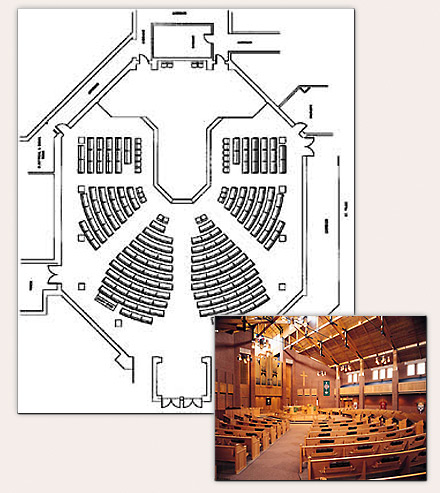
We see Low Christology reflected in the church architectures which bring the altar down toward the people and even into their center, as it were. It tends to have a more semi-circular design with the activities around the altar being brought physically and psychologically closer to the people. The circular-style seating also promotes much more of a feeling of community and connection with fellow worshippers. The warmth of this sort of arrangement contrasts the austerity of the high cathedrals of Europe.

In art, we find depictions of the temptations and suffering of Christ looking like suffering. No longer does the art look like mild discomfort or a slightly bad afternoon, but the agony described in the gospels.

I recently watched the 6-hour Jesus of Nazareth movie from the 1970s, and was blown away by how the actor's facial expressions are almost robotic or trancelike. This represents the ideology of the directors or producers - Jesus could barely crack a smile. He was remote and disconnected from his disciples. He was blank or sober in expression much of the time. I guess he was busy being Divine.

Contrast this with the made-for-TV movie entitled "Jesus" released in 2000. Jesus smiles, dances, laughs, is shown chanting in the temple with the "law" on his forehead according to tradition, teases his cousin John, feels insecure, loves and goofs around with his disciples, and plays with the children.
In Gethsemane He claws at the grass, and some the temptation is depicted as a struggle to stand strong in his path as Satan offers ways out of the coming torture and assures Jesus that His efforts will be in vain. I really cared about this Jesus and felt conflicted and torn by "Satan's" arguments.

The production sought to bring us into Jesus' experience, and Him into ours.

I didn't cry when the 1970's movie Jesus was crucified. It was an awful intellectual exercise to watch, but I had no personal attachment to the figure. But in the 2000 movie, I bawled my eyes out. I had LOVED this Jesus. I was devastated. A precious, beloved mentor was being unjustly tortured and killed before our eyes. It seems to me that this emotional response to Jesus' crucifixion is far more appropriate than a merely intellectual dismay and distaste.

While the Gibson movie certainly didn't shy from showing incredibly hideous torture in all it's physicality, it failed to generate in me a feeling of connection to the figure on the screen before the torture started. Again, I spent most of the movie in a state of horrified fascination---in an intellectual and analytical response---critiquing the scholarship and almost finding a morbid humour in how "horrible" advanced to insufferably hideous, to ridiculously horrendous. The only times I wept were when humanity, in efforts to support and comfort Jesus, broke through the relentless torture. Otherwise, it didn't bring me into my heart at all. I stayed in my head, just to survive.

So, what is the thing about High Christology and Low Christology? Is Low Christology "better" than high Christology?
I don't think so. I think separation of Human and Divine is harmful, either way you slice it.
If we make Jesus too human, he becomes our buddy, our yes-man, or our "sweet" friend who is essentially a powerless wuss.
We need to really get it in our very blood that Christ is Divine and human, Human and divine. They don't cancel each other out. They aren't mutually exclusive.
I think this is hard for us. I think we tend to be out of balance with it, and it takes a lifetime to "get-it-together" or see that they are One.
God with us.
GOD with us.
God WITH us.
God with us.