Showing posts with label clutter clear. Show all posts

Tuesday, December 18, 2018

Principles of Clutter Clearing 3: Observe Your Work Style

I wish I could say that there is one perfect formula for how to organize, and if you just implement it, your life will be all better. 

But my experience is that each life is different. Each job must be tailored to the specific strengths and limitations of each person and situation.  So a big part of what we do is to assess how you are already using your space and then adapt and create ways that support you moving towards what you desire.
  
We look at what you are already doing, how you are doing it, what your goals are, and what habits or physical limitations keep you from your desired outcome.

(Frequently used items should be in easy reach. Store rarely used items on the top shelves, have a sturdy step-stool handy, or in some cases, do not use the top shelves at all.)

While there are general principles that guide how we help you organize, each one must be flexible. Each one has to respond to the client and the space.  Each one guides the decisions we make taking into account all the other principles, the client's work style, and the space we are working in.

(Tall people have their own challenges with standard-height counters.)

One client, let's call her "Emily," has a very visually motivated work style.  She responds to what she sees needs doing, and doesn't tend to get to things that are out of sight.  As an example, for Emily, seeing a broken toaster would bump her into ordering a new toaster, whereas seeing, "order a new toaster" on a list might leave Emily feeling stuck. Emily had written plenty of lists in her life but wasn't getting things done. So we adapted to her actual work style.

In Emily's case, how she worked clashed with the Feng shui principle of having everything tucked away and serene at the end of the workday. She discovered that if she stacks visual cues in her workspace, she plows through her to-do "lists" in a much speedier fashion.  Now she sets up her workspace each night with visual cues for the next morning, and now has little trouble getting started or getting through. She ignores the rule saying everything should be tidied at the end of the day in order to honor her need for visual cues.

So don't get bogged down in  organizational "rules." Be sure to adapt them according to how you actually work!  The "rules" are there to support you in getting where you want to go. They are not there to be one more thing you have to implement perfectly. "Perfectly" means adapting the concepts to work for you, based on how you already work.  It's magical.

Principles of Clutter Clearing 1

Principles of Clutter Clearing 2: Store Like Things Together

Okay. This one is easy.

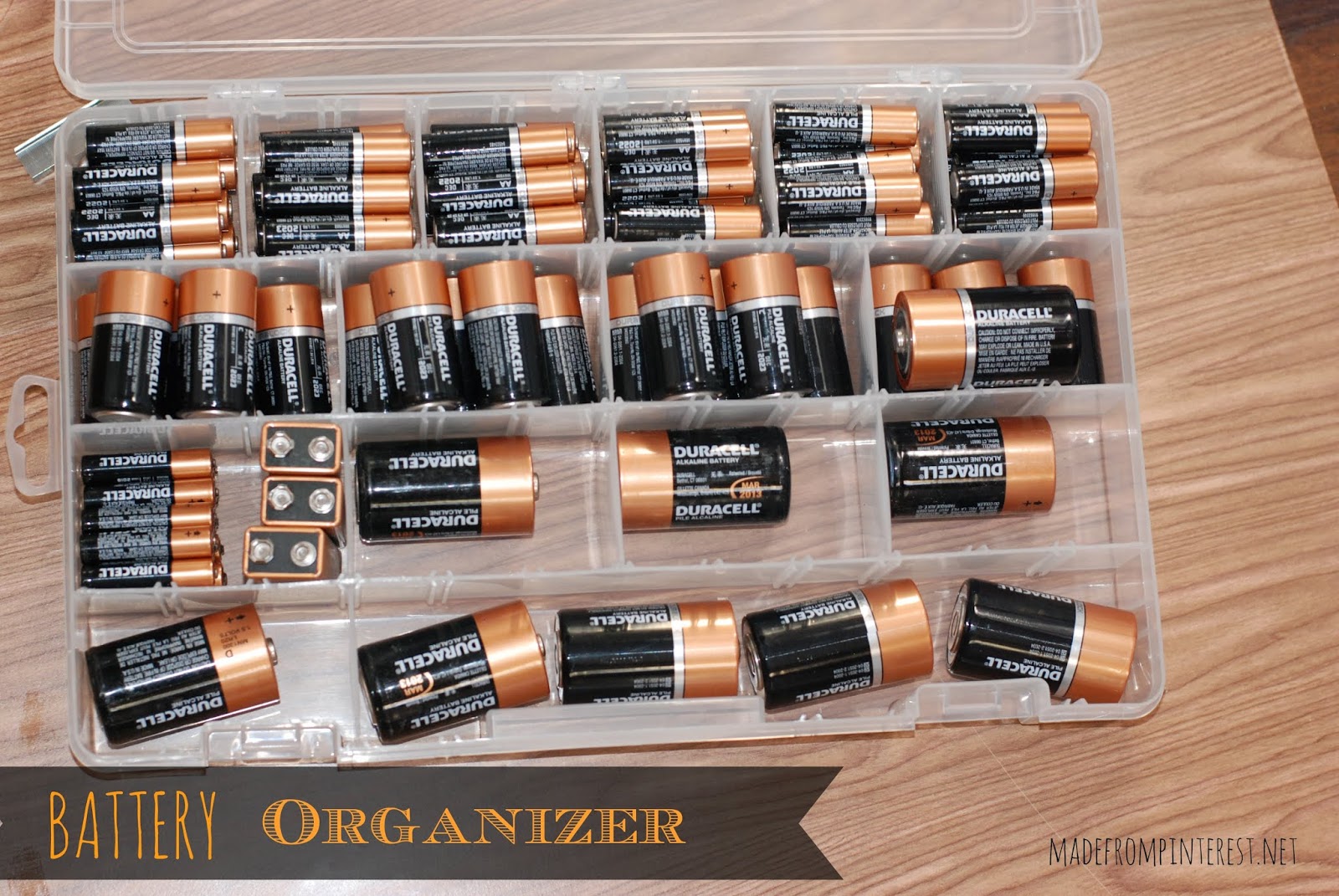
It just makes sense to store your batteries with your other batteries, or your light bulbs with your other light bulbs. It makes sense to store your candles all in one place, or your hardware together in a certain area (sorted by type and easy to find.)

Then when you need whatever it is, you know exactly where to look.

But a lot of folks, in their rush to get through their days, just put things away "wherever", and then later can't remember where on earth they stashed them.

"Oh, I wondered what happened to that," or, "How did that get in there?" or, "Is THAT where I put them?" or, "I just bought more, and then I find the missing ones," ---these are the sorts of comments I hear all the time.

In a recent job, my client lived in an area that has frequent power outages. She kept a lot of candles, which I found all over the place. There were some mixed in with stationary and envelopes (which were also stored in several places), some in with her Christmas decorations (also scattered), and some, strangely, in with her hammers and nails.

Eventually, we got all of her candles in one location, along with her matches, candle holders, and flashlights. Now, the next time the power goes out she has everything she needs all in one place.

We also dug out lots of batteries, many of them expired. We settled on one place where they will now be kept, and now she knows just where to look when she needs batteries. (For those who need help remembering where you put things, there are apps for that, like Sortly, which has a free home version.) She also now knows how many of which kind of batteries she has; (all expired ones have been discarded).

We found a coffee can full of mixed hardware. We also found many baggies of screws, bolts, nuts, tacks, S-hooks, eye-screws, drapery hooks, etc. All of these separate little containers are now sorted into labeled drawers in one hardware unit. It is now easy to put things away with other like things, and easy to find a specific item when needed.
Save yourself time and money by keeping like things together in one place. You can do it!

And by the way, if you "can't" do it, you are not alone. Life has only so many hours, and many people don't leap into organizing things the first free minute they get.  That is why there are professional organizers like Moore Magic Organizers to support and accompany you through the process. You can have the better home you desire without the tedium. Give yourself the gift of organization.

Sunday, December 9, 2018

Clutter Clearing as a Spiritual Practice - Part 3

Follow-Through

As I assist my clients, one of the main things I find myself doing is making note of what sorts of things are piling up, and why.

A big pattern I am seeing emerge is a lack of follow-through.

For most of us, a common pattern looks like this: we come in the door with an arm full of stuff and set in on the first available surface. Then we might run immediately to the bathroom or answer a call or text (or both at the same time), or respond to a pet or child or spouse, or otherwise rush to prepare for the next obligation in our overly busy day.  And while we intend to follow through on the mail sorting, and/or putting away the shopping, and/or putting away the random possessions that are returning to the house, we actually rarely get back to putting away that latest pile of stuff lying on whatever surface is nearest the door.

This is such a common dynamic for my clients, I am now surprised when I enter a home and don't find the inevitable pile of unprocessed mail, flotsam, and jetsam somewhere near the main entrance.  It takes mindfulness and a certain amount of self-discipline to return and process those things, and honestly, most of us don't often have the disposable time.

For myself, I have had to build into my expectations and time-budgeting the intention to process all that stuff shortly after getting home, and slowly this behavior is becoming a habit. Instead of shifting into the next gear the minute I get in the door, I choose to stay with all the things I've just brought in the door until they are all processed. Mail gets sorted into instant recycling, instant shredding, and the place on my desk where bills and such go to await my desk time. Groceries and shopping items get put all the way away including all the bags and receipts.

Done. All done.  It is a wonderful new pattern.

There are always days when I get distracted or way-laid or am short on time. Those days I often walk into our kitchen later in the day to find unprocessed stuff still sitting on the table.  Of course, there are those days!  But building the habit and intending to maintain it helps me reduce their number a great deal. (Also, we live in a tiny space, and there simply is no spare flat surface for dumping. We NEED the kitchen table for too many uses, so we have to keep an eye on the secondary dumping spots as well, which have a tendency to collect items moved quickly off the table. These locations---that space between the books and the next shelf, that corner of the desk in the next room---can collect unprocessed junk just as fast as any primary dumping spot. But the complete shortage of space certainly encourages better habits in managing the little we do have.)

This lack of follow-through can show up with dishes sitting in or near the sink, with laundry on the floor or near the laundry basket, with piles of items near the stairs waiting to go up or down (which we pass repeatedly without actually bringing them along). We have the intention to be tidier.  But we are missing some key step between our intention and our actual follow-through.  All too often the lack of follow-through results in a mound of neglected tasks still awaiting our attention. And as that mound grows to a mountain, the very size itself becomes a deterrent.

I don't think the lack of follow-through is necessarily laziness.  I think sometimes it is fueled by a habit of rushing, or perhaps it is some rebellious "I don't want to" left over from childhood.  Sometimes when I walk in the door, my brain decides I am "done" and I go straight to resting or playing, forgetting to finish the final steps of returning---the equivalent of the child repeatedly dropping the coat on the floor (though at age 57 I do at least hang up my coat). It is certainly a lack of mindfulness---not an immoral thing per se, but not something that benefits me either.  My auto-pilot just isn't very enlightened and I am often quite simply tired.

And yet it is when I am tired that staying present and completing the tasks of follow-through feel spiritual. Not only does it take mindful presence and a kind of surrender, but it also requires that I refuse to rush and to give my future self the gift of a clean and completed space.

There is some connection between good personal self-care and good care of our spaces. It is not linear or pure or black and white. Beautiful, wise, and creative people can be found inhabiting all sorts of spaces, from the very chaotic to the very ordered.

But for me, there is something spiritual about taking care of my surroundings, be they mine or simply a public washroom I may use. It feels like respect and care for the next person to enter the space.  It is an act of care for my future self at home and an act of care for some traveler whom I may never meet in the public space. They are connected for me. It is a way of living the Golden Rule, to show respect for the one who will follow me. It makes my soul feel good.

Follow-through. That thing the gym teacher harped on about. It turns out it is important in all parts of life, not just tennis or baseball.  Even if you are not interested in leaving the public washroom cleaner than you found it, do your own self the service of following through on intended tasks at home promptly. Don't leave them until "later" unless you are actually good at returning and finishing the job in a reasonable amount of time. (Several weeks is not a reasonable amount of time.)

And as you succeed and fail and succeed again, be kind to yourself.  This stumbling and wavering and returning to the plan again and again is exactly what the process looks like.

For the other entries in this series, see below.

Clutter Clearing as a Spiritual Practice - Part 1


Sunday, August 20, 2017

Clutter Clearing as a Spiritual Practice - Part 2


Releasing

A spiritual practice is an activity undertaken on a regular basis for the purpose of inducing spiritual insights and encouraging spiritual growth.

So ... clutter clearing ... as a spiritual practice?

It can be.

Think about it:

Clutter clearing invites us to release things.

I have seen three things that block us from releasing things back into the universe

1. A sense of responsibility for the item.
2. The fear that one might need or use the item in the future. And
3. obligation or sentimental attachment to the item.

1) A sense of responsibility
Some clients have trouble releasing items because they want to know what will happen once they are out of their keeping. There is a sense of responsibility to see that the items "get into a good home" or are otherwise properly cared for. (This is admirable, but too often is harming the client's ability to get free.)  

The spiritual practice asked of these clients is TRUST. Can we trust that the universe (God/Providence) will get the item to its proper place? Can we let go of feeling responsible for the item's future (without any shame or self-doubt?)  Can we let go of worry about the item, setting it and ourselves free, and trusting that all will be well? 

2) The fear that one might need the item in the future.
Some clients have trouble releasing items because they are uncertain whether they might need the item in the future. There is an unwillingness to let go of even long-unused items in case they want it later.

The spiritual practice asked of these clients is also TRUST. Can we trust that the universe will provide what we need when we need it? In this abundant culture, with flea markets and Amazon and community swaps and Freecycling, can we believe that we could probably find just the thing we need in the future, should the need arise? 


"Then Jesus asked them, 'When I sent you out without a purse, bag or sandals, did you lack for anything?'  'Nothing,' they answered.  Luke 22:35

3) obligation or sentimental attachment to the item.
There is nothing wrong with having a sentimental attachment to our possessions. It isn't so good if the attachment begins to dominate what is best for us. Sometimes we have items we do not enjoy but feel unable to release due to their origins.  Perhaps something was a gift from a loved one or belonged to an ancestor, and letting it go feels uncomfortable, even though we don't actually want it.

The spiritual practice in relation to sentiment and obligation is "saucha."  Saucha is a word from Sanskrit which means a purity of focus or clarity of vision. Saucha pulls us back to our core self. When we are grounded in our core, we can discern most clearly what serves us spiritually.   Items of sentiment and obligation can be the most sticky and difficult to release. Yet in our deepest core, we know that we don't need to remain attached to anything physical for our wellbeing.

Rarely do we have to endure the loss of all our most treasured possessions.  Only those in massive fires or earthquakes, or refugees from war and famine, may suffer the loss everything they own.  However, it is a healthy practice to be willing to release everything that burdens us or stands in the way of our best life.

When it comes to items we hold due to obligation we must ask ourselves, "Would I want someone I love to carry around something they no longer need or use simply because they fear to hurt my feelings?" If our answer is "No," we must trust our friends and loved ones to be as wise. Let it go! (I don't want anyone to feel obliged to hold on to some unneeded item just to protect my fragile ego. God willing, my ego is far more resilient than that.)

The preceding are just a few examples of how clutter clearing invites us to do spiritual work. Try it, and you may find that the regular examining and releasing of physical items can help you feel clearer and lighter in non-physical ways too.

To be continued.

Clutter Clearing as a Spiritual Practice - Part 1

Too Much Stuff


I have been clutter-clearing since I was a teenager, probably since I was born.

I have been a professional clutter-clearer since 2002.

My mentor clutter clearer told me that 90% of my job would be counseling.

She told me that my clients' biggest challenge would be shame---shame over having so much stuff, shame over the stuff being "out of control", and shame over the apparent inability to deal with it.

She was right.

I don't think the shame is deserved---not at all. In fact, I think it is part of the problem.

But in a culture increasingly ready to call someone a "hoarder", it takes extra courage to ask for help. I admire my clients for that. It takes courage to face a problem for which we are ashamed (unjustly). It takes a certain spiritual maturity to be ready to sort the old from the new, the broken from the whole, the no-longer-needed from the necessary.

Our north-american culture has an overabundance of STUFF.  We get gifts and give gifts all the time. Then we feel obliged to keep them. And everywhere we go, someone is trying to sell us something new, or cute, or something that will magically fix our life, and we fall for it.  Again and again.

When we open our mailbox, stuff pours out. Most often it is advertising---special offers and discounts on things we might need, or feel we might need, or read, or use...some day....

Our culture inundates us with stuff. And who has the time to sort and decide about it all? So we set it aside "for later," into another pile of stuff we intend to get to "when we have time."

The bigger the space we have, the more likely it is to fill up with stuff that we intend to get to. It happens faster than we can imagine.

Yet every client I have helped is NORMAL. Because we all have this struggle in our culture, and only a few of us have the time, AND energy, AND mindset to keep continuously processing all that stuff OUT again.

I have needed help with my stuff, so I do not judge. I am an expert due to a lifetime of necessity. Most recently I had to downsize from a three-bedroom home to about 100 sq. ft. (To move in with my college sweetheart who had a fully furnished 400 sq. ft. unit in Manhattan.) It was HARD. It hurt! But it was worth it. I survived. In fact, I'm thriving.

But still, clutter-clearing as a spiritual practice?

Oh yes.

Read on....