Showing posts with label Theodicy. Show all posts

Sunday, March 15, 2015

Dealing With Despair - sermon March 15

“Why Is My Pain Unceasing?” - Dealing With Despair
Rev. Alison Longstaff, March 15, 2015
Bath Church of the New Jerusalem
Jeremiah 15:15–21, Matthew 16:21–28, DP 214


Why is my pain unceasing, my wound incurable, refusing to be healed?

One nice thing about pain is that it feels so good when it stops.

In our Scripture readings, we heard a lot about suffering.  We heard a pain-filled cry to God to end the suffering in Jeremiah.  In the gospel reading, Jesus is warning the disciples about the terrible suffering he will endure.  Peter objects, and Jesus shouts at Peter, “Get behind me, you Satan!” in a shocking, very un-Jesus like moment.  He says, “You are a stumbling block to me; for you are setting your mind not on divine things but on human things.”

Peter was the voice of the tempter when he declared that such suffering and death should never happen to Jesus.  Jesus knew it was imperative to focus on the spiritual work about to be accomplished and not on the suffering.  He had to focus on His Divine mission and not be distracted.  Perhaps Peter was the voice of the demon attacking Jesus, trying to convince Jesus to opt out of the suffering.  This would explain the intensity of the rebuke.

Jesus had to keep his eyes set on the Divine, to accomplish his mission.

Life on this earth includes suffering.  Even here in North America, with our insurance policies, relative wealth, and myriad safety measures, we can’t seem to escape suffering.  We often think we shouldn't have to suffer.  We keep creating more ways to protect ourselves, as if constant comfort and total security were the answer to all our problems.

So why are we still so restless and unhappy?  Some of the countries that rank highest for overall national happiness are places like Nigeria and Bhutan.  What’s that about?  Nigeria suffers from extreme poverty, and many people live in mud huts.  How can they possibly be happier than us?  Well, it seems they have a deep reliance on God.  They are a very Christian country, and they live their faith in every way they can.  They are desperately poor, yet they sing and pray and share the little they have with each other, and they are happy.

Toronto journalist Jonathan Power interviewed Olusegun Obasanjo, a Nigerian who became a Christian and a preacher after being unjustly imprisoned.  In his three years of captivity, Obusanjo became a sort of chaplain to his fellow prisoners. He says, “The time I had real joy in my life was when I was in prison.  I felt then that there was just God and me, and my fellow prisoners whom I must try and help." (Power, 2003)  Extreme hardship robs us of everything … but God.  Perhaps this is why some of the most loving and deeply spiritual people are also people who have suffered great hardship.

In the midst of the deepest suffering God becomes all we have left, and this breaks ground for a deep and rich faith to grow.  I’m not saying we should all discard our current lives and go live in a third-world country so as to really suffer so we can experience God. Suffering will find us, no matter where we live, nor how much money we have.  I am saying that it is good to remember that suffering can be our greatest teacher.  God wouldn't allow anything to happen if it didn't serve some purpose for good.  So even the painful times in life—perhaps especially the painful times—are carefully overseen by God to deepen us and eventually bring us joy.

My one objection to books and philosophies like The Secret is the way they can promote the idea that we are solely responsible for what happens to us in our lives.  The idea is that if we cultivate a good attitude, we invite good things into our lives, and conversely that we invite misfortune by having a bad attitude.  The logical conclusion to this is that if we just work hard enough to have a great attitude, nothing bad will happen to us.  But if that were true, those Indonesians and Japanese must have had terrible attitudes to invite such massive tsunamis onto themselves.  The Hebrew nation must have somehow invited the Holocaust. Every victim of every tragedy could be blamed for their misfortune.  Such a belief might give the rest of us some sort of security, but I can’t believe in a God or universe that works so simplistically (and harshly).  We mortals are simply not that powerful.
 
“It must be their fault.  If only they were positive like me, they’d be okay,” is the underlying thinking  when we judge victims of hardship and illness.  This thinking is problematic, in that it promotes a strong reliance on our own efforts for “salvation”, and there's no mention of reliance on God (or Spirit or Higher Power or anything outside of oneself).  I understand the appeal of this idea.  But it falls flat whenever we come up against anything more powerful than our own positive thinking.

My mother lived in chronic physical pain for many years of her life.  She had fibromyalgia and rheumatoid arthritis and depression, which meant that everything hurt, inside and out.  She was on all sorts of pain medicines, which only helped a little, had their own strange side-effects, and caused other problems.  I don’t know how she managed.  I can’t handle chronic pain for even a day.  I get grumpy and whiny and can be very impatient when waiting for my next dose of pain reliever.  She had chronic pain for over twenty years!  Did I mention that she also got regular migraines?  She tried every treatment in the world, from steroids to vitamins to acupuncture to moose meat, and nothing helped.  She was told again and again that it was all in her head and that she “should” be happy.

She died in 2008, in terrible pain to the bitter end.

I loved her.  It was terrible to watch her suffer.  I admit that sometimes I got impatient with her.  I thought, “Surely she can do something differently!”  I judged her for not trying hard enough, and for not trying the right things long enough.  My judging came from how hard it was to see her in such pain. 

But my judging never helped her. My impatience never helped her.  No one’s judgment or “should”s helped her.

Again and again, the best and only thing I could do for her was to love her to bits, and spend time with her, and believe with my whole heart that God had a plan.  Period.

Have you ever heard someone say, in the midst of some awful situation, “I suppose God has a lesson for me,” as if he or she could stop the suffering if they could simply figure out what the lesson was and learn it?  I don’t think God works that way.  I don’t think God ever sends suffering to teach us a lesson.  I think God allows it sometimes, only when He can also bring some long term good out of it for everyone involved.

Did my mom suffer for over twenty years because there was some lesson she was refusing to learn or because she didn't have the right attitude?  I can't believe that.  I know she did the best she could.  She got dealt a rotten hand.  She didn't invite her pain onto herself any more than she invited the childhood abuse she suffered at the hands of her father—any more than my classmate’s two-year-old son invited death from liver cancer onto himself either. 

Sometimes terrible stuff just happens.

Yes, a positive attitude can greatly improve certain aspects of our lives; it can improve our coping, and can spin off some terrific side effects.  Optimism and hope are our wings, and when we have them, they lift us up and over a multitude of life’s hurdles.  But sometimes, through no fault of our own, our wings get plucked or broken.  Sometimes a hoard of locusts swoops down on our rich and thick harvest of positive thinking and in a heart-beat, strips it to dead stalks.  Sometimes we are left walking or crawling down life’s muddy road, not flying, experiencing every bump and ditch and thorn and mud puddle.  “The rain falls on the just and on the unjust,” says God in the Gospels.  Or, to quote contemporary wisdom, “Shit happens.”

So we must set our minds on divine things, and not on human things.

There is so much in this life over which we have no control.  There are all sorts of forces at work around us, and we are far less powerful than we think. Our thoughts are not God’s thoughts.

We want a happy, comfy life now.  God wants us to have a happy, comfy life for eternity

From The Divine Providence by Emanuel Swedenborg, passage number 214:
The Lord’s Divine Providence pays attention to things that matter forever, and pays attention to short-term things only so far as they work in unison with the things that matter forever.  Short term or temporal matters usually have to do with earthly wealth and status, which is fame and fortune in the world. But what matters forever is our spiritual well-being and our spiritual character, which have to do with our becoming ever more loving and spiritually wise—these impact our eternal happiness.  We mortals see the worldly values of wealth and social standing as disconnected from our eternal happiness, but the Lord sees that they are connected.  And so the Lord’s Providence must give our eternal well-being priority over our earthly fame and fortune, until they work in unison.

We are part of a great tapestry.  Stuff that looks bad to our eyes now is allowed to happen because God sees a bigger picture.  But don’t forget, God isn't some cold, distant artist.  When we suffer, God suffers along with us.  S/He knows what it is like to be a mortal.  He was one, in Jesus.  Jesus suffered to bring a much better outcome for every one of us down the road.   And in the very same way the disciples couldn't see why Jesus allowed Himself to suffer, we often can’t see why we or our loved ones are allowed to suffer.  We can’t see God’s plan, but it is there.

Bad things happen, and not all the positive thinking in the world can save us from it.  No one is that powerful, no matter what we'd like to think.  All twelve steppers can tell you that powerlessness is the first and most important thing to learn.  We have to embrace and face life on life's terms, not ours.  Facing our powerlessness throws us finally and completely into God’s arms.

“Why is my pain unceasing, my wound incurable, refusing to be healed?”  Set your mind on divine things, and not on human things.  Spiritual growth or personal growth involves finding our relationship with suffering, not avoiding it.  Why else would God invite us to take up the cross to follow Him?  Jesus fought through temptation after temptation on his journey to the cross.  He showed us the way.  AND He showed us that it will come out all right, no matter how hopeless it looks along the way. 

God loves us desperately.  S/He doesn't want us to suffer.  But sometimes the most loving thing He can do for us is to let us have our experiences, good and bad.  Eliminating the struggle for us eliminates the joy and triumph we will feel when we finally arrive at the finish line.  Suffering calls forth qualities in us like endurance, stamina, and patience. It frequently teaches us compassion and opens us up to the Holy Spirit.  It is like spiritual roto-tilling, breaking up old and set things inside us, turning us upside down, and making room for new and wonderful things to grow.

Suffering helps us to appreciate more fully the truly good things in life.  It also teaches us how precious are the times of peace and good fortune.  We no longer take them so much for granted.  Suffering deepens us, whether we like it or not.  And it reminds us who’s really in charge of the universe, and that it is not us.  It teaches us to trust in God; and to set our sights on divine goals and not on human ones.

For those of you who are in the midst of suffering, take heart.  Every single thing in life is in God’s hands.  Not one hair of your head falls without notice.  No matter how long the night may seem, the spiritual morning always brings comfort and joy.  You are intimately loved and cared for, and every single detail of your life is being woven for your eternal blessedness.  Even if you cannot see it; even if you rail against God for your suffering, it is all covered.  Your spiritual insurance policy is in God’s Divine Providence, which is wise beyond all human wisdom and compassionate beyond all human understanding.

All manner of things WILL be well.
           
 Why is my pain unceasing, my wound incurable, refusing to be healed?
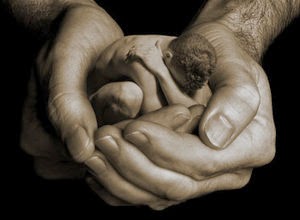
“…They shall not prevail over you, for I am with you to save you and deliver you, says the LORD.
 I will deliver you out of the hand of the wicked, and redeem you from the grasp of the ruthless.” (Jeremiah 15:20-21)
“Be of good courage, and He shall strengthen your heart, all you who trust in the Lord.” (Psalm 31:24)
Then surely goodness and mercy will follow you all the days of your life;
And you will dwell in the house of the Lord forever. (Psalm 23)
Amen

Revised from a sermon preached August 2008
Reference: Nigeria: Happiest Nation on Earth?
by Jonathan Power, Published on Monday, December 29, 2003 by the Toronto Star

The Readings
Jeremiah 15:15-21
O LORD, you know; remember me and visit me, and take vengeance for me on my persecutors.
In your forbearance take me not away; know that for your sake I bear reproach.
Your words were found, and I ate them, and your words became to me a joy
and the delight of my heart, for I am called by your name, O LORD, God of hosts.
I did not sit in the company of revelers, nor did I rejoice;
I sat alone, because your hand was upon me, for you had filled me with indignation.
Why is my pain unceasing, my wound incurable, refusing to be healed?
Will you be to me like a deceitful brook, like waters that fail?
Therefore thus says the LORD: “If you return, I will restore you, and you shall stand before me.
If you utter what is precious, and not what is worthless, you shall be as my mouth.
They shall turn to you, but you shall not turn to them.
And I will make you to this people a fortified wall of bronze;
they will fight against you, but they shall not prevail over you,
for I am with you to save you and deliver you, declares the LORD.
I will deliver you out of the hand of the wicked, and redeem you from the grasp of the ruthless.”

Matthew 16:21-28
From that time Jesus began to show to His disciples that He must go to Jerusalem, and suffer many things from the elders and chief priests and scribes, and be killed, and be raised the third day.
Then Peter took Him aside and began to rebuke Him, saying, “Far be it from You, Lord; this shall not happen to You!”
But He turned and said to Peter, “Get behind Me, Satan! You are an offense to Me, for you are not mindful of the things of God, but the things of men.”
Then Jesus said to His disciples, “If anyone desires to come after Me, let him deny himself, and take up his cross, and follow Me. For whoever desires to save his life will lose it, but whoever loses his life for My sake will find it. For what profit is it to a man if he gains the whole world, and loses his own soul? Or what will a man give in exchange for his soul? For the Son of Man will come in the glory of His Father with His angels, and then He will reward each according to his works. “Assuredly, I say to you, there are some standing here who shall not taste death till they see the Son of Man coming in His kingdom.”

The Divine Providence 214
The Lord’s Divine Providence pays attention to things that matter forever, and pays attention to short-term things only so far as they work in unison with the things that matter forever.  Short term or temporal matters usually have to do with earthly wealth and status, which is fame and fortune in the world. But what matters forever is our spiritual well-being and our spiritual character, which have to do with our becoming ever more loving and spiritually wise—these impact our eternal happiness.  We mortals see the worldly values of wealth and social standing as disconnected from our eternal happiness, but the Lord sees that they are connected.  And so the Lord’s Providence must give our eternal well-being priority over our earthly fame and fortune, until they work in unison.

Sunday, February 22, 2015

"Theodicy" (Theo-what?) - Sunday's discussion

"Theodicy"  (Theo-what?)

Church was cancelled AGAIN.

The ice made the roads too treacherous for our guest speaker, Rev Dr Reuben Bell, to make it up to us to preach.  So church was cancelled, and I was prepared to sit alone in the church with candles and Gregorian chant playing on the stereo, and praying.

Well it turns out that since worship had been cancelled the two previous Sundays, the longing for spiritual community won the day for several locals plus two not-so-locals!  As we had such a small community and no organist, I opted for a gentle discussion group with the seven of us.

I opened the Word, led us in prayer, read a little Scripture, and then after a few other discussion points, opened up the topic, "Why does God let bad things happen to good people?"

In case anyone cares, that HUGE spiritual question is called the question of "Theodicy," which is the attempt to understand how God can be good and yet there is so much evil in the world.


So we reviewed some of the ways people answer this question. (Note:  This is the way PEOPLE answer this question.  These are not necessarily "right" answers.)  Each one of us must answer this for ourselves and we often travel around between these or combine two or three as we struggle to make sense of this question.

  1. God sends bad things as a punishment for sin. 
  2. God sends bad things to test our character, or to show us what we are capable of
  3. God allows bad things to happen because we need to learn something.
  4. Bad stuff just happens and God isn't all that involved down at our level.
  5. There is no God.
  6. God doesn't cause evil nor prevent evil, but is right there with us walking through the suffering.  God's job is not to protect us from bad things happening to us but to be with us even in the heart of them.

We looked at each "solution" and reflected on the different ideological landing places.  I talked about some of the psychological underpinnings of these various solutions,  with each one making sense when we understand the sort of thinking or perspective that drives it.  

1. For example, deciding that God is punishing us for our sin comes from the sort of reasoning that causes a child to think they caused their parents' divorce.  It is connected to a feeling of dependency and powerlessness. We feel powerless in the face of the tragedy and want some sense of control.  We decide either God is Bad or we are, and the idea that God is evil is just too terrifying, because then we would be utterly helpless in a hostile universe.  In this case it is more comforting to think that we are to blame.  Because if we are to blame, we can maybe do something to make things better.  We still have agency---we still can have a way to put things right.  

2.  "God sends bad things to test us or show us what we are capable of."  We leaned more towards the "help us see what we can do" idea than the "God is testing us" idea.  (Besides, an omniscient God wouldn't need to test us.  And God is not passive aggressive, and does not need to grade us nor to create martyrs.)

3.  "God allows bad things to teach us something."  At least one member liked this one.  I certainly have heard such sentiments as, "I wish I would learn what I need to learn from this so it would pass."   Notice that the idea of "needing to learn something" gives us a feeling of some control in a tough situation.  In that case, if we just "learn" whatever it is we need to learn, the bad situation would go away, right?  I knew someone with a chronic illness who said fairly often, "I guess I haven't learned what I need to learn yet." Certainly all sorts of good learning and good secondary experiences (human compassion, human cooperation) can happen around and in the wake of tragedy.  But I am not sure that our learning is ever the primary reason God would allow our suffering.  

4.  "Bad stuff just happens."  God neither causes it nor prevents it.  This answer lets God at least be neutral, if a bit detached from human affairs.  This God has left us on our own, or has different priorities than we do. (Some could argue that this is a typical Swedenborgian conclusion, if we read only the passages that say that God doesn't pay attention to any temporal affairs unless they have a direct impact on our eternal well-being.  It does not take into account the numbers that say that God is aware and present in even the least moment of our lives, guiding and guarding while leaving us in spiritual freedom. Putting these teachings together implies that our perspective on tragedy and suffering and what is allowable is different than that of God's; meanwhile God cares deeply and is intimately present with us in our suffering.  This leads to 6.) 

5.  There is no God.  This is a common and understandable landing place for many of us in the face of deep suffering.  Please don't judge such a person. (To blame someone for losing their faith as a result of terrible loss and pain is just adding insult to injury.)  When one must choose between an incomprehensible, uncaring God or no God at all, many choose "no God."  Until one can see another option, "God cares and helps but doesn't always stop tragedy," the "no God" option makes perfect sense. 

6.  God is present with us in the suffering and carries us through.  God's job is not to protect us from earthly hardships, but to walk with us through them.  There are reasons this conclusion satisfies many theologians and pastors, though it can be small comfort to the one in the depth of suffering. We can remember that Jesus did not protect himself from horrible suffering, but walked all the way through it, even to the point of feeling abandoned by God and a slow agonizing death.  He braved the whole experience without sparing himself one bit, as a way to show he is willing to come with us into the very worst of human suffering, and as a way of saying there is something more beyond.

However, when someone you love is suffering, the best thing you can do is be with them, and ask them what they need.  If chaplaincy training taught me anything at all (and I still often need reminders of this, because the urge to offer comforting words can be so strong) it is the value of the ministry of presence.  What most folks need in the heart of a crisis is company more than quotes, a steady presence, rather than platitudes.  Just be there. Just stand by them. Words are not as necessary as you might think.

Well, this summary of our discussion has turned into a mini sermon.  I have shared some extra things here and skipped some others.  I hope we all came away with new tools and ideas to support us in living into this profound question.

We wrapped up our discussion and shared an amazing tea hour (no coffee).  And we sent each other off with love and wishes for safe travels.

And I will leave it on that sentiment.  Life can be slippery and uncertain sometimes.  May we all go carefully.  And when the worst happens to one of us, may we all take extra good care of each other, and the bruised one most of all.

Blessings,
Pastor Alison