Showing posts with label Communion. Show all posts

Monday, September 21, 2015

Divine or Human? - Communion sermon Sept 20, 2015

“Divine or Human?”
Rev. Alison Longstaff, Sept 20, 2015
Bath Church of the New Jerusalem
Psalm 8; Matthew 16:13-17; Doctrine of the Lord 29 

 I am going to say a big word.  Brace yourself.

“Christology.”
 
We learned lots of big words in seminary.  Christology was one of them. All of those big words annoyed me at first, because I felt left behind whenever someone used one.  If didn’t know the meaning, I felt stupid.  I didn’t want to have to ask, and honestly, in that first year there were so many new words, I got tired of asking what they all meant again and again and again.

Hold on. Here it comes again: “Christology.”
 
Big words are invented for a reason.  They don’t exist just to make some people appear super educated in relation to everybody else, though sometimes it may seem that way.  Big words sum up a complex concept under one name. 

For example, instead of saying, “That flower that represents love and has thorns and sometimes has a long stem,” when we want to talk about one of those things, we just say, “Rose.”
 
So “Christology” is a fancy word that just means “how we understand who Jesus Christ was.”  Was Jesus more Divine or more human?  Was Jesus more Human or more Divine?  This debate has existed since the very beginning of Christianity—yes, all the way back to the disciples.  This debate is summed up under the word “Christology” and the two apparently opposing perspectives are called, “High Christology” and “Low Christology.”  Both perspectives have good aspects and not-so-good aspects.  Listen up.

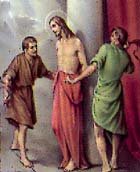
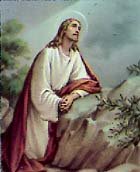
High Christology likes Jesus to be as Divine as possible.  It puts distance between Jesus and the human condition.  Baby Jesus smiles with eternal wisdom from the manger.  Teenager and adult Jesus moves serenely and calmly through his already-wise life.  High Christology art has Jesus looking mildly uncomfortable in Gethsemane and a bit unhappy on the cross.  In movies, Jesus is played with almost no emotional expression. In one movie, his hair didn’t even move when the wind blew. 

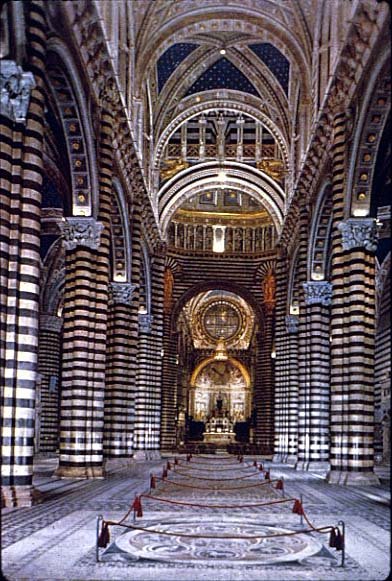
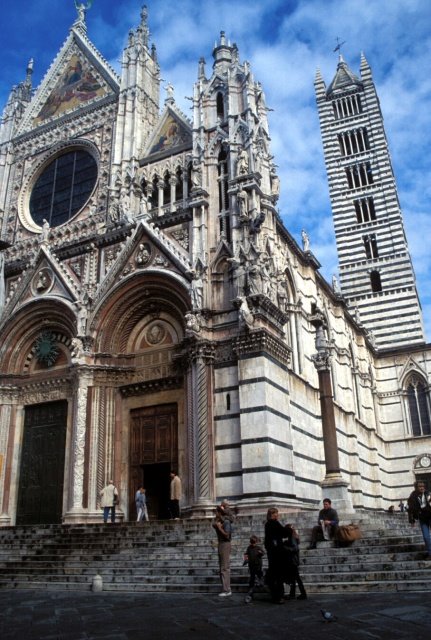
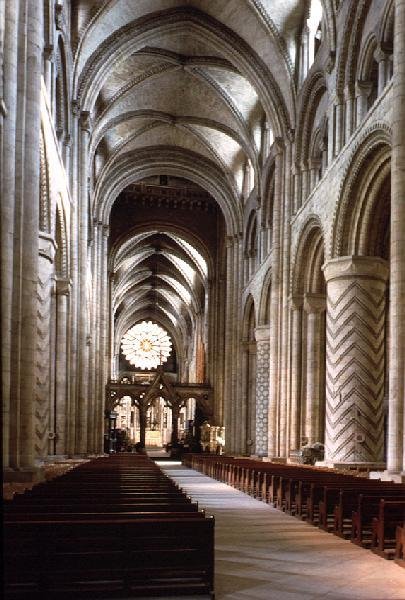
High Christology shows up in the Vertical beam of the cross. The Vertical beam represents the Divine in relationship with humankind.  God is “up there” and we are “down here.” High Christology architecture has lofty pulpits from which the preacher looks down upon the people.  The churches tend to be linear in architecture with straight-backed pews and straight lines.  The buildings are straight and narrow.  There is often high ritual, with incense and statuary, pomp and circumstance—illustrating the exalted status of God as our Divine ruler.  After all, how else does one venerate the King of heaven?  How does one approach the royal court?  What does one wear?  How does one behave?  Disapproving stares teach children and fellow church worshipers to keep themselves in order, because “heaven forbid” one should be poorly dressed or wiggle or cough when the Great King passes by.
 
While the reformation pared down the fancy dress, pageantry, and gilded accessories of High Christology worship in favor of simplicity, nevertheless it still kept God on high and humanity down low. “Worm” theology appears during this time period.  Rather than emphasizing the Glory of God, worm theology focuses on the sinfulness of humans. We are “worms,” therefore sinners, filth, excrement, and nothing but evil in relationship with God.  A lot of shame and guilt and “fear of the fires of hell” enter the discourse at this point.  Corrective doctrine, extreme reverence, and purity of life become the path to salvation.  Striving for perfection in the face of our human depravity become the stark black and white focus of this perspective.  It is so important to be in right relationship with God that service to the neighbor becomes almost irrelevant. It is in there somewhere, but it is not a big focus.

Very few churches are this extreme.  Most have a blend of High and Low Christology.  Do you have any sense of where you would be most comfortable?

The things that I treasure about High Christology is the respect and reverence for all things Holy.  I love the vaulted ceilings and soaring stained glass windows of the ancient cathedrals.  I love how the very movements of the bodies in the high ritual communicate respect and reverence for the Creator.  I love listening to Gregorian chant in a dim and cavernous cathedral. I love the way a great organ work vibrates right through my body as though the earth itself was moved to praise God.
 
High Christology produced some of humankind’s most remarkable buildings. That grandeur—that imposition of the sacred on our senses was born from a focus on the Divinity of God.  Where would we be without our great cathedrals, or even the sacred peacefulness evoked by this graceful and airy space?


A down-side to high Christology is that Jesus can be kept so Divine that his temptations become an intellectual exercise.  Feelings are too human for this most perfect man.  He was born from the Divine, walked around already Divine and went back to the Divine.  This sets up Jesus’s human experience as something other than what we experience, which misses the most fundamental significance of his incarnation. If we push Jesus too high up, there really is no “God with Us.” We must watch out for this pushing away of God. When we hold God far away, religion stays as an intellectual exercise—rather like doing jigsaw puzzles—satisfying in some way, but having little effect on how we live.

Low Christology sees Jesus as right down at our level. With low Christology Jesus is someone just like us, who laughed and cried, was confused sometimes, sweated, bled, and even needed the latrine. In low Christology paintings, Jesus looks like he is suffering.  In the movies he has human feelings and does human things.  He smiles, dances, laughs, and plays with the children. His hair moves in the wind.  And during the whippings and torture and crucifixion, he bleeds and he cries out in pain. Mel Gibson’s “The Messiah” is so very low in its Christology the viewer is wading in the blood and gore. The Divine purpose was so far removed from the story that the resurrection was the merest whiff of an afterthought—it is barely acknowledged.
  
Low Christology is shown by the horizontal beam of the cross.  That beam symbolizes the human plane and human interconnection—“we are all in this together.”  Where the vertical beam represents our relationship with the Divine, the horizontal beam is our call to live in good relationship with each other.  That beam represents Creation, in all its messiness and imperfection and beauty. Low Christology architecture tends to be circular and communal.  If there is a pulpit at all, it is lower or right down at ground level with the people. The circular arrangement of the pews allows worshipers to see each other’s faces as they worship together. 

In Low Christology Jesus is seen as our friend.  He is right down here in the muck with us, and completely understands what we go through in this life.  Low Christology Christianity doesn’t care so much what someone wears to church.  It tends to emphasize social justice and service to our fellow human beings.  There is a strong sense of connection to Jesus as he walked among us—with an emphasis to do as he did and live as he lived.  There is no need to hold God at arm’s length or to feel unworthy or to worry about our sinfulness.  That is not where the energy and attention go.  It goes toward service to the neighbor and toward connection and community as the Body of Christ.  It is not about whether people feel “worthy or unworthy” in relationship to God.  Helping each other is the purpose.

I treasure the warmth and, well, the humanity of low Christology.  I almost never see disapproving stares.  Having spent so much of my life in a very high Christology, the relaxed and kindly lack of perfectionism has been a refreshing and healing corrective for an overly worried and “uptight” spirit.  I love the focus on service and the easing up on the constant self-flagellation and soul-bleaching efforts that was part and parcel (for me!) of feeling forever not good enough, as a result of the long-term effects of my high Christology childhood.

A down-side to low Christology is that Jesus can become so human that we lose any sense of his power to make a difference in our lives (save).  He is so “down here with us” that He is in the same sinking boat with us, unable to calm the wind and waves.  We can make Jesus “just another human,” which loses the most fundamental aspect of this ancient story.  If there was no miraculous birth nor resurrection, he was just a really good guy, but no more special than any other great prophet.  We can become so comfortable with Jesus, that he ceases to be able to perform miracles in our lives, because we have no sense of his Divinity.

The main reason to learn about Christology is that how we understand God affects how God can come into our lives.  Any recovering addict can tell you the powerful effect of asking God into one’s life. No matter what name or face you give that Higher Power, that Love awaits your simple invitation.  God will sweep you off your feet, or move you gently along a quiet river of transformation, according to your need, but you must ask.  God will wait forever for you to ask. A simple, “Yes please,” will invite that extraordinary power down into your ordinary life.

The two beams of the Cross: the vertical beam—Divine, and the horizontal beam—Human.  Only where these two meet do we have that potent point of intersection—when the Divine breaks into our human experience.  That powerful moment, that “Big Bang,” is where it all happens.  It happens every single time we invite God into our imperfect lives.  But if Jesus is too Divine, we won’t let Him near.  If Jesus is too mortal, we don’t believe he has the power to save.

The Divine/Human tension shows up even in the two creation stories.  In Genesis 1, God thinks, things happen, and God is pleased.  It is a sort of remote-control creation—very tidy. Male and females are created in one “poof”.  God thinks, and we are, and it is very good. 


In the second creation story, found in Genesis 2, God is down in the muck, shaping things with the Divine hands.  (Notice, the Divine has hands.) God tries things out, tips his head, and then makes improvements.  It is a process, and it evolves. Humans are shaped from the dust (and perhaps some Divine spittle) and called “AdAM” (dust) because he was made from the “AdaMAH” (dust of the earth).  But the Man is “lonely.” (Did the Divine make a mistake?) So God throws together a solution on the spot.  God creates a woman from a spare piece of the man and fixes things.

Which of these stories would you say aligns with high Christology and which with low Christology?  It is a pretty big difference, and most people are not even aware that there are two creation stories.  And yet the tension between the different ways we understand God is right there, at the beginning of the Bible—one might say, “From our very creation.”

These two general perspectives, these two ways of seeing the Divine, are not meant to oppose each other.  Like the left and right sides of the body, we need both all the time and we function best when they are balanced and working as one.  Like maleness and femaleness, High and Low Christology can often seem to be completely different animals, and it is only from the point of their union that the Divine can burst on the scene with transformation and new life.

The Divine IS Human.  The Human IS Divine.  When we invite God into our run-of-the-mill lives day after day after day, our very ordinary lives increasingly sing of something Divine.  When we allow God’s transformative love to crack us open, we become increasingly ready to say, “Yes please!” again and again to the Divine, drawing closer with each encounter.

As we celebrate the Holy Supper following the sermon, I encourage you to invite the Divine into your life, however you might understand that.  Each one of us that comes to this table understands the symbolism differently.  Whether you believe the elements are truly the body and blood of Christ, purely symbolic, or some version of a blend of those, you are welcome at the table.  You are not just welcome, God waits, God asks, God desires to come into your life through the bread and the wine.  However you understand it, the Holy Communion is an enactment of the Divine entering into its beloved Creation. It enacts the Infinite touching the finite, with all the impossibility of that.  As you feel the bread and wine change your body, know that God desires to change your life for the miraculous, that you might be blessed.


Welcome to Christology.


The Readings
Psalm 8
Lord, our Lord, how majestic is your name in all the earth!
You have set your glory in the heavens.
Through the praise of children and infants you have established a stronghold against your enemies, to silence the foe and the avenger.
When I consider your heavens, the work of your fingers, the moon and the stars,
    which you have set in place, what is humankind that you are mindful of them, or human beings that you care for them?
You have made them a little lower than the angels and crowned them with glory and honor.
You made them rulers over the works of your hands; you put everything under their feet:
all flocks and herds, and the animals of the wild, the birds in the sky, and the fish in the sea,
    all that swim the paths of the seas.
Lord, our Lord, how majestic is your name in all the earth!

Matthew 16:13-17
Now when Jesus came into the district of Caesarea Philippi, he asked his disciples, “Who do people say that the Son of Man is?”  And they said, “Some say John the Baptist, but others Elijah, and still others Jeremiah or one of the prophets.”  He said to them, “But who do you say that I am?”  Simon Peter answered, “You are the Messiah, the Son of the living God.”  And Jesus answered him, “Blessed are you, Simon son of Jonah! For flesh and blood has not revealed this to you, but my Father in heaven has revealed it.”  

The Doctrine of the Lord #29
a.       The Lord from before time, sometimes called Jehovah, took on a human body to reconnect with the human race and turn us back to goodness. 
b.      The Lord turned that human body into something Divine because He was Divine.
c.       The Divine became human by taking on human mortal temptations through that body.
d.      He then completed the uniting of the Divine with that Human by the last and fiercest temptation which was the passion of the cross. 
e.       Step by step, through his life on earth Jesus transcended the merely physical/animal aspect of human nature, and this way united his human body with the Divine within Him. This is the Divine Human, and this is what we call the Son of God. 
f.       This is how God became fully Human, from the most initial elements, all the way down to this very flesh and blood existence.

Sunday, October 5, 2014

Blessed and Broken - sermon October 5 2014


“Blessed and Broken”
Alison Longstaff, October 5th, 2014
Bath Church of the New Jerusalem
Jeremiah 18:1-6; Luke 9:12-17; Heavenly Secrets 2343
           
       Take. Bless. Break. Share.
       Did you notice this progression in our reading from Luke today?
       Take. Bless. Break. Share.         
Whenever we find this progression in the New Testament, a communion is taking place. In today’s reading from Luke, Christ takes the meager offering of loaves and fishes, which is certainly never going to be enough to feed the large crowd; He blesses it and breaks it and gives it to the disciples to share.  And it becomes more than enough.  There is a message in that.
            Take. Bless. Break. Share.
            It struck me, as I researched this story, that this is what we can do in response to God’s gift of life to us: accept it, give thanks for it, break into it, and share it.  Also, this is what the gift of life does to us.  It comes on us and blesses us … and breaks us.           
          Life both blesses us and breaks us.  Loving others blesses us and breaks our hearts.  Living in community, as church and as family, brings untold blessings, and can break our spirits.  Nevertheless, there is something about that breaking that opens the way to a new richness in our souls and lives.
            Many of us here have parts of us that feel broken.  Though we do our best to look fine most of the time, we also hide the parts of ourselves that feel, well, “unsuitable for public consumption.” We all have memories of words and behaviors of which we are not proud. All of us at some point have said the wrong thing and hurt someone else’s feelings. We have all, at some point done the wrong thing and offended someone. For that matter, sometimes we do the right thing, and still someone misunderstands and gets offended.  No one can live in any real community for any length of time and not experience how communications can go wrong, good intentions can result in hurt, and resentments can erupt in sharp words.  Is there any congregation on this planet that has not had one scandal or another based on clashing personalities, conflicting control issues, poorly chosen words, or disappointed expectations?
Nadia Bolz-Weber, a tattooed pastor in Denver, Colorado, made famous for her colorful language and raw honesty, jokes that she thinks her church motto should be, “We will disappoint you.” She believes in reality over naive idealism.  She insists, “Any human community is flawed and will end up hurting people and not living up to their ideals.” So tells each new inquirer, “Listen. I need you to hear me say this: ‘At some point, this church will not meet your expectations. It will let you down. At some point I’ll say something stupid and hurt your feelings.’” She then invites each one to consider at the beginning if they are willing to continue in the community after that happens. “Because,” she says, “when we leave the minute our community disappoints us, we miss out on the way that grace can come in and fill in those cracks that are left behind from our brokenness and our mistakes, and it is too beautiful to miss.” (from the CBC radio show, "Tapestry" Season 20, Episode 3, "The Irascible Pastor") 
     Certainly we have all been offended or had our feelings hurt in this spiritual community or some other.  BUT we have also experienced being held close and cared for when we have been broken apart. That gift: that way a community can hold us together when we are at our most broken is one of the most meaningful aspects of being church together. Think about it. Recall some of the acts of kindness, great and small that have come your way simply because that is what we do.  Recall a time when you realized your small act of service made a difference, and how that felt.
            We are broken and we are blessed by each other. We cannot have one without the other, it seems.           
     In our Hebrew Testament reading we heard about a Potter throwing a pot on the potter’s wheel.  As we listen, the pot becomes deformed under the Potter’s hands.  Anyone who has attempted throwing pots knows how the clay seems to have a mind of its own. Either the clay is too wet or it is too dry, or there is an impurity in it that ends up causing a crack.  One minute the pot is shaping up nicely, and the next minute the clay thins too quickly, or it splits, or flops over from excess moisture. . . .  And the envisioned vessel becomes a broken blob.
            In my life I have often felt not so much like the useful vessel I intend to be but more like a broken blob.  Have you ever wondered if you were just too broken or flawed to ever become the person you dream you could be?
            But notice this: the pot is in the Potter’s hands while the deformity happens. It isn't that the Potter was careless, yet the pot is spoiled.  It isn't the Potter’s fault, and it isn't the clay’s fault either, even though the flaw is inherent in the clay.  This text is not telling us: “Be careful because you too might mess up like the pot.” No. This story is in God’s Word exactly this way because this is how life goes. We will be broken. We can’t help it. We come flawed. That’s not the point. The point is that we are held, known, and loved right through the brokenness and back to wholeness. The text is reassuring us that we are always in the Potter’s hands. He’s never faltered for a minute. We are already being made new.
      We never leave God’s hands. The brokenness is always a gateway to a new and more beautiful plan.
      A famous Leonard Cohen song says, “There is a crack, a crack in everything; but that’s how the light gets in.”  I’ve heard this quote so often, it has become cliché. Nevertheless it remains true. Sometimes the only way the light gets in is through our cracks.
     The cracks open a way for us to learn things we could learn no other way. Babies learn how to walk by falling down. Skiers and skaters learn balance through repeated spills. We learn how to love each other well, by loving clumsily and hurting each other sometimes first. And new pastors learn how to write good sermons only after inflicting some real clunkers on some long-suffering congregations. It is just what the process looks like.
            Besides, we’re the ones that want perfection straight out of the gate, not God.
            God designed a system in which being broken is part of the process.
         Honestly, in this very little denomination, inspired by the writings of a brilliant man, whom some considered a bit of a crack-pot, we of all people should recognize that sometimes the light gets in best through the cracks. Swedenborg saw visions; he talked to dead people; he said there are people living on the moon. But despite his oddness and his unorthodox teachings—many of which still leave us scratching our heads—his writings have also brought healing, enlightenment, and new hope to tens of thousands.  He has opened the Bible in a whole new way.  He has taught us about heaven and hell, the internal meaning to the Bible, about Love and Wisdom, and about salvation for peoples of all faith and all walks of life.
      So let’s hear it for crack-pots! Let’s hear it for anyone who is brave enough to speak their truth into a world that isn't ready to hear it. Let’s hear it for all the ways and means that God devises to help the light break through into our lives.
     After all, Jesus was considered a crack-pot. He certainly was broken for His efforts to speak the truth into an unready world. And He certainly blessed us by His willingness to be broken.  Perhaps that is part of what he was trying to tell us—that we need not fear brokenness. That brokenness is always the path to being made new.
        I think it is in our nature to fear our brokenness. We want to hide it, cover it over, and paint a smiley face on it. We feel sure that it means we are weak, that we are not good enough, that we should be ashamed, that we have failed.  But it is not so. It simply means we are human. It means we are alive.
            Take.  Bless.  Break.  Share.
         Isn't it so often true that our vulnerabilities end up being our strengths?
         Accept your life! Give thanks for it, for it is perfect, no matter how inadequate it may seem. Break into it, live it, eat it up, let it change you. And share the gifts you are given, no matter how meager they look in your hands. In God’s hands they become an overflowing abundance.
     Yes, this life can sometimes break us. But embrace it—all of it—for it is only through the breaking and the eating that we find and share our deepest blessings.
       Amen.
Rewritten from a sermon preached January 28th, 2007, Kitchener, Ontario
Readings
Jeremiah 18:1-6 (NKJV)
The word which came to Jeremiah from the Lord, saying:  “Arise and go down to the potter’s house, and there I will cause you to hear My words.”  Then I went down to the potter’s house, and there he was, making something at the wheel.  And the vessel that he made of clay was marred in the hand of the potter; so he made it again into another vessel, as it seemed good to the potter to make.
 Then the word of the Lord came to me, saying:  “O house of Israel, can I not do with you as this potter?” says the Lord. “Look, as the clay is in the potter’s hand, so are you in My hand, O house of Israel!

Luke 9:12-17 (NKJV)
When the day began to wear away, the twelve came and said to Him, “Send the multitude away, that they may go into the surrounding towns and country, and lodge and get provisions; for we are in a deserted place here.”
But He said to them, “You give them something to eat.”
And they said, “We have no more than five loaves and two fish, unless we go and buy food for all these people.” For there were about five thousand men.
Then He said to His disciples, “Make them sit down in groups of fifty.” And they did so, and made them all sit down.
Then He took the five loaves and the two fish, and looking up to heaven, He blessed and broke them, and gave them to the disciples to set before the multitude. So they all ate and were filled, and twelve baskets of the leftover fragments were taken up by them.

Heavenly Secrets 2343. “And they ate” means they accepted it and made it part of their life.  “Eating,” means accepting and ingesting, and so to make something a part of one’s life. “This is My Body;” and “this is My Blood” means the Lord's Divine Human and the Lord’s Holy Spirit, from which and by means of which come all life and salvation. That is why communion is so sacred. Whether you say “His Divine Human,” or “His Body”, or “His Flesh,” or “the Bread,” or “the Divine Love,” it is the same; for the Lord's Divine Human is pure Love.  It is being from Divine Love that makes something sacred.              

Tuesday, February 18, 2014

Reflections on Communion

Reflections on Communion


In lieu of a sermon last Sunday, (because of the projected storm) we held a "Bible study" around a table of goodies and hot beverages.  It was an experiment, but seemed to go extremely well, and those who gave me feedback appreciated the experience.

I believe strongly in opportunities for us to hear each other as members of one community, and this sort of event gives us that chance.  I get to know my dear congregants better, and they get to know each other better too.  We laugh together, and we become re-humanized in each other's eyes, dispelling any false perceptions or thin layers of fear or judgment that may have settled over some relationships.  It makes things "shiny" again.


So I opened the topic of the meaning of communion. I particularly encouraged any questions, problems, or difficulties anyone might have.  This was the time to air them.  I started by describing my own experience of being taunted for being a "cannibal" by a former Christian.  I had myself always had a bit of discomfort with the "eat my flesh", "drink my blood" language, and this mockery brought that discomfort to the surface for me.  I could explain that I saw it as a metaphor, and that I believe Jesus and the disciples also understood it that way, but if someone wanted to mock, there was only so much defense, because the language is undeniably there.

Besides, if she needed to mock, that was not my problem so much as my own inner discomfort was, and my need was to come to some peace and resolution inside myself.  Her journey is and remains her journey.

"What has your journey with communion been like?"  "How do you understand it?" Were the questions I asked those gathered around the table.  We then went around the table giving each person a chance to respond.

I would like to share some of the observations and insights that came up, in case they add to or inform your own relationship with communion.

No one else had ever considered or been challenged by the "flesh and blood" language nor the idea of cannibalism.  All of the other eight participants, three of whom had not been raised Swedenborgian, had considered the language metaphorical.  One described it as meaning that we must "walk the walk" and "live the life."  Many nodded their heads in agreement with this comment.

One woman (from a minister's family!) said with breathtaking honesty that she had never understood what the communion was about and had a hard time finding meaning in it.  This lightened the room immediately, as it gave everyone permission to admit not understanding, if that was their experience.

One observation that I shared that seemed as helpful to the listeners as it had been to me, when I encountered it (and which came to me from Rev George F. Dole, my predecessor), was this:  That when Jesus commanded that we "do this in remembrance of him.," He was eating a meal with his friends.  He was not kneeling in a special spot in a special place at a special time with a special little piece of bread and little sip of wine.  He was sharing a meal with His friends.  He was communing with them socially and spiritually.

Rev George had observed that the two elements that we consider sacraments---communion and baptism--- are also two essential daily acts necessary for our physical well-being---eating and washing.  Perhaps it is more the remembrance of Him in the most every day and mundane acts that is where the sacredness lies, not in specialized little rituals in specialized little sacred moments.  This has tremendous resonance with me, and seemed to feed many around the table on Sunday as well.

Another person observed that she felt spiritually fed by sitting and conversing over a "meal" such as we were doing almost more than attending church feeds her.  I had to point out that enjoying a meal together is what communion is.  That the preciousness of the bonds built during this sort of "communion" between and among us is what makes it meaningful.  This is what we treasure, and this is why it is sacred.  For me, it illustrates how the sacred has always been "right here, right now" in every day moments.  It is always present, and not meant to be kept in a "sacred" box and brought out only on Sundays.

I know I appreciated this change in our ritual.  It will not happen often.  But I suspect I will do this again. Perhaps once a year I will invite a "communal" gathering with discussion over a meal rather than formal worship.  I like the idea.

What has your journey with communion been like?  How do you understand it?

May you find peace and growing wisdom as you journey forward this week.

Pastor Alison


Wednesday, April 12, 2006

High Christology

"Christology" is how a person or group views Jesus in relationship to the Divine and in relationship to the Human. "High Christology" emphasizes the Divinity of Jesus, with a greater and greater removal from the human aspect. It is evidenced in art and architecture and theology.


High Christology venerates the sacred texts and the holiness of God so much so that the altar in High Christology cathedrals is removed farther and farther from the people. The structure tends to be linear, with the populace kept back by series of barriers or rails beyond which only special holy servants may go. Teaching happens from a lofty pulpit. Only the holy servants, almost always historically exclusively male, are allowed access to the sacred texts, which they then interpret and feed to the populace. Even holy communion was removed from the people in stages. From drinking for themselves from the cup, the people then had to have it held for them. Finally, when the thought of a peasant possibly spilling the "sacred blood" was so dreadful (and required a ritual cleansing or even removal and ritual burning of the flooring material affected), they no longer wanted to risk this possibility and took the wine out of the ritual altogether.

Contact of the sacred and the "secular" was so abhorrent, they built in layer after layer of removal, as if the "special" humans had the need to or even the ability to "protect" the holy things of the Word and of God from mere peasant-human contamination.

High Christology produces shame and fear in relation to God, and makes God so powerful and removed and essentially Judgmental and unloving, that we turn our faces away out of fear of destruction because of our own unworthiness.

High Christology doesn't like anything from mere humanity to touch or taint God's holiness. Jesus is pictured as always serene. While being flogged, he looks a little sad or somewhat bored. While in Gethsemane or on the cross, he looks slightly sad, with every hair in place and his garments artfully arranged. The famous movie, "Jesus of Nazareth" shows Him as virtually without emotion, no joy, no laughter, virtually no humanity, always apart and separate. Different. Disconnected from real human experience or emotion or process. He never looks messy or dirty.


There is a place for reverence, but as soon as we are making the "real" God inhuman, pushing God as far away as possible from humanity, we are completely missing the point of His incarnation.
When we make God so Divine and pure and unable to accept our humanity that we hide our faces out of fear and shame, something has gone terribly wrong. It is WE that cannot accept our imperfections, not God.

There is a place for reverence for the holy texts, but any human or group of humans that sees itself as especially appointed to interpret God's Word for others and tries to cut off the people from direct access to the Word is presuming that God cannot handle his creation nor take care of His own Word. It is a case of mistaken self-importance and actually shows disrespect for God by trying to handle things on His behalf, as if he can't manage---all in the name of His holiness.

Clergy are consultants and wise advisors. They should never presume to know better than the one they are supporting. They are teachers and empower-ers (is there such a word?) not parents, not police, not dictators.

God's two great commandments?
LOVE the Lord and Love the neighbour.

Not "fear the Lord and judge the neighbour."
Not "presume that you are closer to the Lord than the neighbour and therefore must control the neighbour for their own good."

The Lord is pressing to be received at every second, not recoiling in horror from His children and needing the nanny to wash us and bathe us and dress us up and feed us before He deigns to let us cower at His footstool.

Fear is the opposite of love. Fear, when not understood or addressed or handed over to God, almost always ends up as controlling behaviours and justification of controlling behaviour.

Just some thoughts.