Showing posts with label Divine human. Show all posts

Friday, April 28, 2006

Low Christology


Low Christology does not exalt the Divinity of Jesus over his humanity. It opens itself to the reality of Jesus' human experience. His immediacy and connection with our experience is reflected in architecture and art.
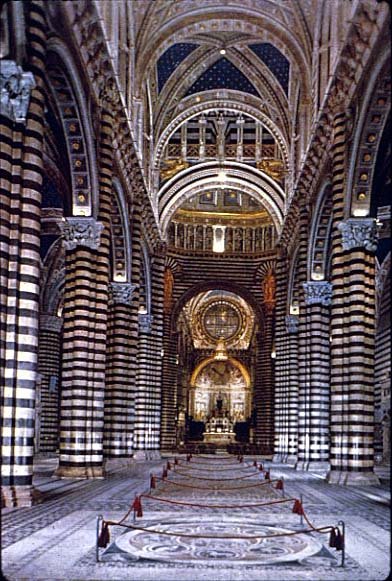
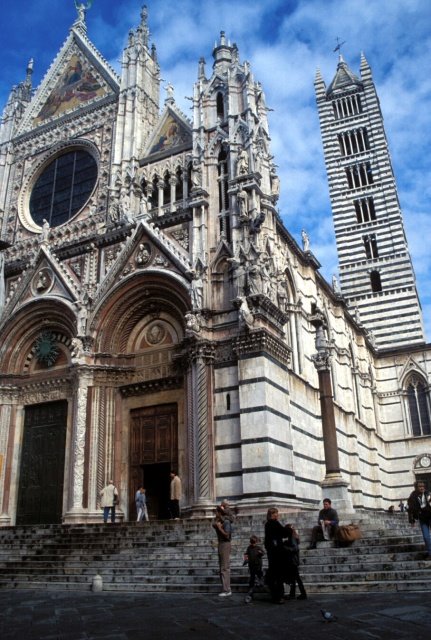
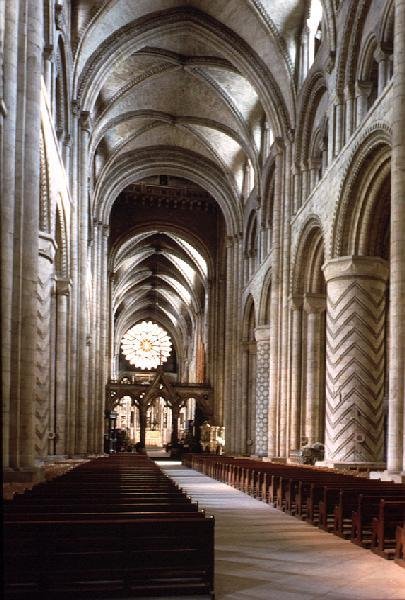
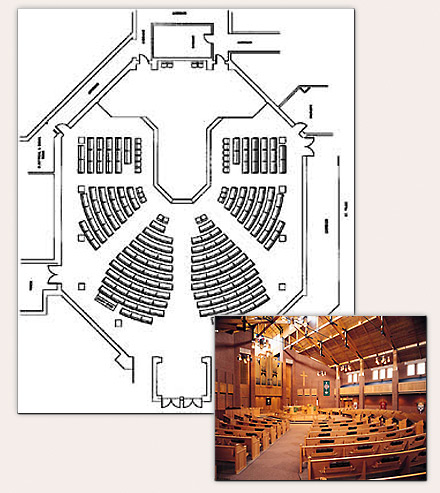
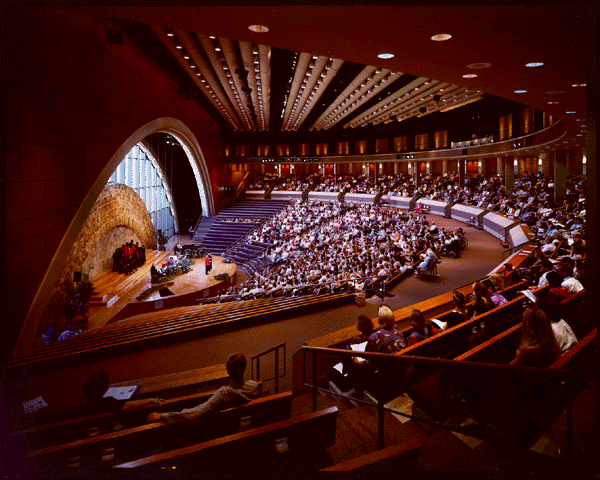
We see Low Christology reflected in the church architectures which bring the altar down toward the people and even into their center, as it were. It tends to have a more semi-circular design with the activities around the altar being brought physically and psychologically closer to the people. The circular-style seating also promotes much more of a feeling of community and connection with fellow worshippers. The warmth of this sort of arrangement contrasts the austerity of the high cathedrals of Europe.

In art, we find depictions of the temptations and suffering of Christ looking like suffering. No longer does the art look like mild discomfort or a slightly bad afternoon, but the agony described in the gospels.

I recently watched the 6-hour Jesus of Nazareth movie from the 1970s, and was blown away by how the actor's facial expressions are almost robotic or trancelike. This represents the ideology of the directors or producers - Jesus could barely crack a smile. He was remote and disconnected from his disciples. He was blank or sober in expression much of the time. I guess he was busy being Divine.

Contrast this with the made-for-TV movie entitled "Jesus" released in 2000. Jesus smiles, dances, laughs, is shown chanting in the temple with the "law" on his forehead according to tradition, teases his cousin John, feels insecure, loves and goofs around with his disciples, and plays with the children.
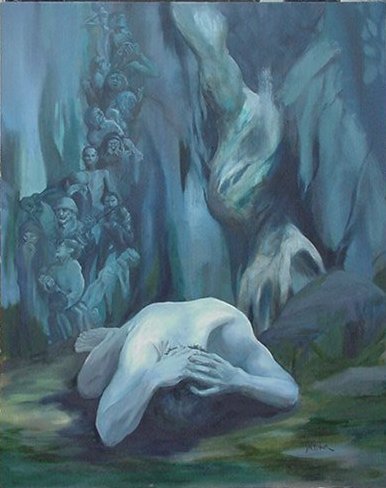
In Gethsemane He claws at the grass, and some the temptation is depicted as a struggle to stand strong in his path as Satan offers ways out of the coming torture and assures Jesus that His efforts will be in vain. I really cared about this Jesus and felt conflicted and torn by "Satan's" arguments.

The production sought to bring us into Jesus' experience, and Him into ours.

I didn't cry when the 1970's movie Jesus was crucified. It was an awful intellectual exercise to watch, but I had no personal attachment to the figure. But in the 2000 movie, I bawled my eyes out. I had LOVED this Jesus. I was devastated. A precious, beloved mentor was being unjustly tortured and killed before our eyes. It seems to me that this emotional response to Jesus' crucifixion is far more appropriate than a merely intellectual dismay and distaste.

While the Gibson movie certainly didn't shy from showing incredibly hideous torture in all it's physicality, it failed to generate in me a feeling of connection to the figure on the screen before the torture started. Again, I spent most of the movie in a state of horrified fascination---in an intellectual and analytical response---critiquing the scholarship and almost finding a morbid humour in how "horrible" advanced to insufferably hideous, to ridiculously horrendous. The only times I wept were when humanity, in efforts to support and comfort Jesus, broke through the relentless torture. Otherwise, it didn't bring me into my heart at all. I stayed in my head, just to survive.
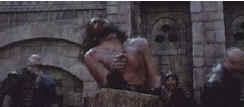
So, what is the thing about High Christology and Low Christology? Is Low Christology "better" than high Christology?
I don't think so. I think separation of Human and Divine is harmful, either way you slice it.
If we make Jesus too human, he becomes our buddy, our yes-man, or our "sweet" friend who is essentially a powerless wuss.
We need to really get it in our very blood that Christ is Divine and human, Human and divine. They don't cancel each other out. They aren't mutually exclusive.
I think this is hard for us. I think we tend to be out of balance with it, and it takes a lifetime to "get-it-together" or see that they are One.
God with us.
GOD with us.
God WITH us.
God with us.

Wednesday, April 12, 2006

High Christology

"Christology" is how a person or group views Jesus in relationship to the Divine and in relationship to the Human. "High Christology" emphasizes the Divinity of Jesus, with a greater and greater removal from the human aspect. It is evidenced in art and architecture and theology.


High Christology venerates the sacred texts and the holiness of God so much so that the altar in High Christology cathedrals is removed farther and farther from the people. The structure tends to be linear, with the populace kept back by series of barriers or rails beyond which only special holy servants may go. Teaching happens from a lofty pulpit. Only the holy servants, almost always historically exclusively male, are allowed access to the sacred texts, which they then interpret and feed to the populace. Even holy communion was removed from the people in stages. From drinking for themselves from the cup, the people then had to have it held for them. Finally, when the thought of a peasant possibly spilling the "sacred blood" was so dreadful (and required a ritual cleansing or even removal and ritual burning of the flooring material affected), they no longer wanted to risk this possibility and took the wine out of the ritual altogether.

Contact of the sacred and the "secular" was so abhorrent, they built in layer after layer of removal, as if the "special" humans had the need to or even the ability to "protect" the holy things of the Word and of God from mere peasant-human contamination.

High Christology produces shame and fear in relation to God, and makes God so powerful and removed and essentially Judgmental and unloving, that we turn our faces away out of fear of destruction because of our own unworthiness.

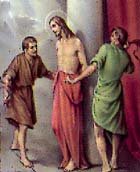
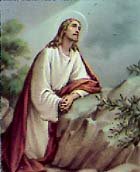
High Christology doesn't like anything from mere humanity to touch or taint God's holiness. Jesus is pictured as always serene. While being flogged, he looks a little sad or somewhat bored. While in Gethsemane or on the cross, he looks slightly sad, with every hair in place and his garments artfully arranged. The famous movie, "Jesus of Nazareth" shows Him as virtually without emotion, no joy, no laughter, virtually no humanity, always apart and separate. Different. Disconnected from real human experience or emotion or process. He never looks messy or dirty.


There is a place for reverence, but as soon as we are making the "real" God inhuman, pushing God as far away as possible from humanity, we are completely missing the point of His incarnation.
When we make God so Divine and pure and unable to accept our humanity that we hide our faces out of fear and shame, something has gone terribly wrong. It is WE that cannot accept our imperfections, not God.

There is a place for reverence for the holy texts, but any human or group of humans that sees itself as especially appointed to interpret God's Word for others and tries to cut off the people from direct access to the Word is presuming that God cannot handle his creation nor take care of His own Word. It is a case of mistaken self-importance and actually shows disrespect for God by trying to handle things on His behalf, as if he can't manage---all in the name of His holiness.

Clergy are consultants and wise advisors. They should never presume to know better than the one they are supporting. They are teachers and empower-ers (is there such a word?) not parents, not police, not dictators.

God's two great commandments?
LOVE the Lord and Love the neighbour.

Not "fear the Lord and judge the neighbour."
Not "presume that you are closer to the Lord than the neighbour and therefore must control the neighbour for their own good."

The Lord is pressing to be received at every second, not recoiling in horror from His children and needing the nanny to wash us and bathe us and dress us up and feed us before He deigns to let us cower at His footstool.

Fear is the opposite of love. Fear, when not understood or addressed or handed over to God, almost always ends up as controlling behaviours and justification of controlling behaviour.

Just some thoughts.