Showing posts with label hope. Show all posts

Sunday, October 25, 2015

"Healing, Hope, and Magic" Final Sermon at BCNJ

This sermon is the last one I preached as pastor of the Bath Church of the New Jerusalem.  During the children's time we talked about the power of ritual, and then had a time of anointing in which the children anointed the adults with healing oil from the Mount of Olives.  Later we had a time of prayer in which we could offer up our prayers using special paper and the tray of candles.  The paper represented our prayers, and the way the paper burned quickly and disappeared without any ash or residue represented the Lord accepting our prayers as well as how we are transformed by God's love.
The special music immediately following the sermon was "Winter Song" performed as a duet by myself and Alicia Dole.

 “Healing, Hope, and the Magical Future”


Rev. Alison Longstaff, Oct. 25, 2015
Bath Church of the New Jerusalem
Jeremiah 17:7-8, 10, 14; Mark 9: 17-24; Apocalypse Explained 518:5 

Healing

There is a saying that caught me off guard the first time I heard it in a twelve step program.  It is this: “We will not regret the past nor wish to shut the door on it.”

While I didn’t regret everything about my past when I heard this statement, there certainly were parts I would rather have forgotten.  Shutting the door on the embarrassing moments from my past seemed eminently sensible. The, “we don’t speak about that anymore,” sort of rule that I associate with a Downton Abbey approach to life ruled in my psyche.  I pushed away memories of uncomfortable events because they were, well, uncomfortable. 

Not only do twelve step programs ask us to open the door to the things we would rather forget, they promise us that we will not regret the past once we submit to the healing work of spiritual growth.  We first need to admit our mistakes, learn from them, make amends when we can, and then move on to better behavior.  These steps bring us to a place of “no regret.” “No regret” means we incorporate all of our experiences, good and bad. We don’t try to hide anything.  We don’t even want to.

In one of my first children’s talks here I told a story from my high school years. I was at a mass sleepover, and one of the girls was telling a story.  In the middle of the story this popular girl sneezed, and a booger shot out of her nose and onto her hands right in front of us.  There was a stunned silence. “Oh my gosh!  How gross!” she laughed. “I can’t believe that happened!” She exclaimed in embarrassed good humor, then asked for a tissue, and moved on with her tale.   She did not spiral into a pit of mortification and shame.  She did not try to pretend it didn’t happen.  She made it funny.  We laughed together to the point of tears.  Her lack of shame helped us all. 
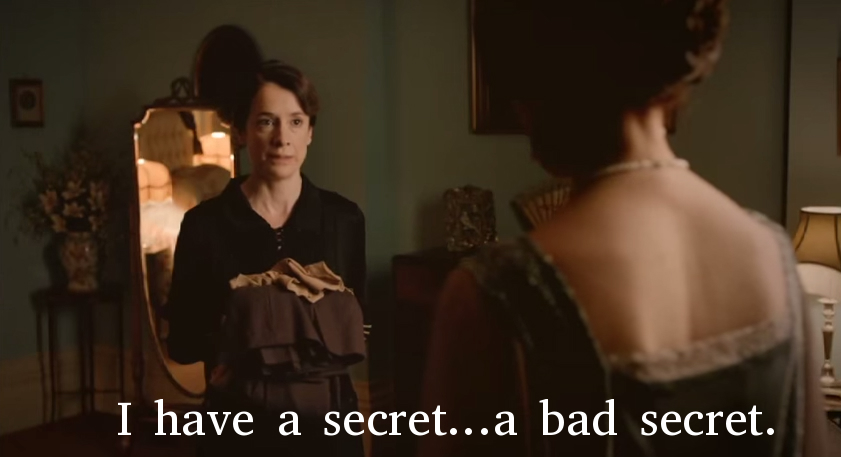
Moving out of shame into personal integrity requires complete honesty and self-forgiveness.  We tell our story with humor and compassion, hiding nothing, accepting all parts of our story.  We see that we are not more broken than anyone else nor are we less broken, and our compassion begins to extend to everyone else we encounter.  Everyone makes mistakes.  Do we think we are less lovable when our mistakes are known?  It actually makes us more lovable in God’s eyes.

When things don’t go perfectly in a group or encounter, we humans tend to go into judgment and blame.  We try to discover who was “wrong” and then we distance ourselves from that “wrong” one.  It shows up as gossip, negative story-telling on others, and social cut-offs. This human tendency goes back even before the Old Testament from which we get the name “scapegoating.” I hope by now that everyone in this room knows that blaming and chopping off a part of our group is about the least helpful response to any painful situation. It is about as helpful as cutting off our hand should we accidentally hit it with a hammer.

When we step away from shame and blame and “what other people think,” we find ourselves in a whole new world—one in which nobody is perfect, and yet all are still lovable.  There is healing in such a forgiving space.  We become kinder to ourselves and others.  When we recognize our own flawed humanity in the other we are less likely to cast stones and more likely to bandage up. 
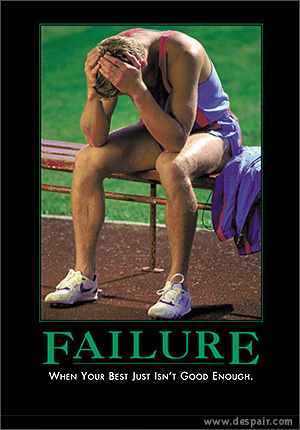
I have heard some people describe our journey together here at this church and my coming departure as some sort of failure.  I don’t see it that way at all.  I believe that every step of this journey has been guided by God’s benevolent Providence, and that everything that has happened has provided important learning for all concerned.  Did everyone make perfect decisions and behave perfectly at all times?  Of course not.  We are a group of humans, and the last time I checked, that means nobody is perfect. If we all have been showing up with good intentions, humility, and a willingness to learn, then we have done well.  I know I leave with tremendous personal gifts of learning, truly invaluable experiences, and a bunch more people to love and whom I will miss very much.

Hope
There was a funny moment at the 2014 Convention in St. Louis. The cafeteria had big glass windows that looked out onto a patio.  On the nice days, many of us wanted to eat out there, but to do so required a long walk around a side corridor to go out a side door.  There was a door through the big glass wall, but everyone “knew” that it was locked.  Every once in a while, someone would try it, have no success, and walk the long way around. 

Then as I sat eating, I watched a woman walk up to the glass door, give it a good yank, and walk outside when it opened.  I just started laughing.  That woman’s can-do attitude made her able to get through a sticky door that all others had believed was locked.  It had never been locked.  It just took a bit of determination to open. Believing that a door is unlocked can’t make it be unlocked, but it sure helps to open unlocked doors that are just a little sticky!  It simply needed faith, determination, and muscle.

Some of you know that my apartment door sticks.  I have called down the stairs to several visitors to “come on in; it isn’t locked,” yet its stickiness still stops a few.  I guess they don’t believe me when I say it isn’t locked.  And so I march down the stairs and yank it open for them and let them in. No, it really isn’t locked.  It really is just sticky.

I am sure that you have had experiences of setting your mind to doing something, and found the ability to get it done because of your sheer determination.  Believing that something is possible can give us the power to do the “impossible.”  However, if we start a project thinking “it has never worked before so it won’t work this time either,” we will probably fail.  We tend to discover what we expect to discover. Believing that something isn’t possible can keep us from even attempting projects of which we are actually capable.  Sometimes “believing” truly is what enables us to “see” a thing come to pass. 

When Jesus said, “Your faith has made you well,” he truly was meaning “faith” on every level of our being.  Jesus was able to heal his followers because of their great faith in him.  It was their faith in his ability to heal them that was in itself healing.  The Divine healing energy united with their confidence, allowing it to transform their spirits all the way down through the cells of their bodies.

Our psalmist cried out, Heal me, and I will be healed; oh, Lord. Save me and I will be saved!”
And Jesus responds to our cry, “Your faith has made you well.” 

In some ways our spiritual recovery is still that simple.  “Seeing” may be “believing,” but even more so “believing” brings about “seeing.”   Thomas could not believe until he saw the wounds in the Lord’s hands, and there is a Thomas inside each of us.  But it is also true that sometimes we simply can’t see a thing until we first believe it is possible.

All too often, our fear of failure means we hide in a story of “can’t.” Isn’t it easier to give up rather than try and fail?  So we tried.  So it didn’t turn out as planned.  Maybe it is time to try again with more fierceness and an even deeper trust in God’s ability to work within and through our faith.  But if we believe that a thing is hopeless, there is only so much God can do.

That we will not be able to “see” things in which we do not believe is a truth more maddeningly powerful than most of us would like to, well, believe.  Anyone who wants to see the past twenty-two months as some sort of failure, will see it as a failure.  This could lead to ever more negative conclusions, rather like that poem* we read in our children’s talk a few weeks ago.  But if we believe that God guided every step of this process, from call to acceptance, from joyful to jaded, from optimistic even to opting-out, then nothing truly went wrong. The past months of love and hard work alongside each other could be seen as exactly what the doctor ordered for everyone’s ongoing growth.  I know I learned some invaluable lessons about parish ministry and about myself, and I believe that I will be leaving this congregation that much stronger and more self-aware, and even better equipped for building your future.  We have done some amazing things together.

The Magical Future
Last weekend I was at a two-day event dedicated to the world of Harry Potter.  There is something about the Harry Potter stories that have so captured the imagination of all ages that families will travel hundreds of miles to have the chance to play in that world and enjoy the collective experience.  Everywhere I looked I saw round glasses and lightning scars, wizarding robes and magic wands, and most of all great big smiles.

I spoke to a packed classroom about the magic of words and the powerful ways we already use words to effect change for the better in our lives.  My particular focus was how we use word and story to protect ourselves from negativity in our lives.  My talk was entitled, “Teaching Defense against the Dark Arts to Muggles” and seemed to strike a powerful chord in the listeners.

J. K. Rowling created a monster in her stories called a “dementor.”  Floating out of the gloom with scabbed hands, these black-robed figures represented our most negative thinking.  It takes powerful magic to drive these monsters away in the stories, magic that takes practice, and magic that calls on our deepest resources to do so.  Deep joy is the one force powerful enough to defend against these nightmarish, soul-sucking figures.  Young Harry struggles and struggles to be able to produce a powerful enough “spell” to drive these dementors back.  His fear of being unable to do it weakens his ability. His intense self-doubt makes him unable to tap the necessary strength.  Only when a fierce desire to save the life of a friend pours through him and out his wand does he tap enough passion to drive the murderous monsters away.

The love that God gives you, the love that lives inside your beating heart is that very same passion.  It is more powerful than you realize, especially when you align it with love for a good cause and faith in our all-powerful God.  If we pray for help with any good cause, you can bet God will provide.  Love is powerfully and mightily alive, if we are willing to open our hearts to it.  It can open any doors and drive away the darkest of monsters.

Heal us, O Lord, and we will be healed.
Lord, we believe; help, please, our unbelief.
There is no need to regret the past nor wish to shut the door on it, for it has made each one of us who we are, and has all been part of God’s plan.
Is God’s love alive?  You can bet it is.
Does God have an intention for good for this determined little group?  Have no doubt about it.

Amen


The Readings
Jeremiah 17:7-8,10,14
“But blessed is the one who trusts in the Lord, whose confidence is in him.
That one will be like a tree planted by the water that spreads out its roots by the river.
That tree does not fear when heat comes; its leaves are always green.
It will not be anxious in the year of drought, neither will it fail to bear fruit.”
 “I the Lord search the heart and examine the mind, to reward each person according to their conduct, according to the fruit of their actions.”
Heal me, and I will be healed; save me and I will be saved, for you are the one I praise, O Lord.

Mark 9:17-24
Someone from the crowd said, “Teacher, I brought you my son; he has a spirit that makes him unable to speak; and whenever it seizes him, it dashes him down; and he foams at the mouth and grinds his teeth and becomes rigid. I asked your disciples to cast it out, but they could not do so.” 
He answered them, “You faithless generation, how much longer must I be among you? How much longer must I put up with you? Bring him to me.”  And they brought the boy to him. When the spirit saw Jesus, immediately it convulsed the boy, who fell on the ground and rolled about, foaming at the mouth.  Jesus asked the father, “How long has this been happening to him?”
And he said, “From childhood. It has often cast him into the fire and into the water, to destroy him; but if you are able to do anything, have pity on us and help us.” 
Jesus said to him, “If you are able!—All things can be done for the one who believes.”
Immediately the father of the child cried out, “Oh Lord, I believe; help my unbelief!”

Apocalypse Explained 518:5
There are three reasons why faith in the Lord healed the Lord’s followers.
The first reason was that they believed that Jesus was God and therefore Omnipotent.
The second reason was that true faith brings complete trust, and complete trust creates a spiritual bond. All spiritual bonds which spring from complete trust cause each one to be spiritually present with the other.  (This happens all the time in the spiritual world.)  A spiritual connection was created because of the complete trust in Jesus’s Omnipotence. And because of this complete trust a spiritual connection with Jesus was established, which produced a transformation in their spiritual state. This is what is meant in the Scriptures by “the faith” that made them well.
The third reason why faith in the Lord healed the Lord’s followers was that all the natural diseases which the Lord healed represented and therefore were the embodiment of spiritual diseases to which they corresponded.  These spiritual diseases could only be healed by trusting in the Lord, by trusting His Divine Omnipotence, and by committing to live a better life. 

*The Poem referenced is:

Worst Day Ever?

by Chanie Gorkin, Brooklyn NY


Today was the absolute worst day ever
And don’t try to convince me that
There’s something good in every day
Because, when you take a closer look,
This world is a pretty evil place.
Even if
Some goodness does shine through once in a while
Satisfaction and happiness don’t last.
And it’s not true that
It’s all in the mind and heart
Because
True happiness can be attained
Only if one’s surroundings are good
It’s not true that good exists
I’m sure you can agree that
The reality
Creates
My attitude
It’s all beyond my control
And you’ll never in a million years hear me say
Today was a very good day


(Now read it from bottom to top, the other way,
And see what I really feel about my day.)

Sunday, February 1, 2015

When Things Fall Apart - sermon Feb. 1

 “When Things Fall Apart”
Rev. Alison Longstaff, February 1st, 2014
Bath Church of the New Jerusalem
Ezekiel 37: 1-14; John 11:portions of 1-45; Apocalypse Explained 555:14
           
"Mortal, can these bones live?" I said, "O Sovereign Lord, you alone know."  Then he said to me, "Prophesy to these bones and say to them, 'Dry bones, hear the word of the Lord!  And as I was prophesying, there was a noise, a rattling sound, and the bones came together, bone to bone. I looked, and tendons and flesh appeared on them and skin covered them, but there was no breath in them. Then he said to me, "Prophesy to the breath; prophesy, mortal, and say to it, 'This is what the Sovereign Lord says: Come from the four winds, O breath, and breathe into these slain, that they may live.'" So I prophesied as he commanded me, and breath entered them; they came to life and stood up on their feet—a vast army.
 
Bones and flesh and breath. We are more than our bones. Our bones are our ideas, and they are the truths we need in order to live an “upright” life. They are the things we all know . . . but can fail to live. A “truth” is a dry bone when we know it, but we don’t live by it yet.

The thing is, it is hard for us to make dry bones live without the help of God—some might say, impossible. Look at the alcoholic who knows he or she shouldn't drink, but can’t seem to stop.

"Mortal, can these bones live?" says God to Ezekiel.  And Ezekiel says, "O Sovereign Lord, you alone know."

Put yourself in Ezekiel’s shoes. Staring at a valley full of dry bones, how would you answer God? Perhaps Ezekiel was hedging his bets with his response. “God alone knows,” he said. Was he being sarcastic? Or reverential? Despairing? Or perhaps, skeptical? Was this his way of saying, “I’m not going to touch that one….”? 

But God can look at a valley of dead dreams and wasted efforts, and make them live again. And when God asks us if we think the bones can live, “He” makes space for all of our responses, whether we are in the optimistic and shiny faith of the newly spiritual-born, or the jaded and weary faith of the long-lived spiritual traveler. Depending on who we are and what we have been through, we may be jaded, or hopeful, bitter, or deeply trusting, or a mix.

Bones need flesh to live—flesh that softens and rounds and pulls things together—flesh that can pull these dry bones into a human form, capable of hugging, lifting, carrying, serving, holding, and bandaging the wounded. Flesh corresponds to love. Flesh symbolizes putting things to use. “Fleshing out” a belief is when we try to live it. 

I like to think of myself as environmentally conscious, but how much do I actually do on a daily basis to help the environment? Do I recycle diligently? Do I walk when possible, rather than drive? Do I compost? Do I support businesses that have proactive environmental practices?  This is a fairly civic and world-bound illustration, but you can extrapolate over to any value that you desire to embody—be it devoting more time to your relationships, to being trustworthy in your workplace, to working out more often and eating better, to being kinder to that one person that absolutely drives us up the wall.

Getting such “bones” fleshed out isn't as easy as we wish it was. Living our beliefs is where the “rubber hits the road,” and sometimes our efforts can feel pretty dead and lifeless.  I know mine seem to need constant “resurrection” or re-commitment, like any New Year’s resolutions that died within a few weeks of their launch.

This piece of Scripture, like every other passage in God’s Word, has layer upon layer of meaning.  We can study it from all sorts of angles and find new, fascinating, and nourishing insights. And like we discussed in the children’s talk, the ideas we find are never meant to be used to whack our brothers and sisters over the head with, though this does tend to be what we do, at least at first, with God’s truths. This passage is for me to use in my life, and you to use in your life, not for me or you to use to find fault with someone else’s life.

So what is this passage primarily about?  Is it a confirmation that living our faith can sometimes be hard work? Oh, this passage goes way beyond that. This passage is about the despair we feel when we have tried and tried to live a better way, and have failed.
           
This story describes the death of living dreams. There is a saying that goes, “A person can survive up to forty days without food, three days without water, but scarcely a minute without hope.” This level of discouragement is absolute.  We are ready to throw in the towel.  No doubt all of us here have experienced this despair to some degree, but this despair is well beyond the loss of hope and deep into bitterness and anguish. This despair is what Jesus was feeling when he cried out from the cross, “My God, My God, why have you forsaken me?”  God is the only hope left, and God doesn't seem to be doing anything to help us.

At the time of this story the people of Israel had been captive in Babylon for over a generation.  They had been torn from their burning homes and possessions, had seen their children dragged off to be slaves, their leaders and warriors had been murdered, and their great and beautiful temple being torched and demolished. They had been marched hundreds of miles from their homeland to be slaves in an alien land. This was not even a fresh reality. By the time Ezekiel was prophesying to them, they were in their second generation of slavery in Babylon, and their children had no sense of identity other than as slaves—no experience of their homeland. They could see no way out, and no way to rebuild. Sorrow upon sorrow. Loss upon loss.


It is important to understand that the Judaic people had then and continue to have a profound sense of “place” as an important part of their identity as a worshiping nation. Christians do not have this as part of our religious narrative, so we can have a hard time understanding it. “Where two or three are gathered” is where we can worship, no matter where that is. But for this people, the “Holy Land,” and particularly the city of Jerusalem is a part of their flesh-and-bones sense of religious place, and without living there and worshiping there, they do not feel that they are being God’s people the way they ought to be. Before you snort at this idea, realize that you and I all have within us attachments to certain ideas of how things need to be for us to be right in God’s eyes, beyond which we cannot see. We too have attachments to ideas that might look silly to someone else. We are not so different.

And if it is in God’s Word, it is in our story too. You and I may never be carried away captive from our physical homelands. But we can and will know the equivalent depth of despair in our spiritual lives. When we are at this level of spiritual despair, it is as in the story of Lazarus—by the time Jesus arrives, all hope of rescue is long gone.  

Was Martha feeling bitter when she says, “If you had been here, my brother would not have died,”?  Did she feel abandoned? She had expected Jesus to save the day, and He hadn't shown up in time. This is the cry of every person of faith when we bang into the hideous unfairnesses in life from which we think we should have been spared. But we are not spared. Lazarus did die and lay dead four days. 

When things go horribly wrong, especially with those who have lived good and honorable lives, we can feel betrayed by God. It is a mark of the deepest despair when we feel so abandoned by God that we question God’s existence. If you hit this level of spiritual struggle you are not “weak” in your faith.  You might even be at an advanced level of spiritual work.  Severe doubt is a very real part of developing a living, breathing, resilient faith.  Mother Teresa struggled with terrible doubt in God’s existence her whole ministry.  C.S. Lewis spent many years as an atheist. The current Archbishop of Canterbury and even Pope Francis struggle with doubt in God’s existence and benevolence. Even Jesus cried out, “Why have you abandoned me?” Doubting God’s presence and loving care is normal, and you are in good company if you go there.  
           
Remember, if it is in God’s Word, it is describing a phase of our spiritual journey. No part is “wrong.” It just is. This story is about a very hard part of the journey, and yet it is full of compassion and hope.

So there we are, staring at the dead and dry bones of our hopes, our dreams, and even our faith.  God leads us around and around the bones. They are very many—piles of them! And they are very dead.  And God says to us as we stare at the ruins of all that was meant to be, "Mortal, can these bones live?"

Well, if it was me, I’d say with deep sarcasm, “Oh sure they can.” Ezekiel says, "O Sovereign Lord, you alone know," which could also be heard as, “You know God, if anyone can do it, You can.”

Remember, this isn't just a curious story from an ancient text. Put yourself into the emotional place of Ezekiel. This is you and God, looking at the wreckage of your whole reason for living. And God says to us, “No matter how dry and dead are the bones and ashes of your dreams, I can resurrect them.” God stands beside us in the wreckage of our dearest hopes, and He promises that He can restore it all:   
Then he said to me, "Prophesy to these bones and say to them, 'Dry bones, hear the word of the Lord!’”  And as I was prophesying, there was a noise, a rattling sound, and the bones came together, bone to bone.  I looked, and tendons and flesh appeared on [the bones] and skin covered them, but there was no breath in them. 

God restores the fragments of our lives until they are whole again. Amazing! Can you feel the hugeness of this vision down in your bones? But still, there is no life in them.
Then he said to me, "Prophesy to the breath; prophesy, mortal, and say to it, 'This is what the Sovereign Lord says: Come from the four winds, O breath, and breathe into these slain, that they may live.'"  So I prophesied as he commanded me, and breath entered them; they came to life and stood up on their feet—a vast army.


Breath. The breath of God. This is inspiration—to breathe in the Holy Spirit—to be in-spired by the Holy Spirit. Sometimes we need mouth-to-mouth resuscitation from God in order for our hopes and dreams to live again, in order to live, really live again in a life of joy and grace and rich faith. So God provides that too. It is a miracle surpassing all miracles. New life where there was only death.

Our reading from Swedenborg describes bone as truth before it is lived. But that is describing bone that is not attached to or an integral part of a living body. We do have living bones—living bones that ensure we stand upright, have the strength to hold our children and each other, and to withstand outside pressures. God wants our bones to live—and they can, with God’s help, with God’s breath. 

In this story, these are not bones that have never lived, these are bones that were alive once and have died. There is something so much more desperate about that image. We all know these skeletons of things we once loved—they are dreams we had once, relationships that thrived once, ideas and organizations that we trusted in once. How sad it is to stand there with Ezekiel and feel the desperate losses in these bones.

There is so much more to this story.  There is meaning in “the four winds,” and in the skeletons “standing on their feet.” But I need to wrap this up.

This strange story is about despair, but even more it is about hope. It is about hope against hope. It is about God being able to handle things, even when we have lost everything, our faith, our hope, our reason for living, even our belief in God. This story speaks hope into our darkest temptations and breathes new life, and new spirit into us, that we might live again. God revivifies the best of everything that we think we have lost. This story is telling us that we will again see every good thing that we have loved live again one day, because what is made of love never dies, it just hides and goes to sleep for a while. This can be impossible to believe sometimes, and that is okay. It can be impossible to look at three feet of snow on hard frozen ground and believe in soft earth and bare feet in warm grass too. We must await the warm breath of spring the way the bones awaited the breath of life. So, as we head into these last seven weeks of winter, let us live in this metaphor—let us remember this hope against hope, and go gently with each other until new life springs again fresh from the frozen earth.  Amen.

Originally “Them Dry Bones” preached Feb 9th 2008 St James Lutheran in New Dundee Ontario

The Readings:
Apocalypse Explained 555:14 
“Bone” symbolizes truth before it is made living, that is, incorporated into how we live—this means every single thing we have learned but do not yet use. 

Ezekiel 37:1-14
The hand of the Lord came upon me and brought me out in the Spirit of the Lord, and set me down in the midst of the valley; and it was full of bones. Then He caused me to pass by them all around, and behold, there were very many in the open valley; and indeed they were very dry.  
And He said to me, “Son of man, can these bones live?”
So I answered, “O Lord God, You alone know.”
Again He said to me, “Prophesy to these bones, and say to them, ‘O dry bones, hear the word of the Lord!  Thus says the Lord God to these bones: “Surely I will cause breath to enter into you, and you shall live.  I will put sinews on you and bring flesh upon you, cover you with skin and put breath in you; and you shall live. Then you shall know that I am the Lord.”’”
So I prophesied as I was commanded; and as I prophesied, there was a noise, and suddenly a rattling; and the bones came together, bone to bone.  Indeed, as I looked, the sinews and the flesh came upon them, and the skin covered them over; but there was no breath in them.
Also He said to me, “Prophesy to the breath, prophesy, son of man, and say to the breath, ‘thus says the Lord God: “Come from the four winds, O breath, and breathe on these slain, that they may live.”’” So I prophesied as He commanded me, and breath came into them, and they lived, and stood upon their feet, an exceedingly great army.
Then He said to me, “Son of man, these bones are the whole house of Israel. They indeed say, ‘Our bones are dry, our hope is lost, and we ourselves are cut off!’  Therefore prophesy and say to them, ‘Thus says the Lord God: “Behold, O My people, I will open your graves and cause you to come up from your graves, and bring you into the land of Israel.  Then you shall know that I am the Lord, when I have opened your graves, O My people, and brought you up from your graves.  I will put My Spirit in you, and you shall live, and I will place you in your own land. Then you shall know that I, the Lord, have spoken it and performed it,” says the Lord.’”

John 11: 1, 3-5, 14-15, 20-23, 25-27, 32, 34-35, 39, 41, 43-44
Now a certain man was sick, Lazarus of Bethany, therefore the sisters sent to Him, saying, “Lord, behold, he whom You love is sick.”
When Jesus heard that, He said, “This sickness is not unto death, but for the glory of God, that the Son of God may be glorified through it.”
Now Jesus loved Martha and her sister and Lazarus.  Yet, when He heard that he was sick, He stayed two more days in the place where He was. 
Then Jesus said to them plainly, “Lazarus is dead. And I am glad for your sakes that I was not there, that you may believe. Nevertheless let us go to him.”
Now Martha, as soon as she heard that Jesus was coming, went and met Him, but Mary was sitting in the house. Now Martha said to Jesus, “Lord, if You had been here, my brother would not have died.  But even now I know that whatever You ask of God, God will give You.”
Jesus said to her, “Your brother will rise again. … I am the resurrection and the life. He who believes in Me, though he may die, he shall live. And whoever lives and believes in Me shall never die. Do you believe this?”
She said to Him, “Yes, Lord, I believe that You are the Christ, the Son of God, who is to come into the world.”
Then, when Mary came where Jesus was, and saw Him, she fell down at His feet, saying to Him, “Lord, if You had been here, my brother would not have died.”
And He said, “Where have you laid him?”
They said to Him, “Lord, come and see.”
Jesus wept. Jesus said, “Take away the stone.”
Martha, the sister of him who was dead, said to Him, “Lord, by this time there is a stench, for he has been dead four days.”
Then they took away the stone from the place where the dead man was lying. And Jesus lifted up His eyes and said, “Father, I thank You that You have heard Me.”  Now when He had said these things, He cried with a loud voice, “Lazarus, come forth!” And he who had died came out bound hand and foot with grave clothes, and his face was wrapped with a cloth. Jesus said to them, “Loose him, and let him go.”

Sunday, November 30, 2014

Is There Any Hope? -a Sermon for first Advent


Is There Any Hope?
Sermon for the Advent of Hope; 
Rev. Alison Longstaff, Dec 7, 2014
Bath Church of the New Jerusalem
Isaiah 11:1-2, 6-9; Luke 1: 5-14; HS 8165:2

It was deeply profound to be writing this week's sermon about “Hope” as the nation raged and despaired in response to the acquittal of Officer Darren Wilson for the shooting death of Michael Brown. My Facebook feed was alive with outrage on the day the news broke. One cousin posted report after report about the injustices experienced by dark-skinned Americans, and the obscenely high number of unarmed black youth shot dead by police every year without any hope of justice for their families.

The despair among my friends and connections was palpable. Outrage and anguish, futility and frustration—more and more stories in the news telling tales of humankind’s regression from integrity, moral courage, or any sense of interconnectedness and accountability. While there are many voices out there speaking truths that need to be heard about justice and compassion, there seem to be just as many proclaiming a rhetoric that harnesses blame and entitlement to reinforce a fortress mentality, barricading the entitled from any sense of compassion or “there but by the grace of God go I.”

I have had to work hard to maintain a sense of optimism since moving to the United States. While I am sure there are many other factors figuring in, I genuinely believe that it is a harsher psychological climate here than I experienced in Canada. There is more fear and mistrust in the air. The news is darker, the rhetoric more polemic, and “belief perseverance” (which is rigorously sticking to one’s original beliefs despite all evidence to the contrary, and is now a known, named, and studied phenomenon in the world of psychology) is everywhere. The truth simply cannot set us free if we put our fingers in our ears and hum so that we cannot hear.

My Facebook feed shows increasing frustration and despair among my cyber friends. It is as if a great madness has overtaken this country we love, and we do not know how it has happened or how to correct our course. And as the group anxiety ramps up, our intelligence and ability to work together deteriorates. For under distress, humans regress. It is just a fact of life. Is there any hope at all?

The loss of hope is called despair. And the loss of hope is perhaps one of the most terrible losses of all. To quote modern day prophet J. Michael Straczinski:

“There is a darkness greater than the one we fight. It is the darkness of the soul that has lost its way. The war we fight is not against powers and principalities...it is against chaos and despair. Greater than the death of flesh is the death of hope, the death of dreams. Against this peril, we can never surrender. The future is all around us, waiting in moments of transition to be born in moments of revelation. No one knows the shape of that future, or where it will take us. We know only that it is always born in pain.”

I found this quote peculiarly resonant with today’s words from Swedenborg. But while Straczynski exhorts us never to surrender, Swedenborg says that the very surrender itself is the turning point in a spiritual temptation. The same way any addict must first admit powerlessness over the addictive substance before recovery can happen, God allows a spiritual temptation to progress beyond our ability to fight back, so that we might re-experience that it is God that does the fighting, not us. Because it is the ways that we separate ourselves from God that create hell to begin with, even so it is the “healing crisis” or turning point in a spiritual temptation that reconnects us to God's strength and God’s love. Though painful, this is the only way to birth us back from hell into heaven (connection with God).

Our spiritual existence is a paradox. We live as if we are independent and yet must remember that God does everything. Our sense of independence from God is a vital part of our ability to receive life and experience spiritual freedom. But it can be a curse too, for that independence is made possible by our ego, and our ego pretty much just creates hell. This is because the minute we think it is all up to us (ego), life starts to get hellish. The minute we think we have all the answers and God should just listen to us (ego), we have manufactured misery. We don’t mean to. We can’t help it. It is what the ego does until we learn to master it.

So we both feel like our life is our own and yet we need to remember it is really God’s power and strength that accomplishes everything. God allows us to experience spiritual temptation when we forget that God’s help stands ready at every second. Despair is the extreme suffering that occurs when we feel as though God is nowhere around and not helping at all. (Jesus Himself experienced this in Gethsemane and on the cross, so the next time you go through this, don’t beat yourself up. Even Jesus couldn't escape this illusion.) Despair is inevitable. But staying stuck in it is optional.

And so, on this Sunday of HOPE, let us look for the hand-grips and toe-holds we might want to use when we next find ourselves stuck in the pit of despair. On the same day that I felt bombarded by the depressing news coming out of Ferguson, such that I wanted to renounce membership in the human race, I caught the edge of an MPBN radio show devoted entirely to good news stories. So I turned it up. After less than half an hour, I had tears of joy in my eyes. In fact, some of the stories of ingenuity, collaboration, and human kindness were so beautiful they would have made Scrooge himself a bit verklempt even before the three spirits visited. I went from disgust and despair, to hope and joy in half an hour, just by changing my internet feed.

There’s a lesson in that. What we pay attention to affects our state of mind. While my morbid curiosity pulls me towards bad news like a fly to, well, things flies like—I can intentionally steer my mind towards the things that uplift and feed my soul as well. Not only did the MPBN show transform my day, its web-page had a link to the Good News Network.org—a site dedicated completely to good news stories, yes, round the clock, seven days a week. And so now, now, whenever the regular news feels too heavy for me to bear, I tune into the good news and get an instant spiritual boost. There will always be bad news. This good news site focuses on the myriad stories of hope and triumph happening in the midst of the tragedies—which stories the big networks can’t be bothered to share.

There is the story of the over $175,000 that has been donated to the tiny Ferguson Library. That library is creating "healing kits" for kids that include books dealing with trauma, and a stuffed animal that they can keep. And there is the story about Natalie DuBose, a Ferguson baker and mother of two who was left trying to clean up and figure out how to fill her Thanksgiving orders after rioters smashed her bakery windows and damaged her equipment. A friend suggested she set up a fund-raising page so DuBose decided on a goal of raising $20,000 to get back on her feet. Two days later DuBose had received $252,000 from more than 7,000 doners. “I’ve never felt such love,” she said. “The outpouring of support … has been amazing. I was in tears.”

And in these stories we see a mirror of both our scriptures: life side-by-side with death. Long after all hope is lost for Elizabeth and Zacharias, their prayer is answered. Her womb quickens with a healthy, viable baby. Where once was a long-dead dream, a complete resurrection is happening.

We see a “poisonous serpent”—the angry voices of blame, the lies, the cover-ups, and the twisted versions of events—creating confusion, and paralyzing the process of justice in Ferguson, and seeking to kill our innocence; yet somehow the innocent and vulnerable people caught in harm’s way—the “infant”—transcends and survives despite the venom and violence. Here is the lion and the lamb; the wolf and baby goat, side by side. It is telling us that life and hope will always transcend death and despair. For in God’s holy mountain, which is the realm of all that is good and true within the human spirit, nothing can be hurt or destroyed. The part of each one of us that is created by God and lives forever can never be hurt or destroyed no matter what happens to us in this physical world.

Despair, and joy; darkness and light, death and life side-by-side. The one is born in the other, like a new baby born in the midst of pain. They are actually two faces of the same thing. We would not despair so intensely if we did not love so deeply, and the depth of our love is a manifestation of God with us. In fact the comfort and consolation that God delivers after we come through a dark night of the soul will be in direct proportion to the depth of the despair. Beautiful new life after every death.

It is our old ideas and attachments that die at the height of temptation, not anything that is doing us good. This hurts. We may cry out in pain like a woman in labor, but we are undergoing the birth of a new self—a new understanding. The relief and joy and transformed life that rises from this small death will be so rewarding that we won’t even remember the pain. God puts before us death and life and says, “Choose life!”

And so, as we celebrate this advent of Hope, let us always look for the new life amidst the ashes of old dreams. It is always there, waiting to burst into vibrant expression like the sun is behind the storm clouds and the spring flowers from beneath the frozen ground.

In closing I offer you this poem by Joyce Rupp. 

It is called, 


“A Closer Look at Thanksgiving.”
If you look at a sunset, you might see only the disappearance of daylight.
If you look beneath, you may see darkness opening the splendor of stars.

If you look at illness and disease, you might see only physical diminishment.
If you look beneath, you may see it as a teacher bringing you vital wisdom.

If you look at a broken relationship, you might see only a harsh ending.
If you look beneath, you may see the courageous seeds of new growth.

If you look at lost dreams, you might see only disappointment and doubt.
If you look beneath, you may see the stuff that new dreams contain.

If you look at the death of a loved one, you might see only pervasive sorrow.
If you look beneath, you may see that love lives on forever in the heart.

If you look at the planet’s pain and creatures’ woe, you might see only despair.
If you look beneath, you may see hope woven in the compassionate care of many.

If you look at yourself, you might see only tarnished unfinishedness.
If you look beneath, you may see your basic goodness shining there.

If you look for the divine being, you might see mostly unresolved questions.
If you look beneath, you may be astounded at the availability of divine love.

Amen

References:


The Readings
Isaiah 11:1-2, 6-9.  A shoot shall come out from the stock of Jesse, and a branch shall grow out of his roots. The spirit of the Lord shall rest on him, the spirit of wisdom and understanding, the spirit of counsel and might, the spirit of knowledge and the fear of the Lord. The wolf shall live with the lamb, the leopard shall lie down with the baby goat, the calf and the lion and the fatling together, and a little child shall lead them. The cow and the bear shall graze, their young shall lie down together; and the lion shall eat straw like the ox. The nursing child shall play over the hole of the poisonous snake, and the weaned child shall put its hand on the adder’s den. They will not hurt or destroy on all my holy mountain; for the earth will be as full of the knowledge of the Lord as the waters cover the sea. 

Luke 1:5-14. There was in the days of Herod, the king of Judea, a certain priest named Zacharias, of the division of Abijah. His wife was of the daughters of Aaron, and her name was Elizabeth. And they were both righteous before God, walking in all the commandments and ordinances of the Lord blameless. But they had no child, because Elizabeth was barren, and they were both well advanced in years.  So it was, that while he was serving as priest before God in the order of his division, according to the custom of the priesthood, his lot fell to burn incense when he went into the temple of the Lord. And the whole multitude of the people was praying outside at the hour of incense. Then an angel of the Lord appeared to him, standing on the right side of the altar of incense. And when Zacharias saw him, he was troubled, and fear fell upon him.  But the angel said to him, “Do not be afraid, Zacharias, for your prayer is heard; and your wife Elizabeth will bear you a son, and you shall call his name John. And you will have joy and gladness, and many will rejoice at his birth.

Heavenly Secrets 8165 [2] Paraphrase

The final phase of spiritual temptation is despair. During this phase we feel as if we cannot stop ourselves from sliding into hell. Temptations compel us to experience our powerlessness, for a temptation pushes us beyond our endurance until we cannot hold on any more, at which point we begin to tumble into hell. But the Lord catches us right at that point, stopping our descent. This brings relief and comfort and even joy. The only reason God would allow us to experience such terrible despair is so that our beliefs and our attachments can be reformed, and then by means of new insights and a deeper sense of interconnectedness, we are strengthened, and become even more deeply integrated.