When I was born, you were disappointed because I was not a boy.
That told me that boys are better than girls.
When I was growing up, you told me that boys can do whatever they want, but girls really should be wives and mothers---that a GOOD girl would want nothing else. You criticized and gossiped about the women who had jobs and careers, and questioned their femininity.
That told me that, as a girl, I had no real choice in my future, and was wrong to even want anything besides the role of wife and mother.
I wanted to be a good girl.
When puberty hit, I was feared and controlled and told to wear special clothes that show I am a girl---alluring, but not too alluring---and I was told that wanting to keep wearing pants because they are practical and comfortable is worldly and unfeminine.
That told me that my freedom was over. That I was special in a way I didn't want to be. I was to be ornamental, curbed, and feared for the rest of my fertile days.
If a girl was unattractive, she was criticized. If a girl was pretty, she was praised. If a girl was too pretty, she was feared and criticized.
That taught me that a girl's essential worth is in her appearance---and that I, too, should expect to be discussed and criticized and judged by the group like a piece of merchandise. It also reminded me to be afraid of my sexuality.
When our sister denomination started ordaining women, you shrieked and howled and mocked and laughed. You questioned their intelligence, their doctrine, their love for the Lord, and their ability to understand the Word.
That taught me to mock, howl, shriek, and laugh at different ideas. That taught me that only our denomination was right. It showed me that, if I ever agreed with the other denomination, I too would be mocked, reviled, and laughed at---that my intelligence, judgment and mental stability would be called into question.
In our denomination, only men are allowed to be ministers. Women are taught the doctrine, but are not ever to question it. Women are taught how to translate ancient texts, but are not allowed to officially translate, except as proofreaders, or when there are not enough men. When intelligent, educated women question the church positions, they are called "clever but undoctrinal."
That showed me that women's voices would never, ever be respected unless they say what the boys want to hear; that women will always be second class, and that even when the girls play by the boys' rules, the boys will dismiss and invalidate them anyway.
When the loving, respectful, women-honouring minister was taken from our congregation and replaced with a conservative, "Let's celebrate men's wisdom!" minister, I cried out in pain and anguish. When he took away our artistic, circular, inclusive contemporary service and insisted that everyone should be content to worship in the traditional manner, I watched the death of the only acceptable avenue of heart-ministry for me. When I told you I was suffering, and please, please, was there no way to allow our contemporary service to come back? you told me I was an essentially unhappy person who did nothing but complain, and really should get counseling.
I died.
You criticized me for dying.
Saturday, May 6, 2006


Friday, May 5, 2006
My latest rant
In my upbringing, there was a lot of talk about "being selfish," and "being worldly." There was a lot of, "Don't be selfish!" and "Don't be worldly!" announced with a stern countenance, and generally was used as a socialization tool. Not wanting to volunteer at a church event was "selfish." Not donating money to the church was "worldly."
Not that long ago, I watched four kids riding bikes in my home town, and the kid in the back of the pack, after shouting, "Hey, wait up!" to no effect, tried louder, "You're being selfish!"
I realized then how early even the children were socialized to use the same "motivational" tools. If all else fails, accuse the uncooperative soul of being selfish or worldly.
I was taught that I was essentially prone to evil of all kind. The effect, combined with voices of authority telling me when my unwillingness was simply selfishness or worldliness, was that I believed I could never trust my inner voice. My inner voice was "really the voice of hell," and I needed to listen to my superiors if I wanted to be saved from it.

It's a great way to produce a fearful, compliant laity!
This sort of socialization cuts a person off from their essential self and from the still small voice of God within. It systematically plugs up the inner ear that hears the voice of God (because the inner voice "is only, always, and ever selfish and worldly!") and replaces it with (in my case "The Word," which was really) the views, interpretations and biases of the all-male clergy. We were always encouraged to read and study the Word, but should we ever come up with an insight or interpretation that was contradictory to the standard interpretation, we were a threat, and obviously wrong. The lay person was always, by definition, wrong. Should she be a woman, worse still. So we "read the Word," but came up with what we were told to come up with.
Something was true because it was "in the Word," but if two people disagreed on what "the Word" said, males won over females, and ordained males won over everybody. The ordained males whose interpretations disagreed with the power base were (and still are) given desk jobs of no influence, or are assigned to the backwater placements that nobody wants, or simply left unassigned. Their training is so disconnected from that of the broader brotherhood/sisterhood of Christian clergy that they would be hard pressed to find work anywhere else but within their own, tiny denomination. Daring to disagree means losing your livelihood, your community and even your family---so tightly wound are the bonds of fear and loyalty.
Has anyone read "Leaving the Saints" by Martha Beck?
In my childhood reality, it turned out that the Church was essentially God. Woe betide those who dare to challenge it. We sang to the church, toasted the church, vowed to place her well-being above all else, called her glorious, the bride of the Lord, etc. etc. OUR church was "the crown of all the churches."
The best.
"We're number one!"
(Maybe there is no "number one?" Maybe God doesn't play favourites?)
We were taught that the teachings of the church came directly from the Word. "The Word" was essentially any standard General Church interpretation of Swedenborg's writings, which means more or less according to The Doctrine of Wm. H. Benade.
Apparently, the folks who were reading the Writings for a hundred years before Benade ever came on the scene had somehow missed completely the exclusive, purist, patriarchal, fear-based, "new chosen people" interpretation Benade found and promoted. But thanks to Benade's influence, the tiny denomination of Swedenborgians that existed pre-Benade was spun rapidly into civil war, dividing families, and creating such a hurtful split that the wounds still smart 100 years later.
I certainly witnessed and continue to witness nothing but contempt for our mother denomination. They are reading the same material as us, but the General Church gets it "right" and they QED, must get it wrong. God forbid we should be like them, since they seem to find a gentle, loving, inclusive, non-purist, love and trust-based message in the very same books.
Hm. Sound like any other Christian splits we know? Fundamentalists and .....
I can't count the number of female employees who have secretly confessed they think the leadership and micro-managing style of employment is utterly ludicrous. Still, they stay for many reasons. I can't blame them. Many stay for the sake of the next generation. But the politics involved, the tightrope-walking, gang-warfare, back-stabbing, and gag-orders would have to be seen to be believed. And most of it is cloaked in tremendous Niceness. Smile. Be polite. Look nice. Volunteer until you have lost your health and your children, and smile while you're at it.
No wonder so many lay people in the General Church are afraid to say what they really think. No wonder they are terrified to leave. We are so used to a tight, homogenous community, and so alienated from our nearest cousins. Where do we go if we leave? We are trained to feel so special and different, we have a hard time feeling "at home" anywhere else.
Right now, "staying" for me looks more like staying with an abusive parent or husband because one has never learned or believed one can survive without them. Funny thing is, the farther I get from the fear and cowering and hiding, the more I come home to the Lord.
I can hear in my head the huge array of voices telling me I am wrong, lying, making it up, exaggerating, defaming, falsifying.....
I can see the head-shaking and tsk-tsk-ing, and sad concern for my mental health that I could dare say such terrible, misguided things.
It makes me sick.
Did I mention the incredible invalidation of personal feeling and experience at all levels?
What? I'm not bitter! Who, me?
Not that long ago, I watched four kids riding bikes in my home town, and the kid in the back of the pack, after shouting, "Hey, wait up!" to no effect, tried louder, "You're being selfish!"
I realized then how early even the children were socialized to use the same "motivational" tools. If all else fails, accuse the uncooperative soul of being selfish or worldly.
I was taught that I was essentially prone to evil of all kind. The effect, combined with voices of authority telling me when my unwillingness was simply selfishness or worldliness, was that I believed I could never trust my inner voice. My inner voice was "really the voice of hell," and I needed to listen to my superiors if I wanted to be saved from it.

It's a great way to produce a fearful, compliant laity!
This sort of socialization cuts a person off from their essential self and from the still small voice of God within. It systematically plugs up the inner ear that hears the voice of God (because the inner voice "is only, always, and ever selfish and worldly!") and replaces it with (in my case "The Word," which was really) the views, interpretations and biases of the all-male clergy. We were always encouraged to read and study the Word, but should we ever come up with an insight or interpretation that was contradictory to the standard interpretation, we were a threat, and obviously wrong. The lay person was always, by definition, wrong. Should she be a woman, worse still. So we "read the Word," but came up with what we were told to come up with.
Something was true because it was "in the Word," but if two people disagreed on what "the Word" said, males won over females, and ordained males won over everybody. The ordained males whose interpretations disagreed with the power base were (and still are) given desk jobs of no influence, or are assigned to the backwater placements that nobody wants, or simply left unassigned. Their training is so disconnected from that of the broader brotherhood/sisterhood of Christian clergy that they would be hard pressed to find work anywhere else but within their own, tiny denomination. Daring to disagree means losing your livelihood, your community and even your family---so tightly wound are the bonds of fear and loyalty.
Has anyone read "Leaving the Saints" by Martha Beck?
In my childhood reality, it turned out that the Church was essentially God. Woe betide those who dare to challenge it. We sang to the church, toasted the church, vowed to place her well-being above all else, called her glorious, the bride of the Lord, etc. etc. OUR church was "the crown of all the churches."
The best.
"We're number one!"
(Maybe there is no "number one?" Maybe God doesn't play favourites?)
We were taught that the teachings of the church came directly from the Word. "The Word" was essentially any standard General Church interpretation of Swedenborg's writings, which means more or less according to The Doctrine of Wm. H. Benade.
Apparently, the folks who were reading the Writings for a hundred years before Benade ever came on the scene had somehow missed completely the exclusive, purist, patriarchal, fear-based, "new chosen people" interpretation Benade found and promoted. But thanks to Benade's influence, the tiny denomination of Swedenborgians that existed pre-Benade was spun rapidly into civil war, dividing families, and creating such a hurtful split that the wounds still smart 100 years later.
I certainly witnessed and continue to witness nothing but contempt for our mother denomination. They are reading the same material as us, but the General Church gets it "right" and they QED, must get it wrong. God forbid we should be like them, since they seem to find a gentle, loving, inclusive, non-purist, love and trust-based message in the very same books.
Hm. Sound like any other Christian splits we know? Fundamentalists and .....
I can't count the number of female employees who have secretly confessed they think the leadership and micro-managing style of employment is utterly ludicrous. Still, they stay for many reasons. I can't blame them. Many stay for the sake of the next generation. But the politics involved, the tightrope-walking, gang-warfare, back-stabbing, and gag-orders would have to be seen to be believed. And most of it is cloaked in tremendous Niceness. Smile. Be polite. Look nice. Volunteer until you have lost your health and your children, and smile while you're at it.
No wonder so many lay people in the General Church are afraid to say what they really think. No wonder they are terrified to leave. We are so used to a tight, homogenous community, and so alienated from our nearest cousins. Where do we go if we leave? We are trained to feel so special and different, we have a hard time feeling "at home" anywhere else.
Right now, "staying" for me looks more like staying with an abusive parent or husband because one has never learned or believed one can survive without them. Funny thing is, the farther I get from the fear and cowering and hiding, the more I come home to the Lord.
I can hear in my head the huge array of voices telling me I am wrong, lying, making it up, exaggerating, defaming, falsifying.....
I can see the head-shaking and tsk-tsk-ing, and sad concern for my mental health that I could dare say such terrible, misguided things.
It makes me sick.
Did I mention the incredible invalidation of personal feeling and experience at all levels?
What? I'm not bitter! Who, me?
Friday, April 28, 2006
Gossip

In my life, I have known a series of people who would be my friend to my face and criticize me behind my back. I was well into my naive twenties before I realized that these "friends," who would be so warm and supportive and complimentary in my presence while running down other people, were doing the same with everyone. The impression that I was a special friend, above reproach, while the other people were unfortunately flawed, was a tough illusion to let go of.
I can't believe how long I clung to the illusion that I held a special status with these people. Even after one "friend's" gossip got back to me, I couldn't quite believe that she really was the two-faced energy I had begun to suspect. After that, I began to suspect each person I knew that would gossip about others in my presence (often under the guise of "concern"). It was and continues to be a hard exercise for me.
So many people are charming and likeable! And who among us isn't trying to find esteem and belonging with other people? While I suspect this sort of two-faced behaviour comes from a damaged psyche and unexamined habits, I also see how toxic this quality is in a "friend," and I have had to choose to cut some of these people out of my life---not so much out of judgment of them, but out of self-preservation. I don't want to be around that sort of energy; it is far too easy a behaviour to pick up.
When I disconnect from this sort of energy, I (wisely or unwisely) try to make a space to explain why. "Thus and so got back to me. It made me realize how much gossip is a part of how we spend time together, and that feels bad. If you are gossiping about others to me, why would I think you wouldn't gossip about me to others? If we spend more time together, let's only talk about ourselves from now on."
I got one rage-filled door slammed in my face. No doubt I am now simply a target for that person, rather than a buddy and gossip participant.
I got one stuttering excuse, and that person disappeared, and was soon buddying up with someone else.
The third person is elderly and forgetful and regressing, and simply gossips anyway. It is distressing, because life circumstances require that I spend a certain amount of time in her presence. I have to go into her presence prepared with changes of topic and exit strategies.
It tears me up in so many ways.
How much do I do this thing I can't stand? I know I have! I bet I still do!
It makes me cringe and want to vomit.
One thing I have discovered, is that the more I find a safe place inside myself, and the more I know myself and what I believe in, the more alert I am to gossip, and the less prone I am to fall into it.
No doubt I will be prone to it for the rest of my life, and that thought sucks. But because that is true, I pray that my friends will have the guts and the love to call me on it if and when I do it. Don't let me get away with it!
Low Christology

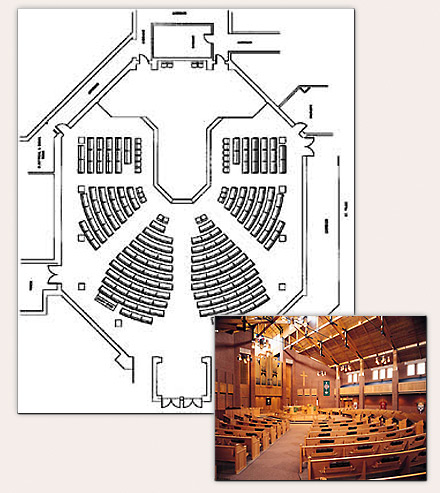 Low Christology does not exalt the Divinity of Jesus over his humanity. It opens itself to the reality of Jesus' human experience. His immediacy and connection with our experience is reflected in architecture and art.
We see Low Christology reflected in the church architectures which bring the altar down toward the people and even into their center, as it were. It tends to have a more semi-circular design with the activities around the altar being brought
 physically and psychologically closer to the people. The circular-style seating also promotes much more of a feeling of community and connection with fellow worshippers. The warmth of this sort of arrangement contrasts the austerity of the high cathedrals of Europe.
 In art, we find depictions of the temptations and suffering of Christ looking like suffering. No longer does the art look like mild discomfort or a slightly bad afternoon, but the agony described in the gospels.
I recently watched the 6-hour Jesus of Nazareth movie from the 1970s, and was blown away by how the actor's facial expressions are almost robotic or trancelike. This represents the ideology of the directors or producers - Jesus could barely crack a smile. He was remote and disconnected from his disciples. He was blank or sober in expression much of the time. I guess he was busy being Divine.
Contrast this with the made-for-TV movie entitled "Jesus" released in 2000. Jesus smiles, dances, laughs, is shown chanting in the temple with the "law" on his forehead according to tradition, teases his cousin John, feels insecure, loves and goofs
 around with his disciples, and plays with the children.
In Gethsemane He claws at the grass, and some the temptation is depicted as a struggle to stand strong in his path as Satan offers ways out of the coming torture and assures Jesus that His efforts will be in vain. I really cared about this Jesus and felt conflicted and torn by "Satan's" arguments.
The production sought to bring us into Jesus' experience, and Him into ours.
I didn't cry when the 1970's movie Jesus was crucified. It was an awful intellectual exercise to watch, but I had no personal attachment to the figure. But in the 2000 movie, I bawled my eyes out. I had LOVED this Jesus. I was devastated. A precious, beloved mentor was being unjustly tortured and killed before our eyes. It seems to me that this emotional response to Jesus' crucifixion is far more appropriate than a merely intellectual dismay and distaste.
While the Gibson movie certainly didn't shy from showing incredibly hideous torture in all it's physicality, it failed to generate in me a feeling of connection to the figure on the screen before the torture started. Again,
 I spent most of the movie in a state of horrified fascination---in an intellectual and analytical response---critiquing the scholarship and almost finding a morbid humour in how "horrible" advanced to insufferably hideous, to ridiculously horrendous. The only times I wept were when humanity, in efforts to support and comfort Jesus, broke through the relentless torture. Otherwise, it didn't bring me into my heart at all. I stayed in my head, just to survive.
So, what is the thing about High Christology and Low Christology? Is Low Christology "better" than high Christology?
I don't think so. I think separation of Human and Divine is harmful, either way you slice it.
If we make Jesus too human, he becomes our buddy, our yes-man, or our "sweet" friend who is essentially a powerless wuss.
We need to really get it in our very blood that Christ is Divine and human, Human and divine. They don't cancel each other out. They aren't mutually exclusive.
I think this is hard for us. I think we tend to be out of balance with it, and it takes a lifetime to "get-it-together" or see that they are One.
God with us.
GOD with us.
God WITH us.
God with us.
Wednesday, April 12, 2006
High Christology
 "Christology" is how a person or group views Jesus in relation
 ship to the Divine and in relationship to the Human. "High Christology" emphasizes the Divinity of Jesus, with a greater and greater removal from the human aspect. It is evidenced in art and architecture and theology.
High Christology venerates the sacred texts and the holiness of God so much so that the altar in High Christology cathedrals is removed farther and farther from the people. The structure tends to be linear, with the populace kept back by series of barriers or rails beyond which only special holy servants may go. Teaching happens from a lofty pulpit. Only the holy servants, almost always historically exclusively male, are allowed access t
 o the sacred texts, which they then interpret and feed to the populace. Even holy communion was removed from the people in stages. From drinking for themselves from the cup, the people then had to have it held for them. Finally, when the thought of a peasant possibly spilling the "sacred blood" was so dreadful (and required a ritual cleansing or even removal
  and ritual burning of the flooring material affected), they no longer wanted to risk this possibility and took the wine out of the ritual altogether.
Contact of the sacred and the "secular" was so abhorrent, they built in layer after layer of removal, as if the "special" humans had the need to or even the ability to "protect" the holy things of the Word and of God from mere peasant-human contamination.
High Christology produces shame and fear in relation to God, and makes God so powerful and removed and essentially Judgmental and unloving, that we turn our faces away out of fear of destruction because of our own unworthiness.
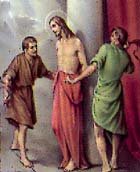
High Christology doesn't like a
 nything from mere humanity to touch or taint God's holiness. Jesus is pictured as always serene. While being flogged, he looks a little sad or somewhat bored. While in Gethsemane or on the cross, he looks slightly sad, with every hair in place and his garments artfully arranged. The famous movie, "Jesus of Nazareth" shows Him as virtually without emotion, no joy, no laughter, virtually no humanity, always apart and separate. Different. Disconnected from real human experience or emotion or process. He never looks messy or dirty.
There is a place for reverence, but as soon as we are making the "real" God inhuman, pushing God as far away as possible from humanity, we are completely missing the point of His incarnation.
When we make God so Divine and pure and unable to accept our humanity that we hide our faces out of fear and shame, something has gone terribly wrong. It is WE that cannot accept our imperfections, not God.
There is a place for reverence for the holy texts, but any human or group of humans that sees itself as especially appointed to interpret God's Word for others and tries to cut off the people from direct access to the Word is presuming that God cannot handle his creation nor take care of His own Word. It is a case of mistaken self-importance and actually shows disrespect for God by trying to handle things on His behalf, as if he can't manage---all in the name of His holiness.
Clergy are consultants and wise advisors. They should never presume to know better than the one they are supporting. They are teachers and empower-ers (is there such a word?) not parents, not police, not dictators.
God's two great commandments?
LOVE the Lord and Love the neighbour.
Not "fear the Lord and judge the neighbour."
Not "presume that you are closer to the Lord than the neighbour and therefore must control the neighbour for their own good."
The Lord is pressing to be received at every second, not recoiling in horror from His children and needing the nanny to wash us and bathe us and dress us up and feed us before He deigns to let us cower at His footstool.
Fear is the opposite of love. Fear, when not understood or addressed or handed over to God, almost always ends up as controlling behaviours and justification of controlling behaviour.
Just some thoughts.
Saturday, April 8, 2006
Amazing Grace
It has been an unusually busy week emotionally. I do often experience this type of lead-up to  Easter, but it still seems to catch me off guard.
I have been reflecting on the theology in which I was raised.
Douglas John Hall, in his book, "Why Christian" (I think that's where he says this... heh-heh...) talks about the phenomenon of even faith itself being viewed as a personal accomplishment by some....
It made me think.
Among some in the system that raised me---indeed, among those who influenced me the most, the common sentiment seemed to be that if one went to heaven, it was all God's doing, and if one went to hell, it was one's own fault. (There is a truth in this. But all truths become false if overemphasized.) Indeed, if you were even suffering, it was your fault. If you doubted, it was your fault. If you strayed from "true doctrine" it was your fault. One needed to study Swedenborg ad infinitum, like stacking up bricks in the tower of.... well, you get my drift.)
Having faith itself, in other words, became a "work," though nobody would have put it that way.
(Certainly not! We were the "one true church" that keeps love and faith in perfect balance always! Er, except when we don't, which seems to be most of the time. I think we went wrong the minute we said "one true faith" in combination with "US".... A lot of happy energy went into and still does go into pointing fingers at other Christian groups as the ones who "have it wrong.")
Even faith has become a "work." This was an epiphany for me.
So ...following that logic... If I get it "wrong" (and getting it RIGHT is everything---essentially salvation) it is my fault. Last time I checked, that was works-based salvation. (Besides, there was no real way to know how to "get it right" other than watching others and the code of approval/disapproval that runs the community, and best of all, to surrender one's intelligence to that of the authorities because "they have a fast track to the TRUTH and lay-people tend to mess it up and get it wrong.")
I was told to read the Word and pray a lot, both of which are very good things, except when doing so put me increasingly in conflict with the governing body, rather than fixing everything. Among other things, the more I read and studied, the more I loved the Lord and the Word, and consequently wanted to be a "minister," (though not in the governing model that currently serves the church.) The reply to the fact that reading the Word and praying put me in increasing conflict with the church, was that I was "doing it wrong."
Works again.
My salvation depended on "doing it right." And if it didn't "work," I was doing it wrong.
Hmmm. Circular reasoning? Who gets to define whether it is "working" or not?
Now wait. I want to be fair.
This is how I internalized the messages taught me. Though nothing grows in a vacuum, I freely admit that how I heard what was said might have been different than what was actually said.
Various childhood wounds certainly set me up to believe that my survival depended on figuring out what I needed to do and not do to keep from being chucked in the garbage or given up for adoption. I had already committed the sin of being born a girl. The THIRD girl. (You'd think I would have known better. Sheesh!) I was given lots of information about the tragedy and unfairness of it all. My cousin's family had gotten to the hospital first and "gotten the boy." I was the booby prize. So, I "knew" my chances of survival were perilous at best. I was at the bottom. Steerage on the Titanic. The first to be drowned. My three-year-old mind knew I would not survive if I made one false move.
Adult common sense aside. Three-year-olds are not capable of adult common sense.
How ironic that I have now jumped ship.
I suppose that is why I found the story of Moses's exclusion from Canaan such an uncomfortable story. He'd served the Lord faithfully for YEARS, and yet one false move, and he's excluded forever. (That's the presenting story. The internal meaning is something quite different.)
But I had accepted this reality as "the way things are with God" and never questioned it. It was my reality. "Learn everything you can. Stay on your toes! Watch out! Be vigilant! One false move and that's it!"
Fear, vigilance, hyper-responsibility and constant overhanging JUDGMENT.
No wiggle room. No room to stumble, learn, and try again. No mercy. No GRACE.
In Lutheran terminology, we are talking about the tension between Law and Gospel.
In Swedenborgian terms, this is the tension between Judgment and Mercy.
Judgment raised me. I was born on the Isle of Judgment. My maiden name is Judgment.
No wonder I am falling madly in love with Mercy.
 Easter, but it still seems to catch me off guard.
I have been reflecting on the theology in which I was raised.
Douglas John Hall, in his book, "Why Christian" (I think that's where he says this... heh-heh...) talks about the phenomenon of even faith itself being viewed as a personal accomplishment by some....
It made me think.
Among some in the system that raised me---indeed, among those who influenced me the most, the common sentiment seemed to be that if one went to heaven, it was all God's doing, and if one went to hell, it was one's own fault. (There is a truth in this. But all truths become false if overemphasized.) Indeed, if you were even suffering, it was your fault. If you doubted, it was your fault. If you strayed from "true doctrine" it was your fault. One needed to study Swedenborg ad infinitum, like stacking up bricks in the tower of.... well, you get my drift.)
Having faith itself, in other words, became a "work," though nobody would have put it that way.
(Certainly not! We were the "one true church" that keeps love and faith in perfect balance always! Er, except when we don't, which seems to be most of the time. I think we went wrong the minute we said "one true faith" in combination with "US".... A lot of happy energy went into and still does go into pointing fingers at other Christian groups as the ones who "have it wrong.")
Even faith has become a "work." This was an epiphany for me.
So ...following that logic... If I get it "wrong" (and getting it RIGHT is everything---essentially salvation) it is my fault. Last time I checked, that was works-based salvation. (Besides, there was no real way to know how to "get it right" other than watching others and the code of approval/disapproval that runs the community, and best of all, to surrender one's intelligence to that of the authorities because "they have a fast track to the TRUTH and lay-people tend to mess it up and get it wrong.")
I was told to read the Word and pray a lot,
 both of which are very good things, except when doing so put me increasingly in conflict with the governing body, rather than fixing everything. Among other things, the more I read and studied, the more I loved the Lord and the Word, and consequently wanted to be a "minister," (though not in the governing model that currently serves the church.) The reply to the fact that reading the Word and praying put me in increasing conflict with the church, was that I was "doing it wrong."
Works again.
My salvation depended on "doing it right." And if it didn't "work," I was doing it wrong.
Hmmm. Circular reasoning? Who gets to define whether it is "working" or not?
Now wait. I want to be fair.
This is how I internalized the messages taught me. Though nothing grows in a vacuum, I freely admit that how I heard what was said might have been different than what was actually said.
Various childhood wounds certainly set me up to believe that my survival depended on figuring out what I needed to do and not do to keep from being chucked in the garbage or given up for adoption. I had already committed the sin of being born a girl. The THIRD girl. (You'd think I would have known better. Sheesh!) I was given lots of information about the tragedy and unfairness of it all. My cousin's family had gotten to the hospital first and "gotten the boy." I was the booby prize. So, I "knew" my chances of survival were perilous at best. I was at the bottom. Steerage on the Titanic. The first to be drowned. My three-year-old mind knew I would not survive if I made one false move.
Adult common sense aside. Three-year-olds are not capable of adult common sense.
How ironic that I have now jumped ship.
I suppose that is why I found the story of Moses's exclusion from Canaan such an uncomfortable story. He'd served the Lord faithfully for YEARS, and yet one false move, and he's excluded forever. (That's the presenting story. The internal meaning is something quite different.)
But I had accepted this reality as "the way things are with God" and never questioned it. It was my reality. "Learn everything you can. Stay on your toes! Watch out! Be vigilant! One false move and that's it!"
Fear, vigilance, hyper-responsibility and constant overhanging JUDGMENT.
No wiggle room. No room to stumble, learn, and try again. No mercy. No GRACE.
In Lutheran terminology, we are talking about the tension between Law and Gospel.
In Swedenborgian terms, this is the tension between Judgment and Mercy.
Judgment raised me. I was born on the Isle of Judgment. My maiden name is Judgment.
No wonder I am falling madly in love with Mercy.
Saturday, April 1, 2006
Remarkable Cows
Listening to Sandra Boynton's "Philadelphia Chickens" CD as  I answer some email and catch my breath. My toes are tapping and I'm humming along to, "We're remarkable cows. . . ."
What would we do without music or humour?
I've just finished reading "Leaving the Saints" by Martha Beck, which I read almost non-stop from the minute it crossed my palms. It is my story, and thousands of other people's story, with variations. I find her humour and breathtaking honesty and compassion more than enough to get me through the difficult material. I had to stop reading to shake and shudder for awhile.
Our stories are so similar, except in my case, much more subtle, and I have no extant scars. Just symptoms, which are so much more deniable.
Despite my playing hookey to read a book on surviving religious oppression and sexual abuse, I made it through my oral New Testament "exam" yesterday with flying colours, which is a huge relief! HUGE.
Now I just have a few smaller hurdles, and my year of course work is done!
Yay!
(Only three years left....Sigh!)
I also, by chance, got to be a support for a sweet soul who is passing through a rough patch. I was the only other person in the room during an innocuous activity when this person was abruptly battling deep grief and tears. It was rather like being in an elevator with an admired and respected acquaintance when they go into serious labour.
There is such a strong social code that "said" this person shouldn't lean on me and I shouldn't really offer it. I did what I could, feeling tender. Feeling privileged. Feeling like I was on Holy ground. It felt sacred.
It was also terribly frustrating. I wanted to sweep away all the stupid social mores and hold this person and let them shake and cry and scream and grieve.... "The only way out is through."
But I don't think this person knows the healing modalities I believe in, and the elevator doors could have flown open at any moment, so to speak.
Ah, what would we do without euphemism and metaphor?
Well, the Lord is in charge of all of it. ALL of it. So I need to let it go.
When I shake and cry, I get what I call my "hamburger face." It's all red and lumpy.
Somehow that ties in with how we are all remarkable cows.
I give EVERYONE permission to shake and cry and scream at every opportunity.
Sometimes it is the only appropriate response to life.
 I answer some email and catch my breath. My toes are tapping and I'm humming along to, "We're remarkable cows. . . ."
What would we do without music or humour?
I've just finished reading "Leaving the Saints" by Martha Beck, which I read almost non-stop from the minute it crossed my palms. It is my story, and thousands of other people's story, with variations. I find her humour and breathtaking honesty and compassion more than enough to get me through the difficult material. I had to stop reading to shake and shudder for awhile.
Our stories are so similar, except in my case, much more subtle, and I have no extant scars. Just symptoms, which are so much more deniable.
Despite my playing hookey to read a book on surviving religious oppression and sexual abuse, I made it through my oral New Testament "exam" yesterday with flying colours, which is a huge relief! HUGE.
Now I just have a few smaller hurdles, and my year of course work is done!
Yay!
(Only three years left....Sigh!)
I also, by chance, got to be a support for a sweet soul who is passing through a rough patch. I was the only other person in the room during an innocuous activity when this person was abruptly battling deep grief and tears. It was rather like being in an elevator with an admired and respected acquaintance when they go into serious labour.

There is such a strong social code that "said" this person shouldn't lean on me and I shouldn't really offer it. I did what I could, feeling tender. Feeling privileged. Feeling like I was on Holy ground. It felt sacred.
It was also terribly frustrating. I wanted to sweep away all the stupid social mores and hold this person and let them shake and cry and scream and grieve.... "The only way out is through."
But I don't think this person knows the healing modalities I believe in, and the elevator doors could have flown open at any moment, so to speak.
Ah, what would we do without euphemism and metaphor?
Well, the Lord is in charge of all of it. ALL of it. So I need to let it go.
When I shake and cry, I get what I call my "hamburger face." It's all red and lumpy.
Somehow that ties in with how we are all remarkable cows.
I give EVERYONE permission to shake and cry and scream at every opportunity.
Sometimes it is the only appropriate response to life.
Subscribe to:
Posts (Atom)