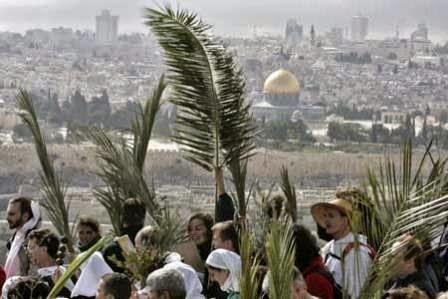
“Palms of Praise”
Rev Alison Longstaff, April 13,
2014
Bath Church of the New
Jerusalem
Psalm 8; Matthew 21:1-9; Portions: HS 878:5
I want to
start this sermon and end this sermon with hands.
Why
hands? Because it is Palm Sunday.
A palm
branch is called a palm branch because it is shaped like a hand. This is actually true in several
languages. English is not the only
language that likens that leaf-shape to a hand.
Perhaps this is because of correspondences. (For those who are new to
Swedenborgianism, “correspondences” refers to the perception and science that
every created thing has a spiritual meaning and communicates a spiritual
idea. This is not a new idea, because we
see it in ancient cultures, in ideas like totem animals, using crystals for
healing, and even in astrology. We don’t
necessarily buy into any of those individual expressions of correspondences,
but we do love to work with and explore the idea that God’s wisdom shows up in
many places in many ways.)
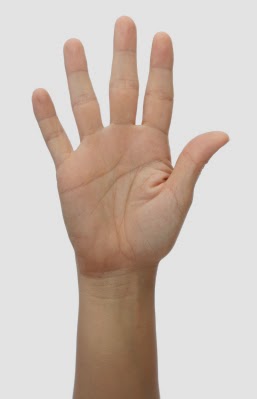
So, back to
hands. Even today, when you see a crowd in St. Peter’s square, or at a rock
concert, or when a celebrity passes on a float in a parade, you will see people
lifting up their hands. We raise our
hands in recognition and honor. And we
raise our hands to say, “Do you see me in return?”
In our story
for today, not only were the people lifting their hands in praise and greeting
of the Lord when He entered Jerusalem, many of those hands had palm branches in
them, extending and enlarging the hands that were raised in praise and
celebration. They wanted to greet Him in
a big way, not only saying “I honor you.”
But, “Please see me too!”
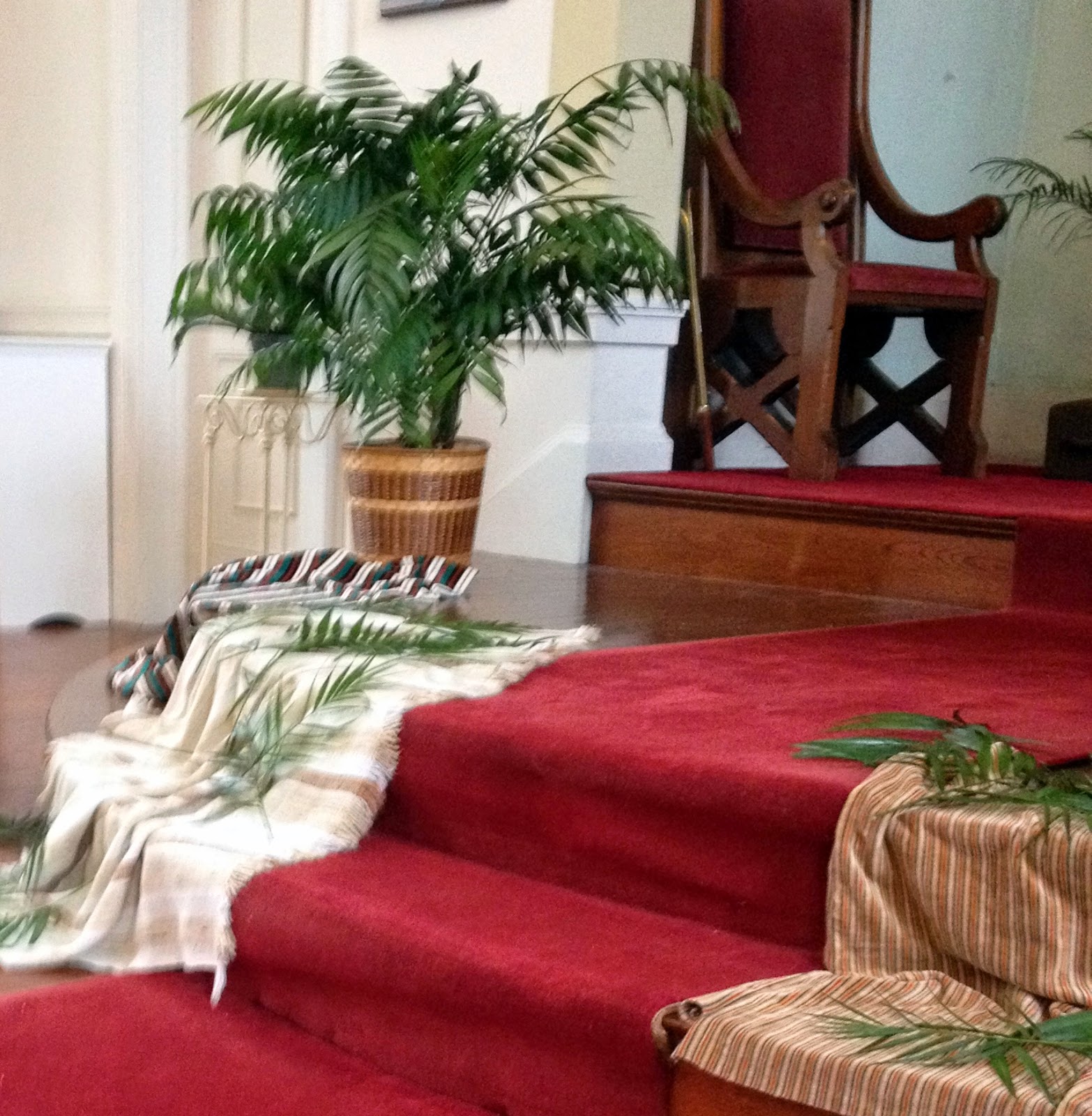
Now, perhaps
on first glance, you might think this strange custom, of waving palms and
casting branches and garments before the Lord has no points of resonance for us
today. We rarely see people riding
donkeys, and if we do, we don’t feel compelled to throw our jacket down in
front of them, or to rip branches off trees so we can wave them.
So let me
help you see just how much we are like these people and still do just what they
do. For example, I’m sure you remember
those days when the streets were all mud and we had to pick up our long skirts
to keep them out of the…. Hmmm. Maybe not.
But surely most of us have seen those images in movies of the chivalrous
days when a gentleman would throw his coat down in a puddle before a person he
respected and honored (usually a lovely lady) to protect her dainty feet and
frilly skirts from the filth.
That
action is the same action as the people of Jerusalem are performing when they
lay their garments before the way of the King.
Very likely they were covering up some of the nastier stuff that was
lying in the Jerusalem streets. It was sign of great respect. It was saying, “You shouldn't have to step in that.” It was a sign of respect so
profound that the individual would sacrifice the clothes off their back to
spare this person such an indignity. And
remember, they didn't have a lot of clothes back then! They couldn't just run into the house and
grab something out of the rummage sale bin.

This is more like you doing this with your
favorite sweater, your best suit, or that expensive coat that you love so much—laying
it down over animal waste or smelly garbage or even human excrement, to then be
walked over by many feet, grinding that garment deeply into the muck. Then after all the excitement has passed, you
can peel it up out of the filth so you can clean it. Because it is the only one you have and you
need it. That garment is how you stay
warm in the chilly desert nights.
Do you feel
that now? The significance and meaning
of that action? Now that is sacrifice! That is devotion.
A custom
that we still have today that has descended to us from that same ritual can be
seen at the Oscars, when we lay down the red carpet before North America’s
royalty. We have paved so much of North
America and gotten so far away from living with live-stock by now, that we have
lost the visceral, emotional, practical connection to the ritual. We don’t think, “I’m so glad she’s not
ruining her Dior garment and Sergio Rossi pumps in that donkey—er, by-product. Yet the red carpet ritual is descended from the
very same tradition. The garments and
branches in the road in today’s Scripture were Jerusalem’s way of laying down
the red carpet for the Lord.

But do we
see people waving branches to honor a passing celebrity these days? Well, maybe not branches. But have you witnessed a sporting event
recently? There are lots of big things
being waved—flags, banners, signs, posters, and giant foam hands. Giant
hands. It is a way of declaring support
and loyalty. It is a form of claiming that
team or star as one’s own. And when the
camera pans over the crowd, don’t the signs and banners catch your eye? Those
individuals want to stand out. They want
to be seen. They are publicly declaring
their support for their hero.

That sort of
cheering, rowdy, crowd energy that you see in the stands at a big event, or on
the streets of London when Will and Kate drive by, is the sort of cheering
crowd energy and declarations of faith and hope that we see in today’s
story. Now do you feel it? Surely you have been in a crowd like
that. Surely you have thrown your faith
and hope in with a team, or a political candidate, or some guru-figure at least
once in your life. That is what was
happening on the streets of Jerusalem that day.
It was as real and relevant and exciting for them then as it has been
for us in our experiences.

Now you
might say, “Yes, but I've never mistaken Oprah, or Obama, or Patrick Dempsey for
God!” Well the truth is, very few, if
any of the people in that day saw Jesus as anything other than their next
physical king. This human from Nazareth (so they thought) was going to rise up,
overthrow the Romans, cleanse Israel from all foreign oppression, and make
their nation a strong and respected nation once again. Hurray! They would no longer be occupied and
oppressed. This man was their Messiah at
last! Their expectation was that he
would become their earthly King—restoring Israel to herself and establishing
her peace and freedom for all time to come.
And that was
almost what Jesus had in mind, except it was the peace and freedom of all of humankind, for all time to come that He had in mind—which
was a much bigger and more ambitious goal than to be a finite king of one
earthly nation for a limited time. So He
went straight to the Temple, representing our spiritual center, and began to throw out the money changers.

The first
step in any renewal is to remove the things that stand in the way. We cannot have a “buy and sell” attitude
about our status with God. God is not a
vending machine, that if we offer a certain amount of prayers the right way, or
sacrifice the right amount of chickens or fat oxen at the right time, we can
then expect certain rewards or favors.
God’s love is unconditional and constant. His/Her desire for our happiness is immediate
and without reserve. It is we who put in
barriers and expectations between us and God, and decide we aren’t good enough
or deserving enough to access God’s love directly. It is we who think God will like us better or
pay more attention if we “prove” our devotion.
It is we who create rules about God’s love and reduce our relationship
with the Divine to something requiring transactions and debt and the exchange
of “money.”

And it is we
who interpret not having our prayers
answered according to our specifications in our time frame as God not hearing our prayers and not loving
us. In that case we are just like the
people in Jerusalem, who had a specific notion of what Jesus was going to do
for them. When He didn’t go to the
Palace and throw out the Romans, but went to the Temple and upset the religious
leaders, they began to withdraw their support.
Their Messiah was letting them down, and they began to abandon him in
droves. No doubt you have lived this in
some version in your life. I know I
have.

How many of
us who expected Obama to turn the whole mess of the US government around after
His election, have downgraded our loyalty and expectation since he hasn’t
delivered the way we thought he should?
Or if loyalty and expectation connected with Obama doesn’t work for you,
no doubt you can think of any number of groups, individuals, doctors, new
health regimes, diet plans, or self-help books that you have signed up with or
committed to only to have your hopes for wholesale salvation from whatever it
was not be delivered. We know this
experience. We live it all the time. It
is easier to understand this people’s wholesale abandonment of Jesus during His
trials and crucifixion when we can connect it with our own disappointments and
disillusionments. Yes, they completely misunderstood what His mission was, and we
often do too.

So this is
the lesson for us. It is showing us the
gap between Jesus’ intentions for our salvation verses our ideas of what we think we need to save us. God always answers prayers and the answer is
always “YES.” But God’s “YES” answers
the deeper longings, the underlying unhappiness, the whole shooting match of
why we are asking for aid, not the face request. It is a little like Extreme Home Makeover,
Spiritual Edition, where we ask for help with a leaky basement, and meanwhile while
God is working behind the scenes to give us a whole new dream home.
But unlike
Extreme Home makeover, God’s Divine Plan doesn't unfold in a week while we go
to Disney World. No such luck. God’s Divine plan takes a lifetime of work, with
lots of apparent set-backs and losses. Sometimes
we get little peeks at what blessings might be coming, but much of the time the
journey can feel like a lot of lonely hard work.
Like the
people in Jerusalem, we all tend to expect on some level that God should make our personal lives relatively free from the
really nasty problems that other people
have. And when He doesn’t, we sometimes jump
ship, and hitch our wagons to something promising a more immediate “salvation” than
God seems to be offering.
I know that
sometimes I can’t help but hope that the next
diet plan will be the one that locks in a slender figure for me forever. I can’t help but hope that some new love or
some big lottery ticket, or maybe Oprah discovering my awesome self will
finally rescue me from the endless drudgery of budgeting and prioritizing and
telling myself “no” because there simply isn’t enough money.

Because I am
human. And that is what humans do. We have incredibly short attention spans
compared to our infinite God. God’s plan
for our salvation is so much bigger and grander and far reaching for us in
scope and comprehensiveness and timing than we can possibly imagine. We
expect Jesus to come rule our little city and overthrow or mortal concerns and
trials. And we do get grumpy when He goes to the Temple instead and calls for a spiritual
cleanse. But the grand outcome will be
ever so much better and more miraculous and comprehensive than even the grand
coup at the end of “The Sting.” There is
a lot more going on behind the scenes
than we can ever see; there is a lot more being set up and guided and put in
place for the eternal happiness of the
whole human race, than our small expectations and hurts and hopes can possibly
fathom.

So welcome to the human
race. Welcome to Palm Sunday. Every day is Palm Sunday when we look at life
this way. Every day we lift our hands to
God in praise, expectation, hope, supplication for aid, and in desperation to
be seen and loved. And every day we may
feel let down or overlooked. We may buy
the illusion that some other god is going to do what we want. Or we may be lifted up in the joy and
mystery, open to whatever may come. We might
just follow Jesus to the Temple, and trust in Him even through the crucifixion,
ready to greet Him when He rises on Easter.
There is so much more to say, and
no time left.
Let me leave you with a few
correspondences for your contemplation.
When anyone raises their hands in
religious ecstasy, it is rather like a flower lifting its face to the sun, open
to being fed and nourished from the rays of sunshine. It is a receiving action.
Hands also represent what we do,
our effectiveness, our power. Things in
our hands are an extension of our power.
Like Moses’ staff, and Gandalf’s staff and Harry Potter’s wand.
Palms are also quite sensitive. The hollow is like a receptacle, and the
driving of a nail through that soft place is the violent rejection of what the
palm is offering. The palm represents
vulnerability and compassion. An open
hand represents “there is no weapon here.”

And finally, it is okay that
yours and my expectations of God often fall short of the mark. We are human.
It is okay that we even sometimes turn on God, and abandon God because
He doesn't live up to our expectations. God
knows we will do this. We are still part
of the story. And yes, even parts of us and times in our lives will sometimes
crucify
the presence of God because we are so threatened by what it
represents. Forgive yourself. And try not to be afraid. Even if we crucify the God of Love,
She returns more powerful and more loving
than ever, still intent on redeeming the whole human race, which is
all parts of us in the story, not just
the “good” parts.
Welcome to Palm Sunday. Welcome to life.
Amen.
Readings
Psalm 8 NKJV
O Lord, our Lord, How excellent is Your name in all the earth,
Who have set Your glory above the heavens!
2 Out of the mouth of babes and nursing infants You have perfected praise
Because of Your enemies, That You may silence the enemy and
the avenger.
3 When I consider Your heavens, the work of Your fingers,
The moon and the stars, which You have ordained,
4 What is humanity that You are mindful
of them,
And the children of humankind that You dwell with them?
5 For You have made humanity a little
lower than God,[b]
And You have crowned them with glory and honor.
6 You have made them to have dominion over the works of Your hands;
You have put all things under their feet,
7 All sheep and oxen—Even the beasts of
the field,
8 The birds of the air, and the fish of
the sea That pass through the paths of the seas.
9 O Lord, our Lord, How excellent is Your name in all the earth!
Matthew 21:1 – 9, 14-16 As they approached Jerusalem and came to Bethphage on the
Mount of Olives, Jesus sent two disciples, saying to them, "Go to
the village ahead of you, and at once you will find a donkey tied there, with
her colt by her. Untie them and bring them to me. If anyone says
anything to you, tell him that the Lord needs them, and he will send them right
away." This took place to fulfill what was spoken through the prophet:
"Say to the Daughter of Zion, 'See, your king comes to you, gentle and
riding on a donkey, on a colt, the foal of a donkey.'" The disciples went
and did as Jesus had instructed them. They brought the donkey and the colt,
placed their cloaks on them, and Jesus sat on them. A very large crowd spread their cloaks on the
road, while others cut branches from the trees and spread them on the road. The crowds that went ahead of him and those
that followed shouted, "Hosanna to the Son of David!" Blessed is He who comes in the
name of the Lord;
Hosanna in
the highest!”
Heavenly Secrets 878 [5] In the Word, the hand
stands for the Divine power. Indeed
"hand" is so significant of
power that it became its very symbol in ancient times, as is evident from the
miracles that were done in Egypt, when Moses was commanded to stretch forth his
hand, or his staff, and this
accomplished the miracles.


 I hope that was easy. If it was, I suspect you are on the road to learning better civil discourse and healthier communication skills.