“What the
Heart Knows”
Rev. Alison
Longstaff, Dec 11th, 2012
New
Church Live Christmas Vespers
Bryn
Athyn, Pennsylvania
Arcana
Caelestia 30; Luke 1:39-47
Luke
1:39-47 At
that time Mary got ready and hurried to a town in the hill country of Judea, where
she entered Zechariah’s home and greeted Elizabeth. When
Elizabeth heard Mary’s greeting, the baby leaped in her womb, and Elizabeth was
filled with the Holy Spirit. In a loud voice she
exclaimed: “Blessed are you among women, and blessed is the child you will
bear! But why am I so favored, that the mother
of my Lord should come to me? As soon as
the sound of your greeting reached my ears, the baby in my womb leaped for joy. Blessed
is she who has believed that the Lord would fulfill his promises to her!”
And
Mary said: “My soul glorifies the Lord and my spirit
rejoices in God my Savior
Arcana Caelestia 30. When
someone is being regenerated, their spirituality develops as follows: First
they start to learn about spiritual things, which they have then in their
memory. This is “fact-based” or “rules-based” spirituality. Then, after they
have thought about things for awhile and have lived with the ideas for awhile
they develop a deeper understanding, which is theory-based spirituality.
Finally, a true spirituality comes from the heart, which is genuinely loving.
Our text tonight is from Mary’s Song of Praise, also known as
“The Magnificat.” We find it in the
Gospel of Luke right after Elizabeth greets Mary. The gospel of Luke is a gospel of contrasts,
of rich and poor, of priests and peasants, of men and women, of the educated
and the working class. Tonight I wish to
focus in particular on what Mary represents.
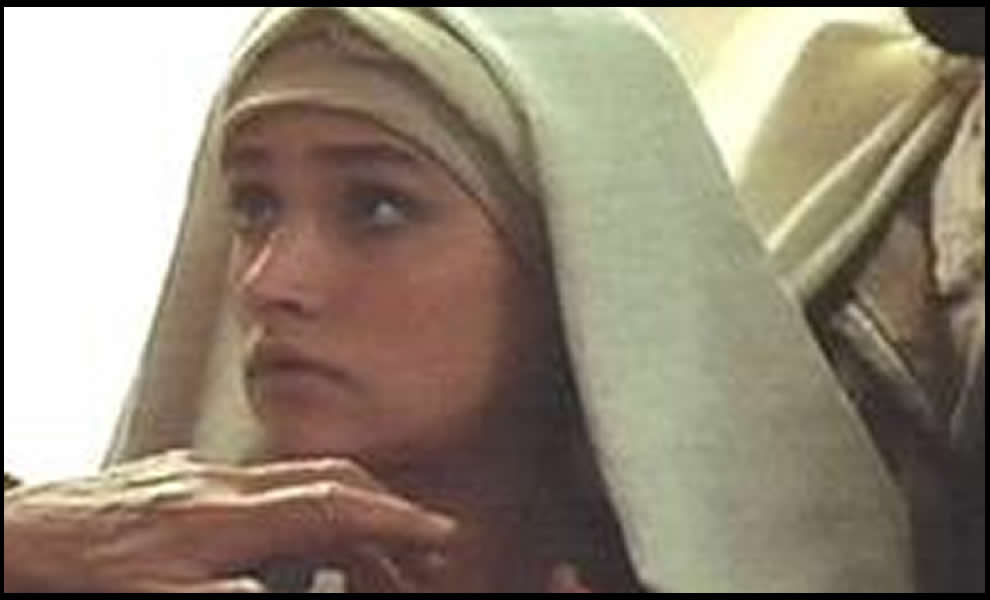
Mary, the young, poor, peasant woman, yet in whom the son of God is
conceived and to whom God incarnate can be born.
Mary represents the feminine, or heart side of our inner nature. Mary is the side of life that is typically
discounted, pushed aside, and silenced in our culture. Mary is the quiet whisper of our heart,
especially when it challenges the status quo. Mary represents the stuff we just know without being able to explain.
Mary is the mystical, the unscientific,
the stuff that we are afraid to trust, yet the part of us that somehow knows
what is going on well before it makes sense.
Let’s look once more at the gospel story. Again and again it is the unsophisticated,
marginalized characters that accept the angels’ wonderful news and welcome the
divine immediately, while the privileged and educated and powerful come around
much more slowly. Zacharias –as an old
man and a priest--- represents our intellectual side. He struggles to accept the news of John’s
birth. In fact, he asks the angel for
proof. He wants evidence. His proof comes in his being rendered
speechless until after the miracle is accomplished. In contrast, young, uneducated Mary simply asks
for reassurance from the angel. She then moves right into acceptance and
ultimately sings the song of praise which contains tonight’s text.

Then, when Jesus is born, it is the shepherds who first see
the angels and hear the good news. Shepherds
at that time in Judean culture were the bottom of the pecking order: poor,
uneducated, and the least respected among the working class. Yet the good news
comes first to them! Something about
them makes them ready to receive it before any other group. And they respond instantly and with full
acceptance, rushing to see the newborn baby. In contrast, the Wise Men---representing
our intellectual side---see a remote star, and have to figure out how to travel
the tremendous distance required to find the newborn. They even have to stop and ask for directions---it
takes a Wise Man to have the humility to stop and ask for directions…. In any case, the Wise Men do finally arrive,
bearing tremendous gifts, but not until LONG after the shepherds do. And
isn't it interesting that the shepherds brought only the gift of their
presence, and it was enough?
Later, when Jesus rises, who comes first to the tomb? It is the women of the story, with courage
and tears. The men---remember, that
means the intellectual side of you and me, not men ---that side of us takes longer to figure out and accept what
has happened. Doubting Thomas represents
the last hold-out in you and me against trusting anything not evidence-based. He is not wrong. He is still one of the disciples! He is part of the story. But yes, we are blessed when we can trust and
see and follow more quickly than fearful, doubting Thomas.
 Please remember, I am not saying that women are better or
smarter than men. Each gender has
strengths and gifts, and each gender has weaknesses, the same way the two
hemispheres of our brain have strengths and weaknesses, and the two sides of
our human nature has strengths and weaknesses.
Besides, not all women fit the
classic female stereotype, nor do all men fit the classic male stereotype. Praise the Lord! We need these
boundary-bending examples to keep us from getting too comfortable with easy
categories.
Please remember, I am not saying that women are better or
smarter than men. Each gender has
strengths and gifts, and each gender has weaknesses, the same way the two
hemispheres of our brain have strengths and weaknesses, and the two sides of
our human nature has strengths and weaknesses.
Besides, not all women fit the
classic female stereotype, nor do all men fit the classic male stereotype. Praise the Lord! We need these
boundary-bending examples to keep us from getting too comfortable with easy
categories.
It is not our fault that we struggle to find balance between our
thinking side and our feeling side. And
it certainly doesn't help if we make one side bad and the other side good, or
one side better and the other side worse.
Both are good. Both are
gifts. Both are beautiful and necessary
for our regeneration. Even the parts of
our nature that won’t fit easily into head or heart categories are gifts too. Never forget it.
 I can easily find stories from my personal life when my heart
rushed ahead and left my intellect struggling along behind, just like we see in
so much of the Christmas narrative. An
example: When I go to my alternative health care provider---my naturopath or my
energy worker---I leave my intellect in the car. The scientific, logical side of my nature
can’t make sense of the flakey, illogical “unscientific” stuff that happens in
those offices. “What do you mean, ‘energy
work?’” my inner Spock wants to know.
The intuitive, experiential, or the “Mary” half of my nature knows that
these forms of care make a difference---often a profound difference---to my
health whether or not there are scientific explanations of “how” that satisfy
my left brain. So my intellect stays in
the car, or it goes in a closet and puts on loud music. My intellect just doesn't understand that
flakey stuff and can't watch. Do you
have similar examples from your life?
I can easily find stories from my personal life when my heart
rushed ahead and left my intellect struggling along behind, just like we see in
so much of the Christmas narrative. An
example: When I go to my alternative health care provider---my naturopath or my
energy worker---I leave my intellect in the car. The scientific, logical side of my nature
can’t make sense of the flakey, illogical “unscientific” stuff that happens in
those offices. “What do you mean, ‘energy
work?’” my inner Spock wants to know.
The intuitive, experiential, or the “Mary” half of my nature knows that
these forms of care make a difference---often a profound difference---to my
health whether or not there are scientific explanations of “how” that satisfy
my left brain. So my intellect stays in
the car, or it goes in a closet and puts on loud music. My intellect just doesn't understand that
flakey stuff and can't watch. Do you
have similar examples from your life?

But before we believe that this scenario is the only
legitimate one, I can tell stories of my intellect being super clear on
something while my heart is still struggling along behind. An example might be how I feel terrified of
spiders despite knowing with my whole
head that they are much tinier than me and not even poisonous in this area
of the world. They are completely
benign! But my emotions when I encounter
a spider remain fairly primitive.
Because it isn't about what I believe. Pre-rational emotion just takes over. It is all
kind of funny --- once I’m done shrieking and can come down off the chair.
The point is that this imbalance between our intellect and
feeling-side is normal. It is how we are made. It is not our fault. It really is rather funny, one we get over stressing
about it. And it is God’s promise to us
that one day these two very different sides of our natures will be united. One day we will become so integrated in our loving and our
thinking that we scarcely notice the negotiations between the two sides, let
alone find the discrepancies so comically wide.

For tonight, it might just help us to remember that when God
comes to us be born anew, there will probably be a big part of us that has no
idea what is going on and wouldn't believe it if it knew. The same way our science-loving culture tends
to discount or invalidate the mystical and intuitive, the seemingly impossible
and miraculous occurrences in our lives, you and I individually may easily
doubt and question any evidence that God is indeed being born into your individual
heart and life. Yes; into yours. Into mine.
But shifts do happen in our spirits as we grow closer to
God. The same as in the Christmas story,
our spiritual growth is lead first by intuition and innocence. “Why did you decide to stop in at that
particular church, or pick up that particular book?” But our intellect quickly takes the lead as
facts and information accumulate.
Unfortunately, the intellect can be kind of clueless when it comes to
feelings and intuition. Sadly, once in
charge, the intellect often invalidates feelings and intuition because it isn’t
well designed to understand them and can feel a little threatened by them. It happens all the time, and isn’t very helpful. Intuition guides the intellect to what it
needs, and then the intellect acts like it was in charge all the time and
intuition is dumb. Oh well.

In any case, for much of our spiritual journey we are more
likely to be lead by ideas and concepts than by gut feelings and instinct. That is okay.
That is how God designed the process of learning to happen for most of
us. This shows up in the Bible as Jacob
taking pre-eminence over Esau, and as the stone temple replacing the soft,
tent-like tabernacle.
But the same way Jacob wasn’t supposed to have contempt for
or fear of Esau, we need to do our best to remember the strengths and gifts
that our intuitive side brings to our life.
Our intellect can have a tendency to want to hoard and hold on to power,
and to fear and invalidate the mystical, fluid, hard-to-box-up-and-measure
qualities of our emotional side. In the
end, Esau will take his rightful place, but in the bulk of the Bible, Jacob’s
story gets the limelight.

Our culture here in the West still remains pretty
uncomfortable with feelings. We have
been told there are good feelings and bad feelings, excessive feelings, and
inappropriate feelings. But in the realm
of psychology and therapy it has been known for a long time that there are no
wrong feelings. There can be hurtful
behaviors, but all feelings are appropriate and make sense when we understand
what drives them. Our feelings can be
amazingly wise teachers when we listen to them.
They point directly to the wounded parts and invite healing. But for tonight just remember: feelings are
never wrong. They simply are. Even if that concept drives the intellect
crazy. Accepting emotions and working with them works much better than judging and controlling them.

Your heart knows what it knows. It is incredibly wise. It doesn’t have to explain. What it knows may not be easy to understand, rather
like a virgin birth; but without our hearts, Jesus cannot be born. By means of Mary, into a simple, mucky
stable, full of humble, smelly animals, our God rushes with new life and
light. Birth is messy and perfect. Let
us sing for joy. Amen
Guided meditation
Welcome
to this holy and sacred and safe space.
I ask you to be still for these next few moments. To pull up a stool and to sit by the manger,
and to gaze into the eyes of the newborn God of the whole universe. This, our
God, has come down right here, right now, into our tender and insecure lives.
Like the
stable animals, all feelings are welcome here.
No one said, “the donkey isn't good enough or clean enough to be here,”
no one said, “The camel is too noisy and grumpy to be here.” God comes to us exactly as we are, how we are,
and doesn't reject any parts of us as too unworthy to be present right where he
is born.
Just be
here, no matter how you are feeling, or what you are thinking. You are welcome here. Perhaps this Christmas you are full of wonder
and joy---the “right” feelings to be having this time of year. But perhaps, like so many, you are feeling
loss or deep sadness; you may be dealing with fresh and new grief, or perhaps old
and aching losses from years past. There
is no wrong story to bring to the manger.
Whatever feelings press forward are the ones that most need the healing
love that this infant brings. Do not
forbid them. And no matter what feelings
come, remember that you are not alone. You
are surrounded by love. Tears are
welcome here.

As we sit
and soak up the peace and the love and the complete acceptance that this new
infant brings to our world, be accepting of every feeling. Perhaps you are feeling anxious about time,
or about money, or about choices that loved-ones are making. You are normal,
especially for this time of year, in this culture and economy. I ask you just to be here. Be here, and release self-judgment if you can. Let’s all of us take a breath together.
Sheep,
goats, camels, chickens, angels…. Just
for now, set your worries, judgments and distractions aside. Put them down, in a box. They will wait. Just be here. Right here, right now, with people
who love you, and want the best for you, and who are committed to walking
beside you no matter what. This
community is where Jesus can be born. Our
Lord Jesus, Emanuel, God with us, is here, now.
Breathe this in.
Glory to
God in the highest, and deep peace to every human heart on earth. Amen